When the page breathes back.
Robbie Austin
March Masterclass
Robbie Austin
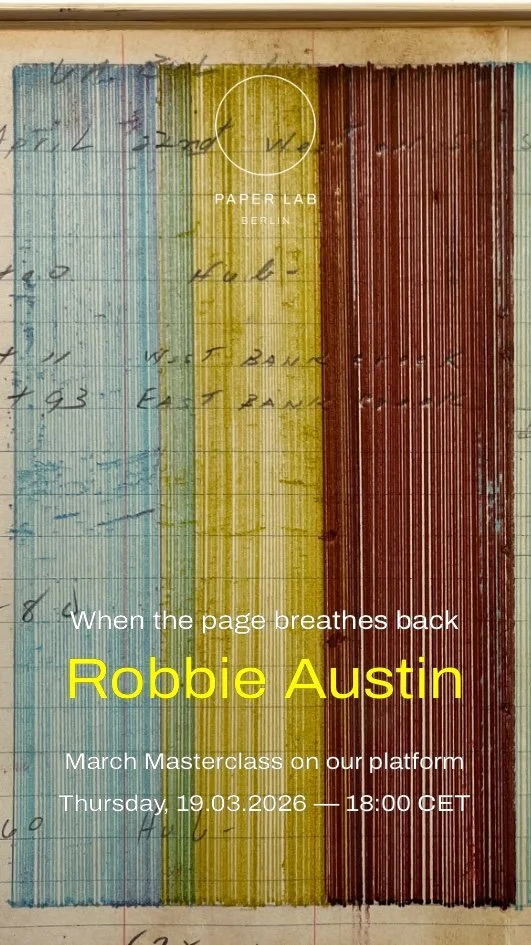
When the page breathes back.
March Masterclass
Thursday, 19.03.2026 — 18:00 CET
Robbie Austin’s art unfolds as a sustained conversation with time, memory, place and decision.
His work does not begin with a blank surface, nor does it seek neutrality.
Instead, it enters into dialogue with what already exists.
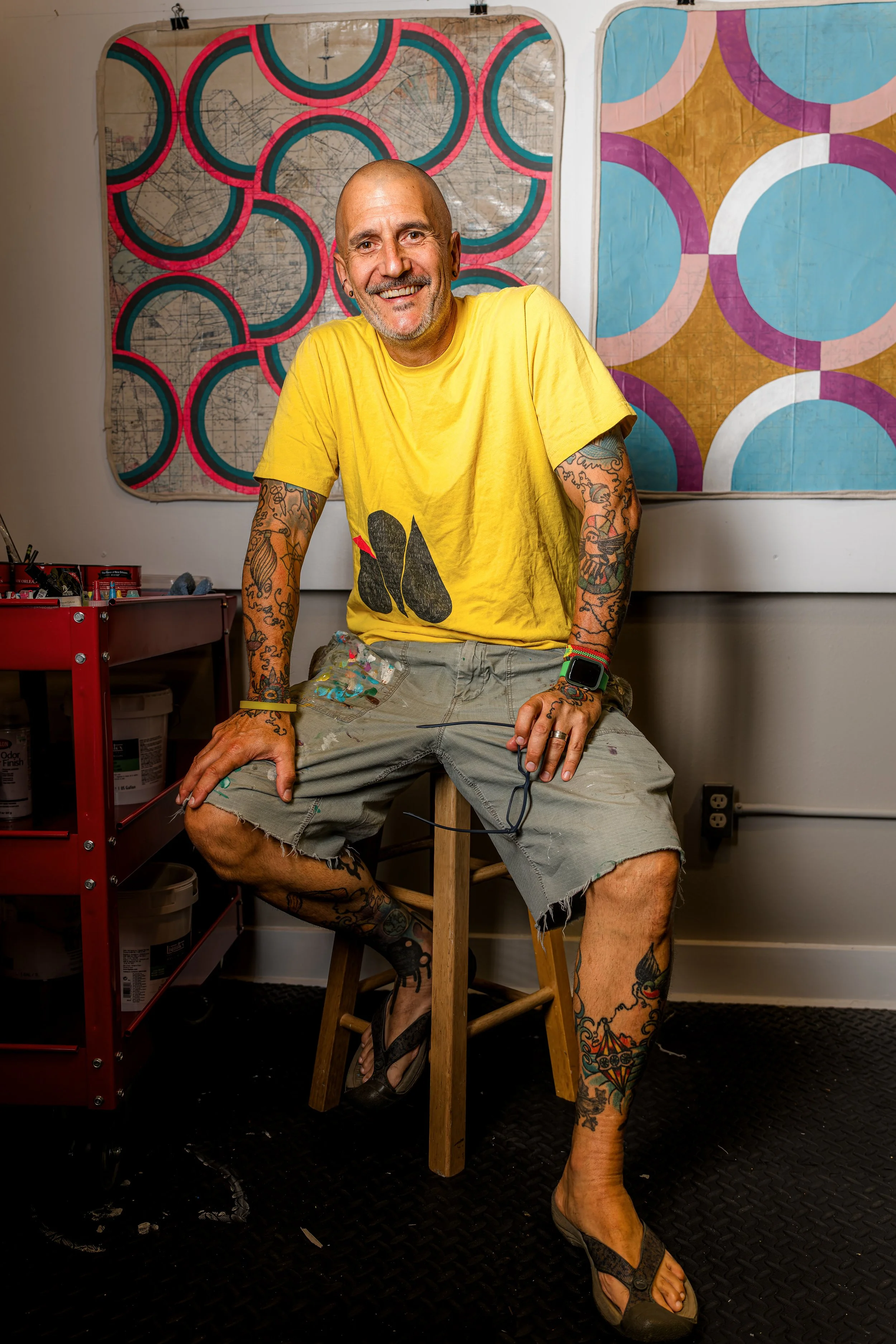
Like skin that carries scars, freckles, wrinkles, and tattoos, the surfaces he chooses are already marked already alive.
His drawings and paintings operate on this living skin of paper, where history is not erased It is activated.
But activation alone is not enough.
The paper holds memory.
The mark directs seeing.
At the core of his practice is an attraction to what he calls the periphery. Not the polished center, not the monumental gesture, but the edges geographical, cultural, and material. He lives and works in a town shaped by fire, hurricanes, rebuilding, and endurance. That sense of rootedness of being anchored in a specific place often overlooked by the art world’s dominant currents—resonates in both his material choices and his visual language.
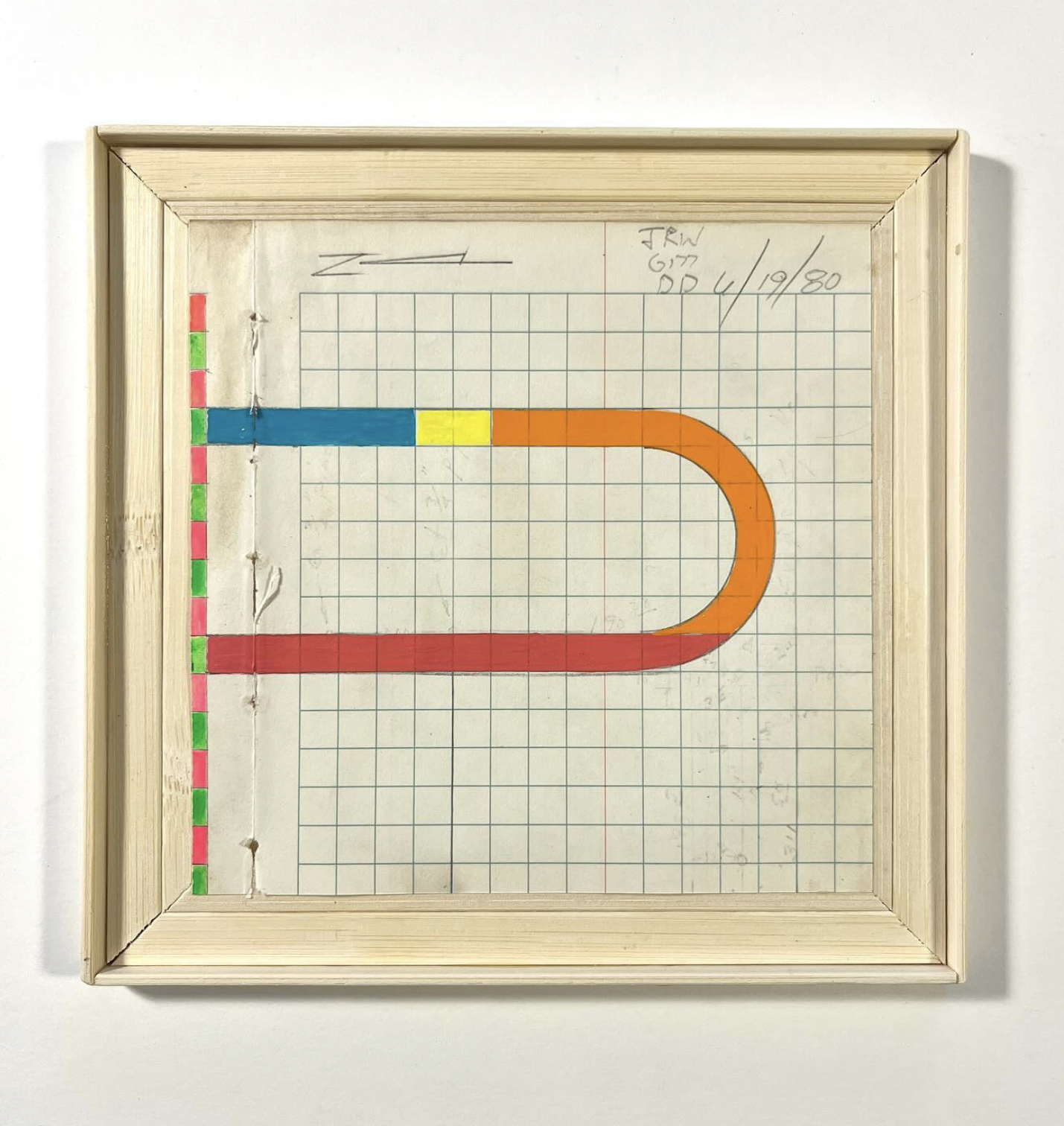
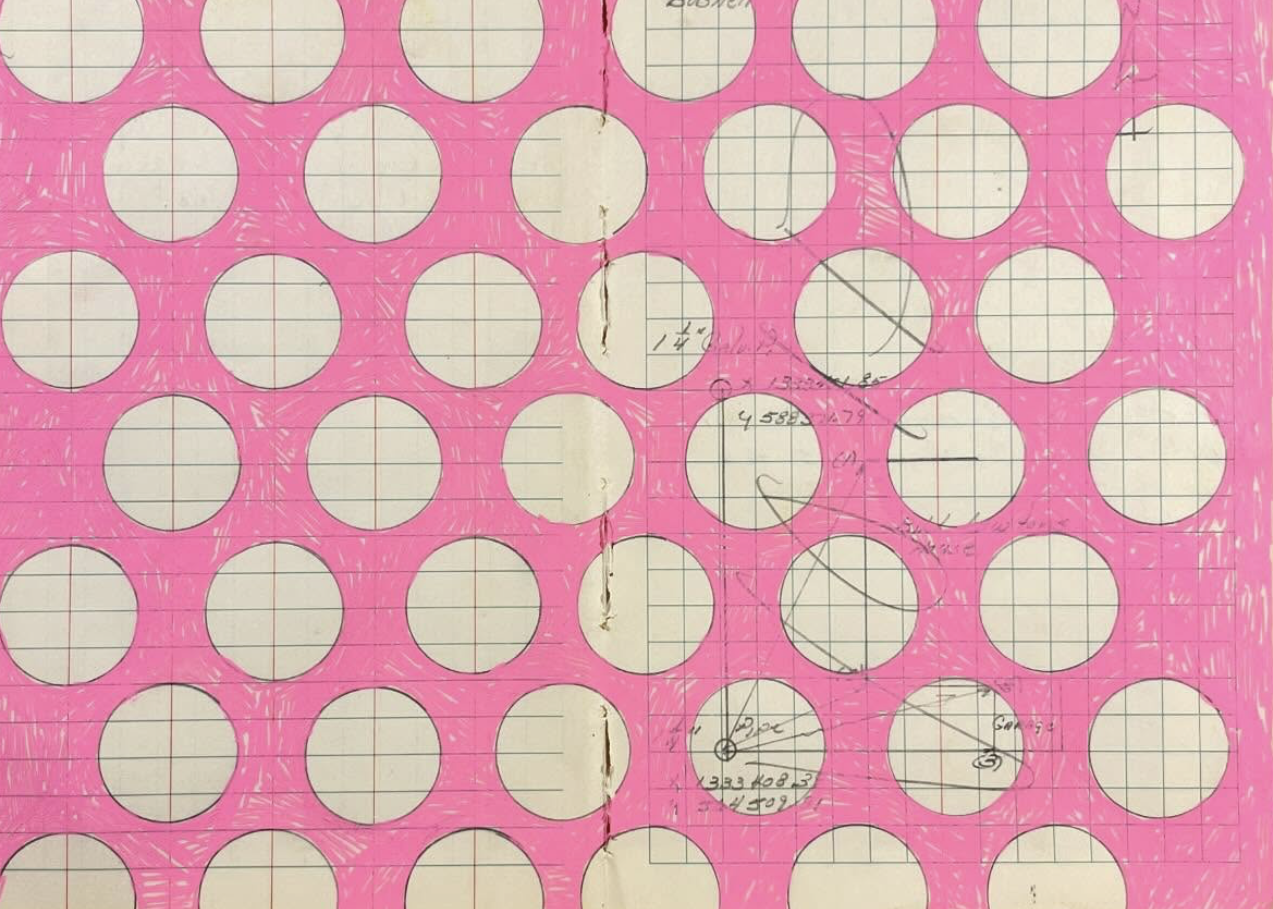
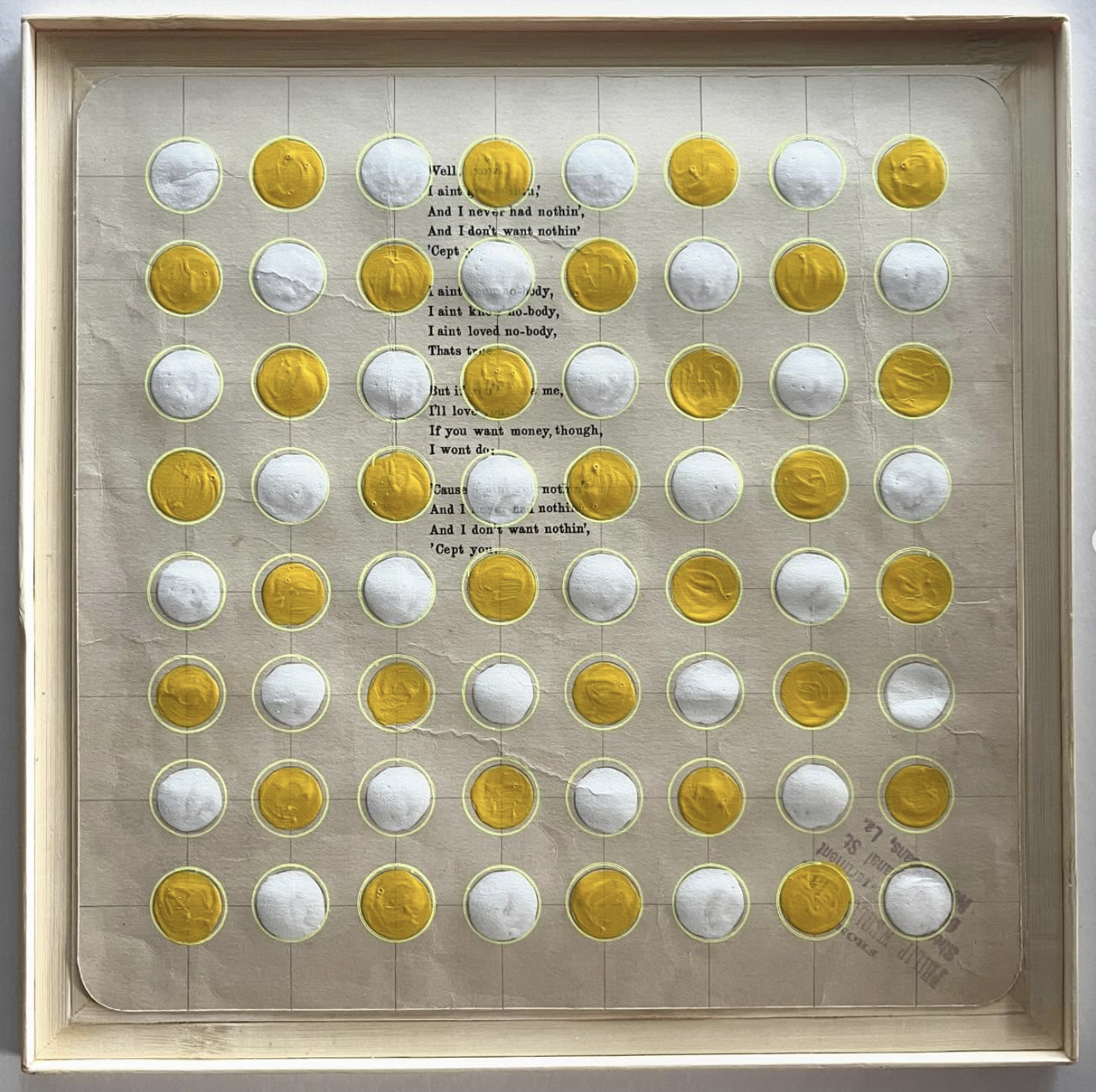
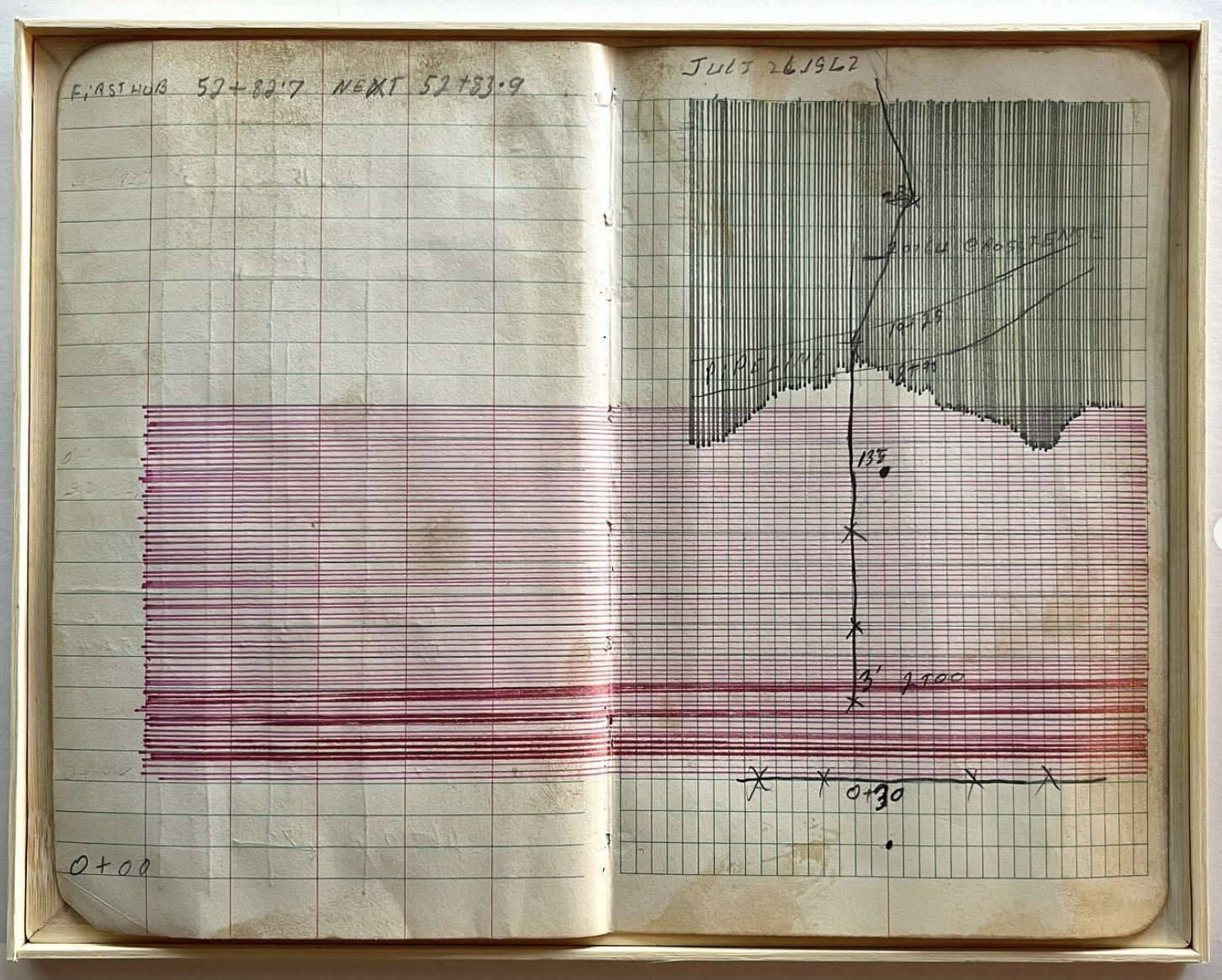
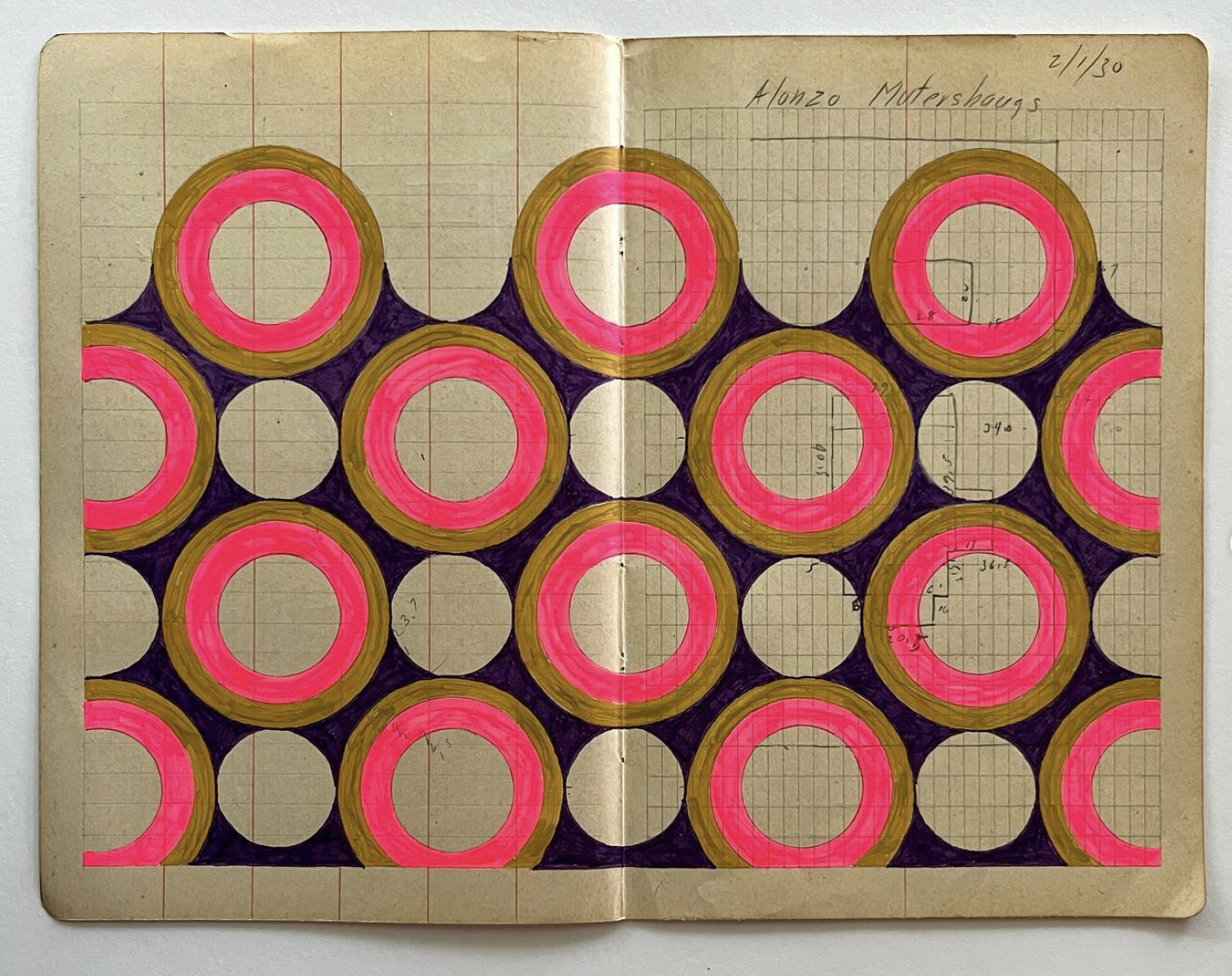
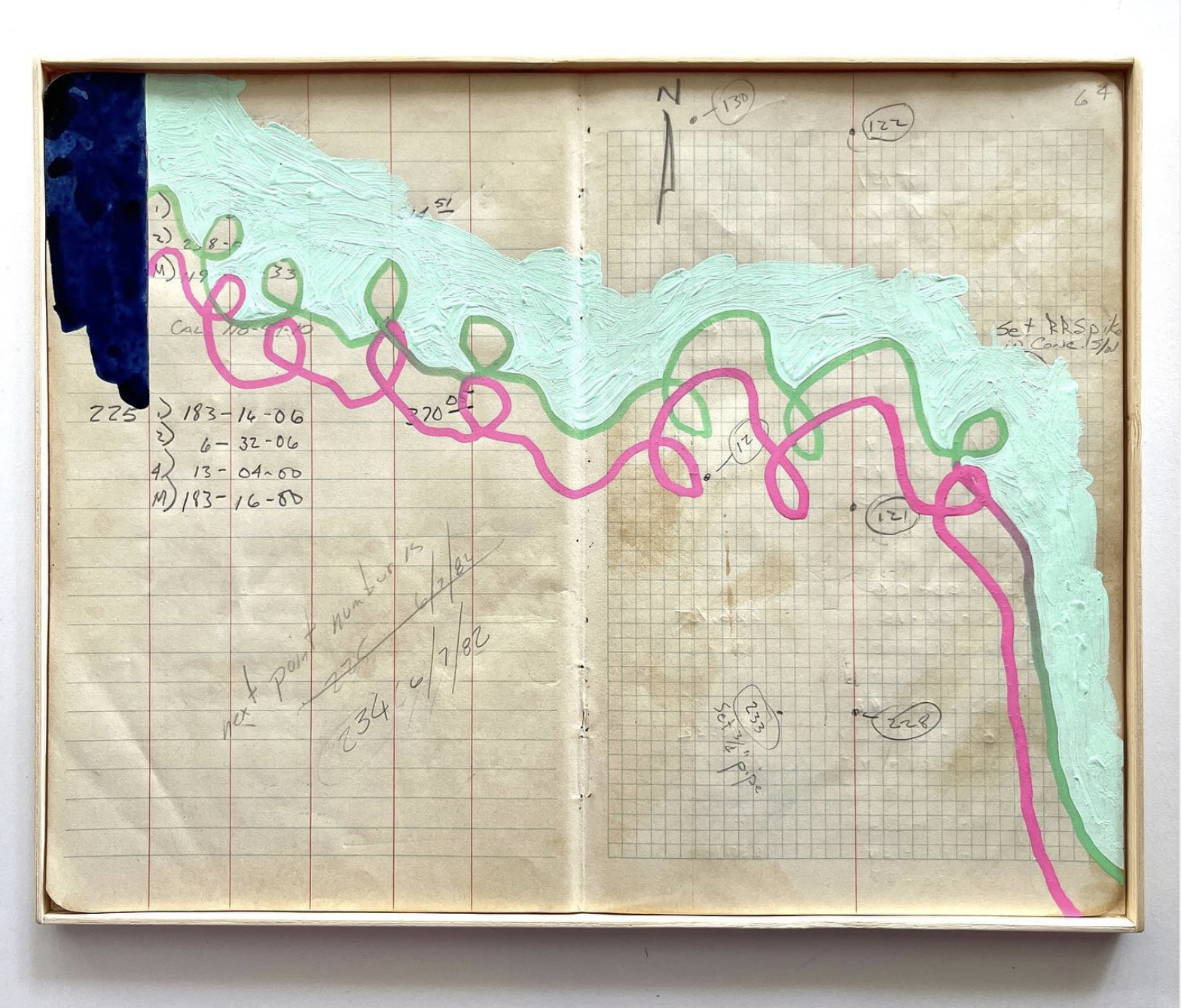
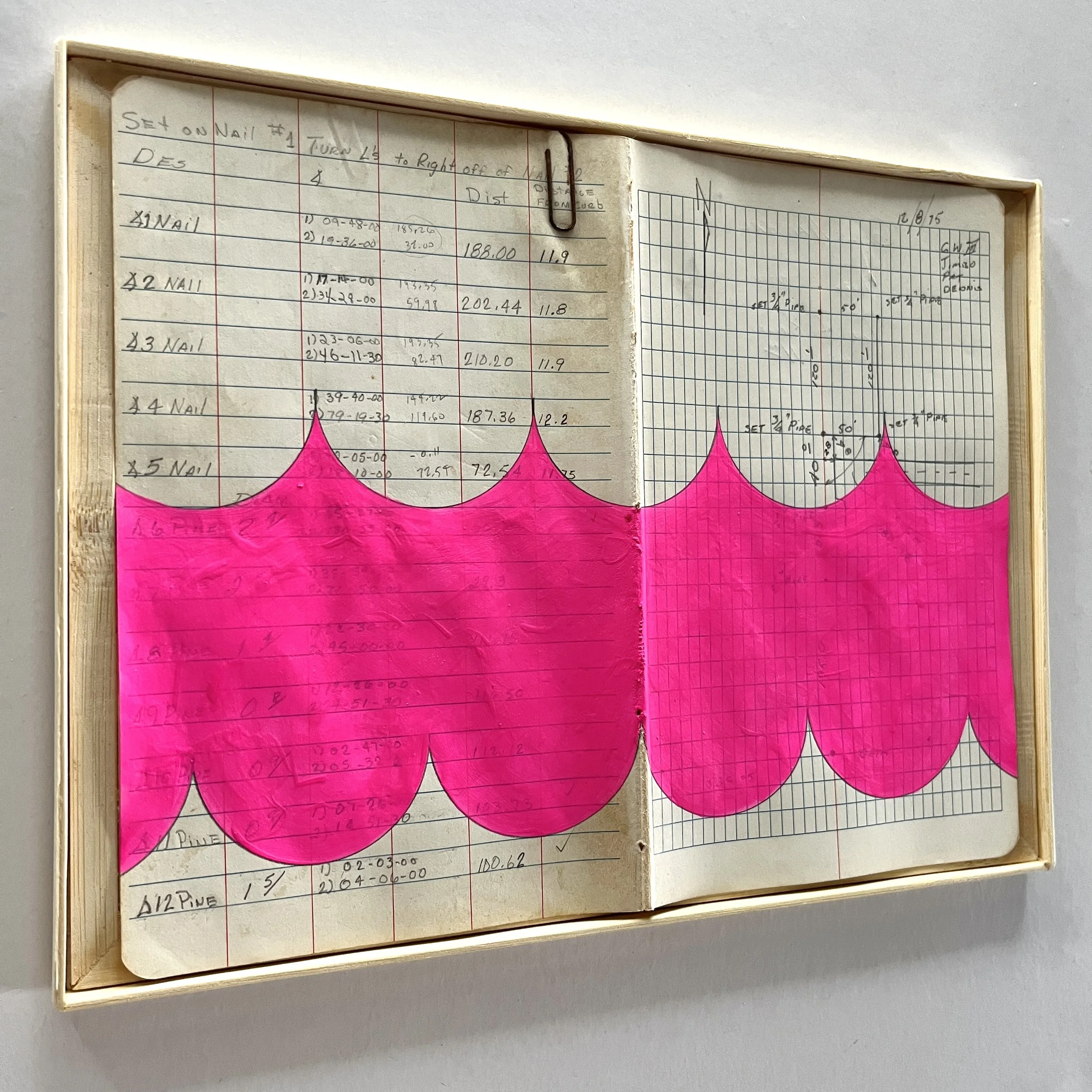
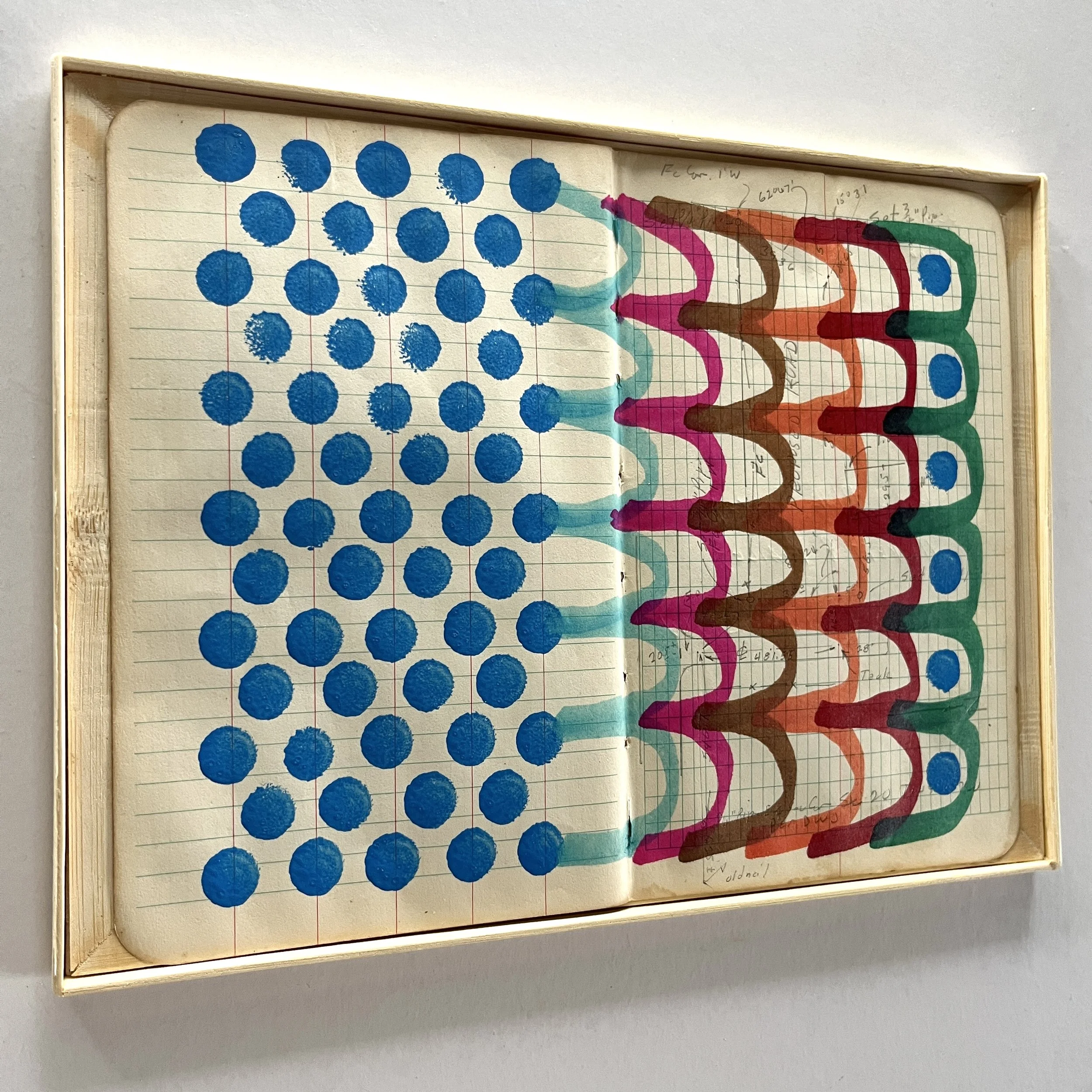
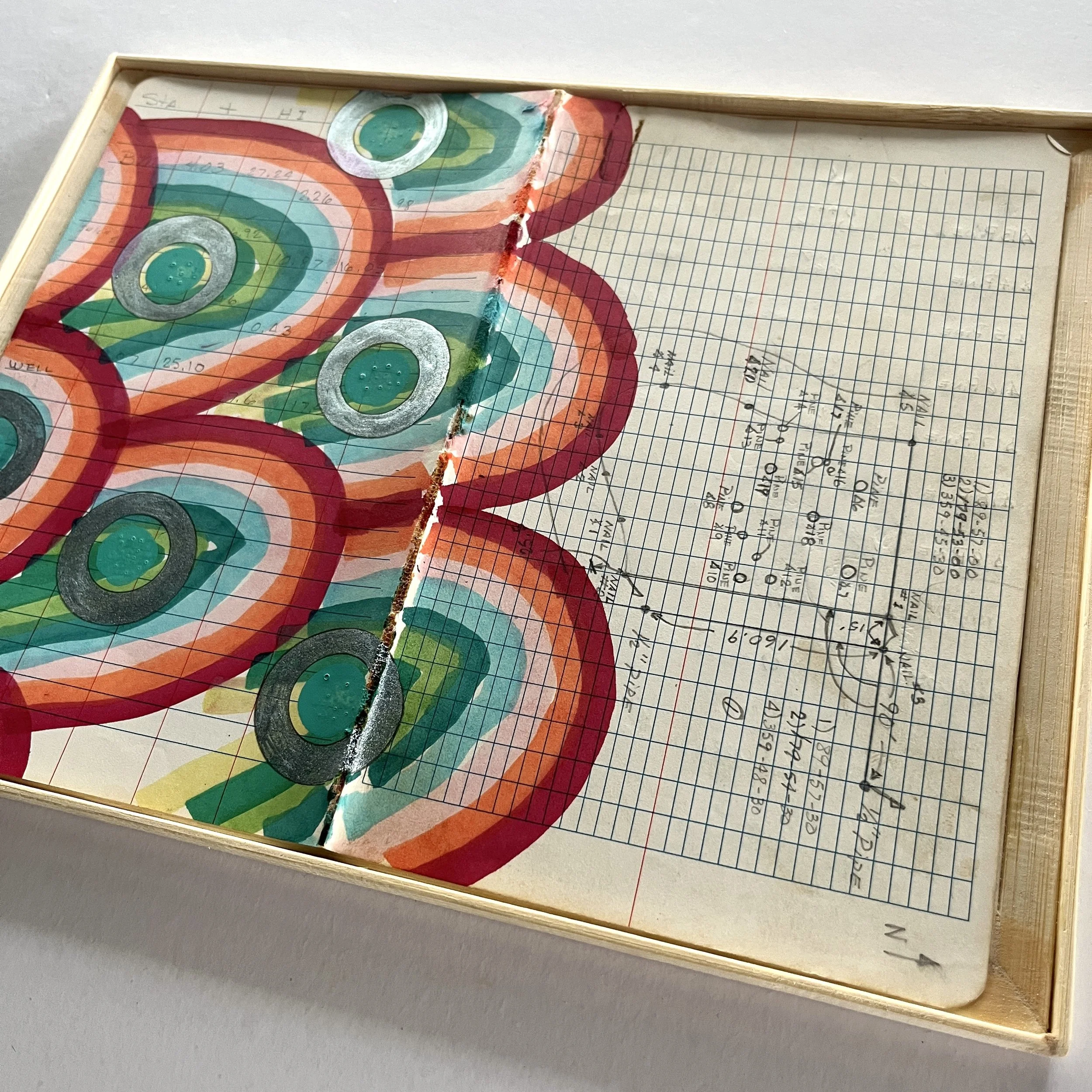
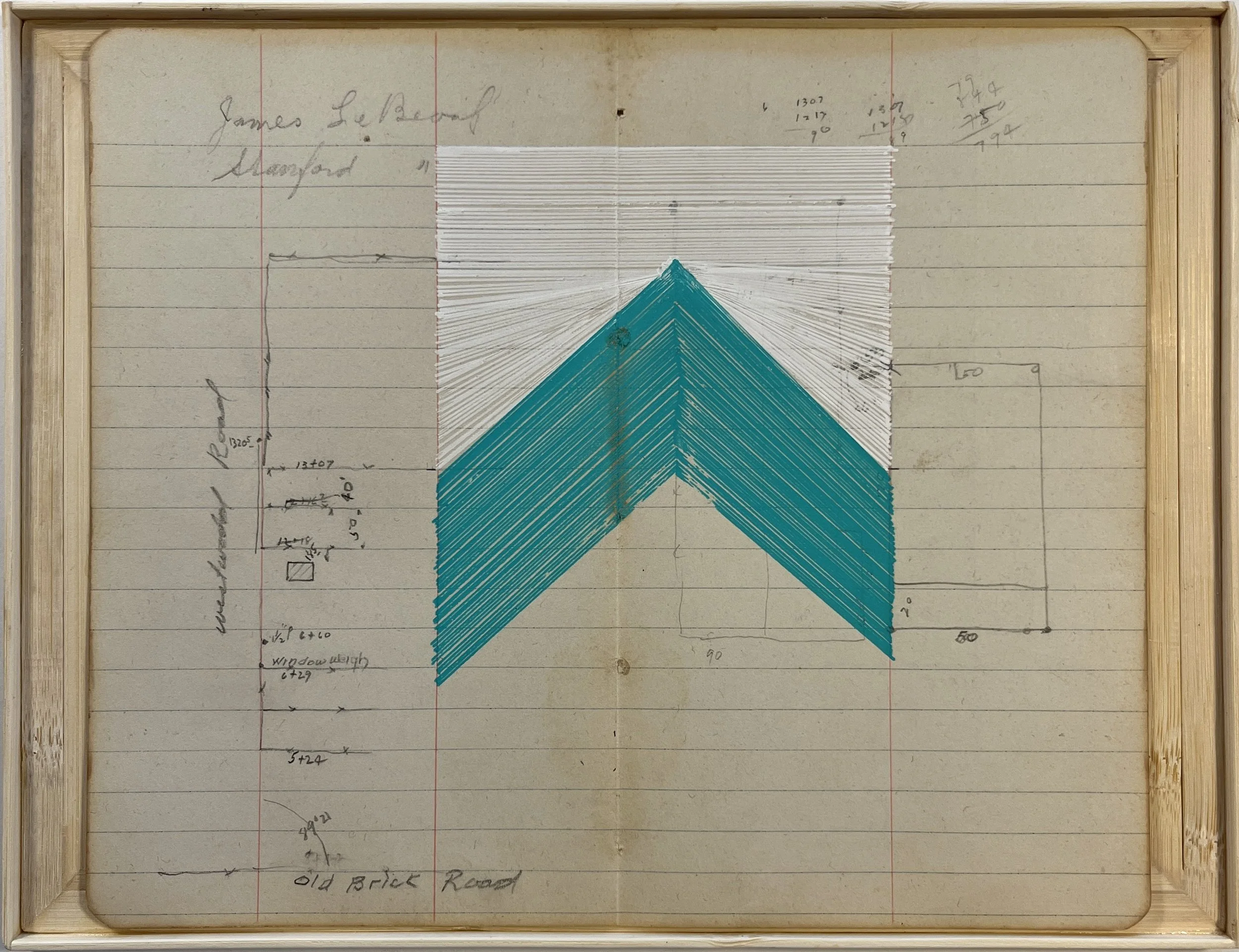
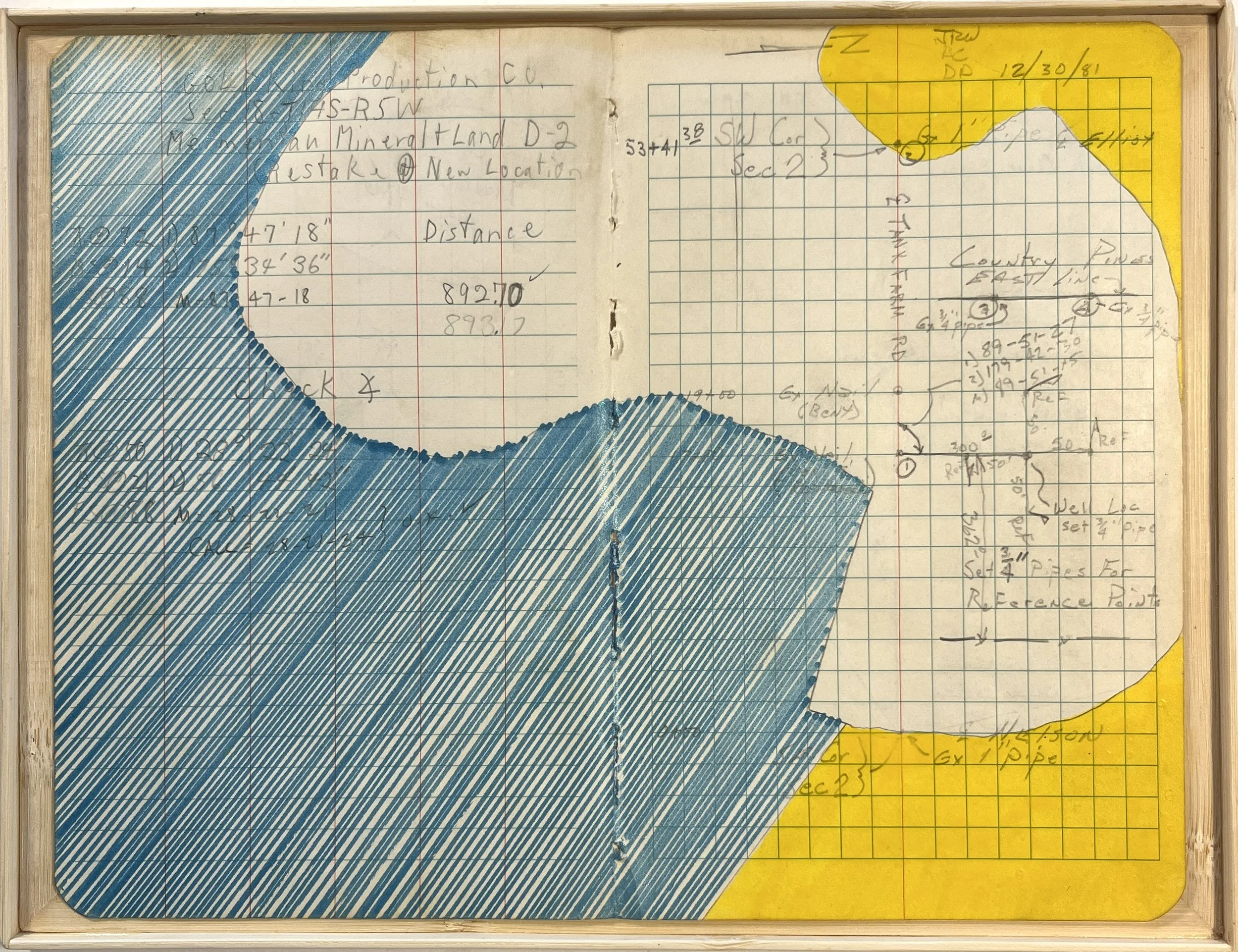
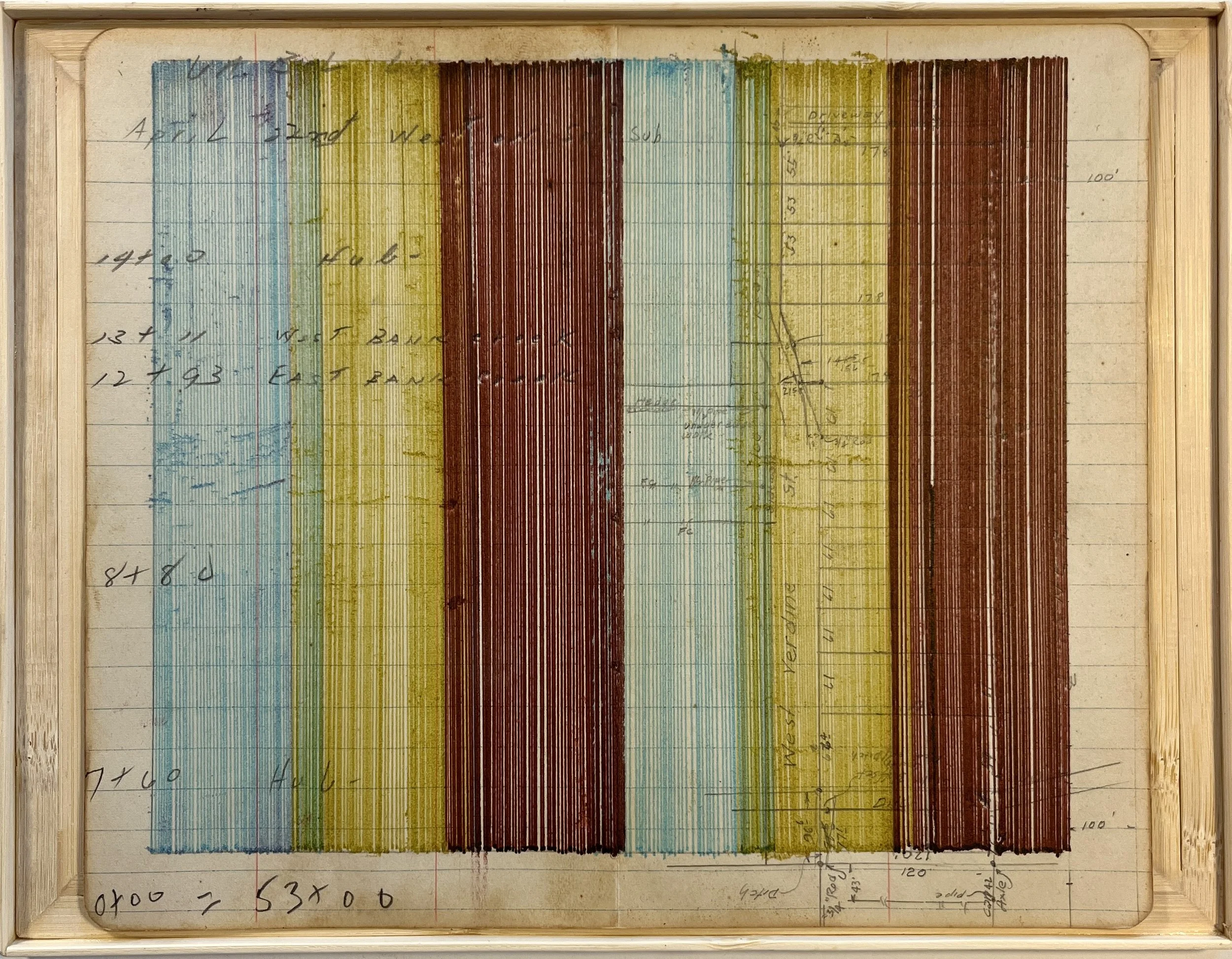
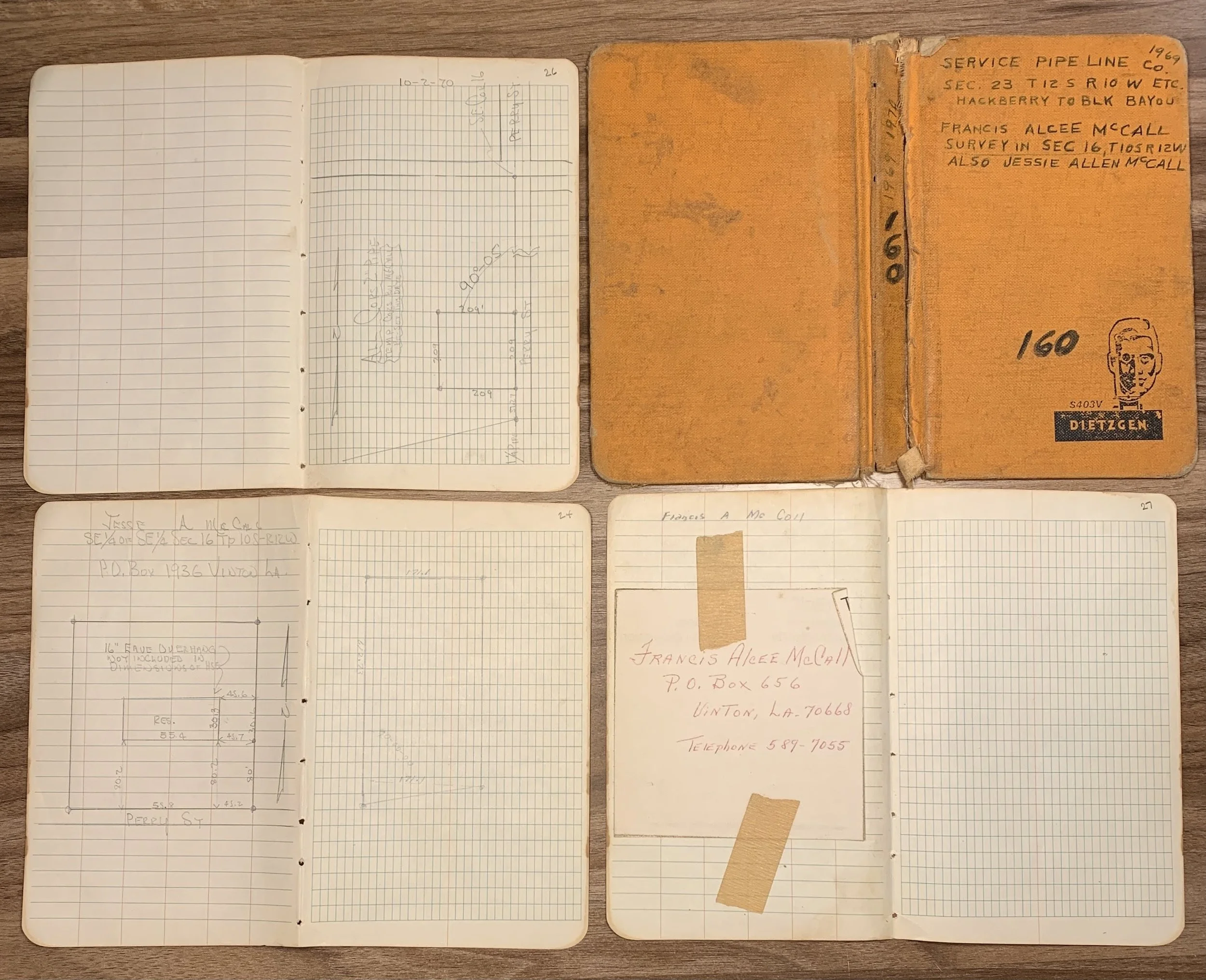
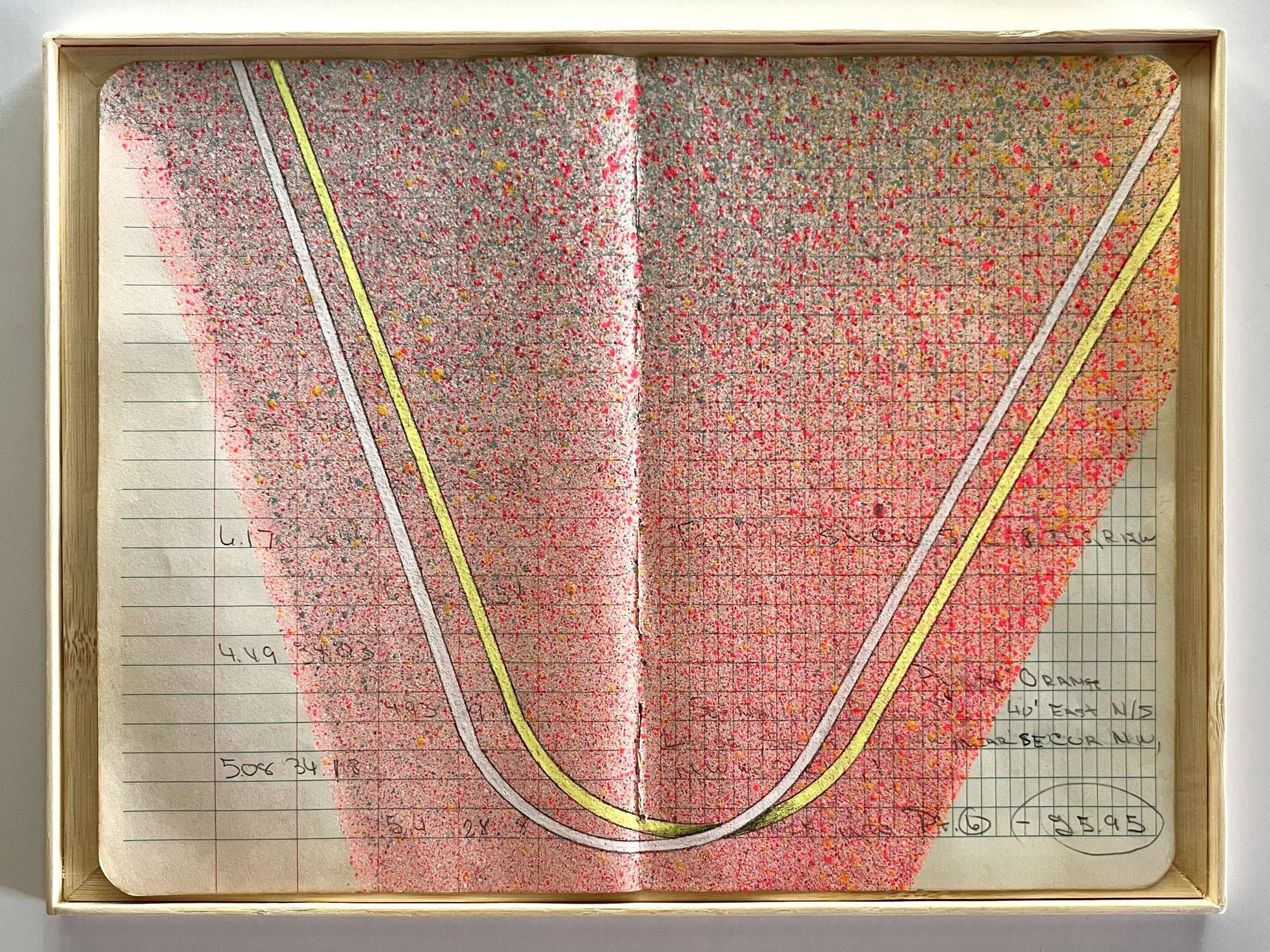
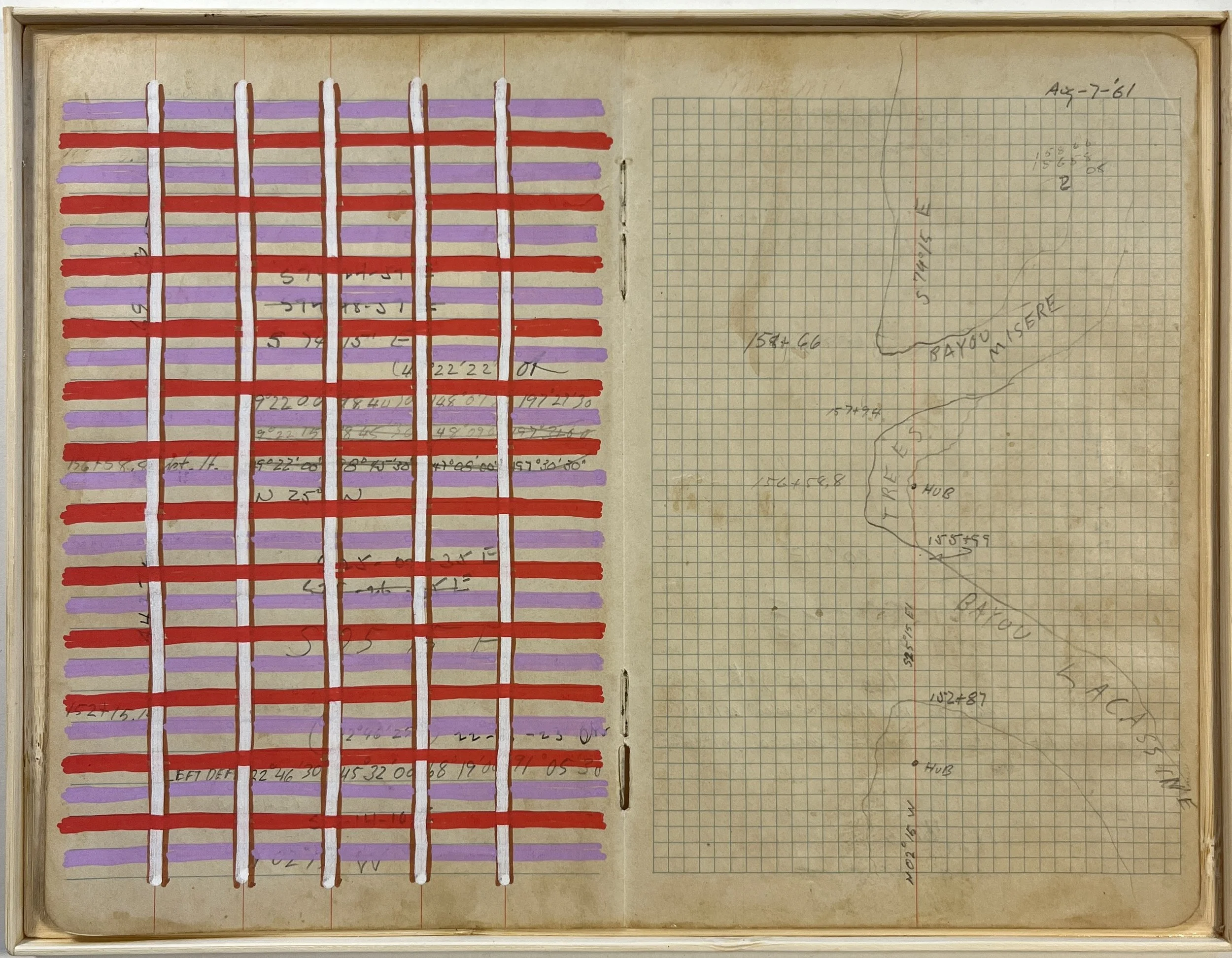
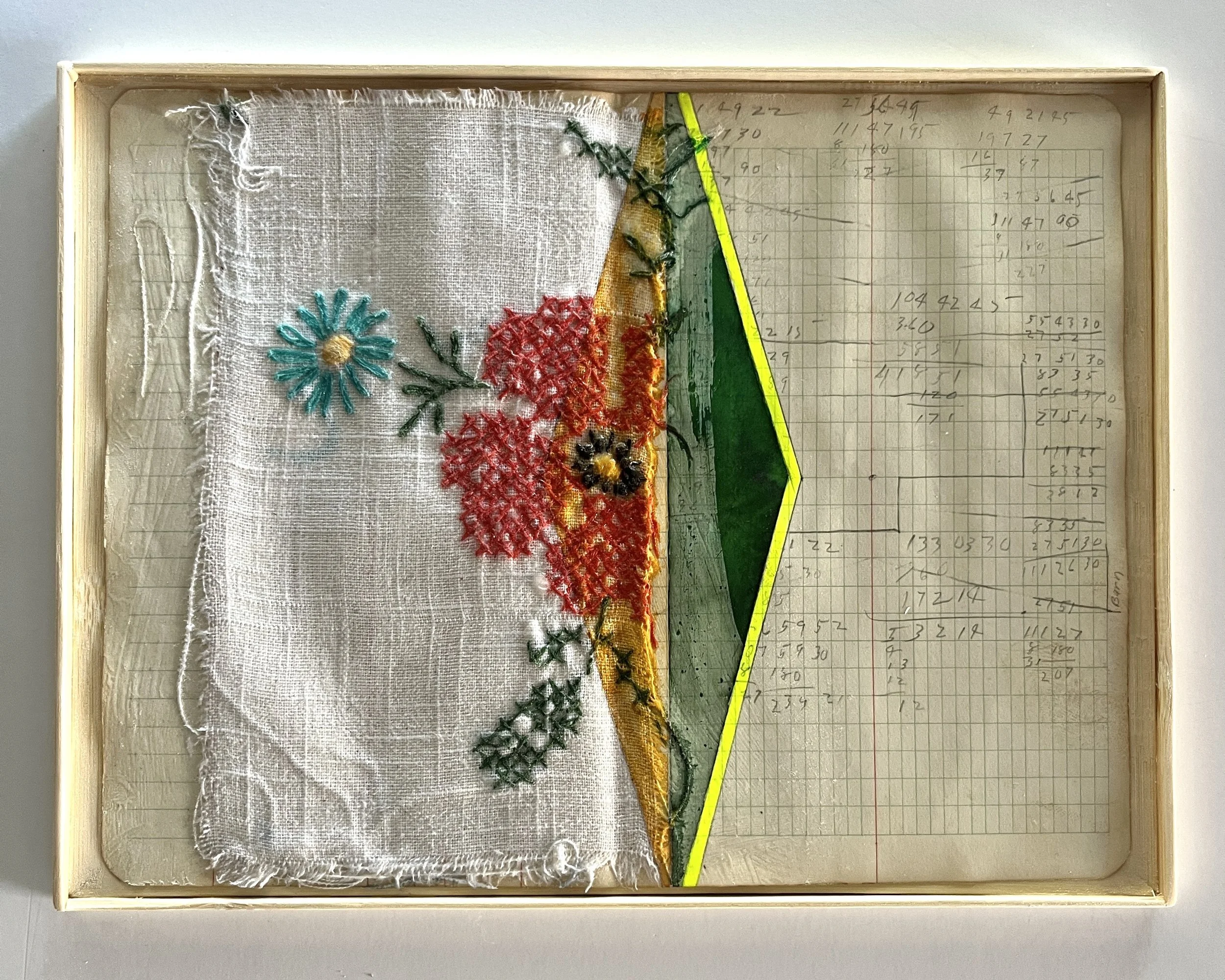
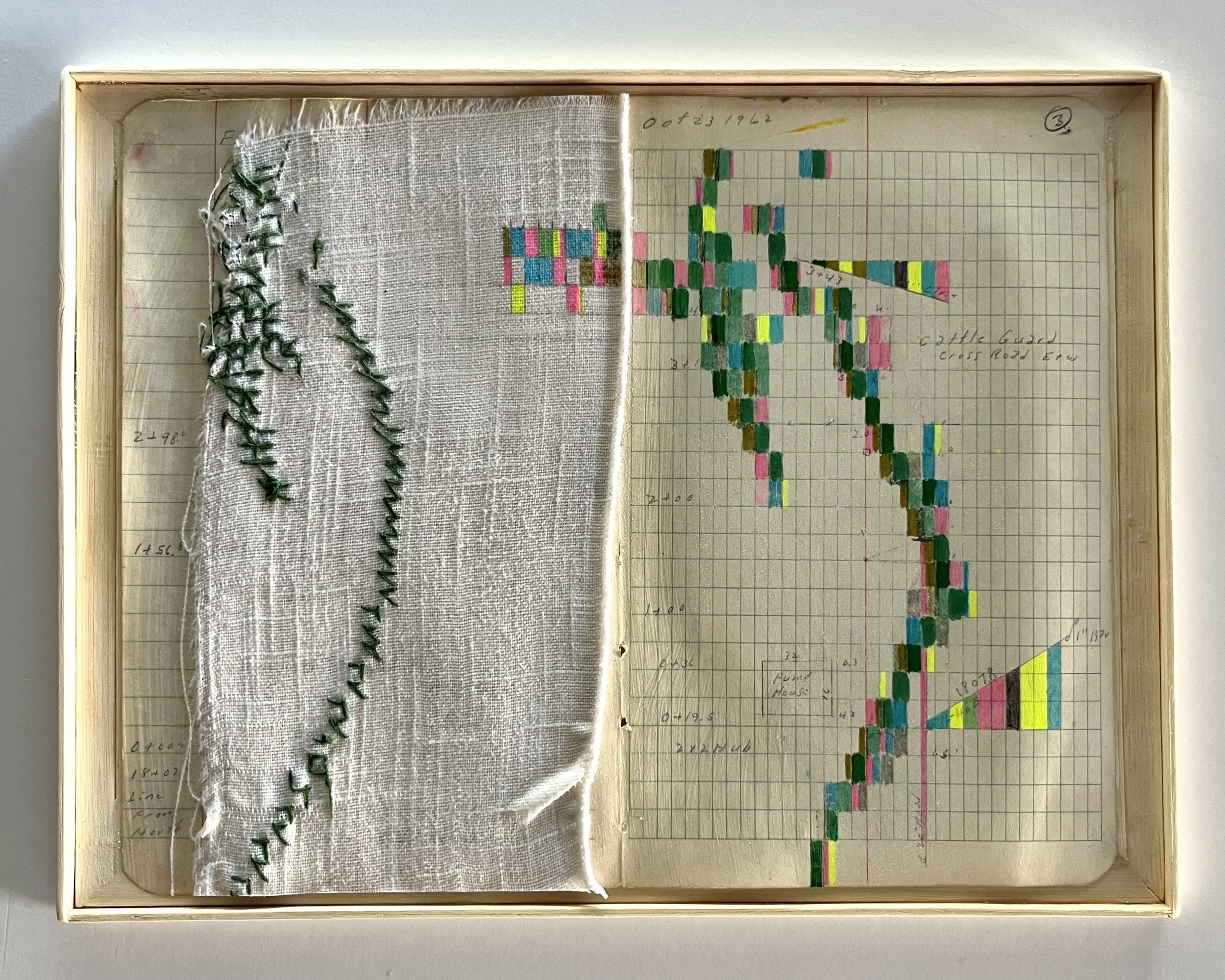
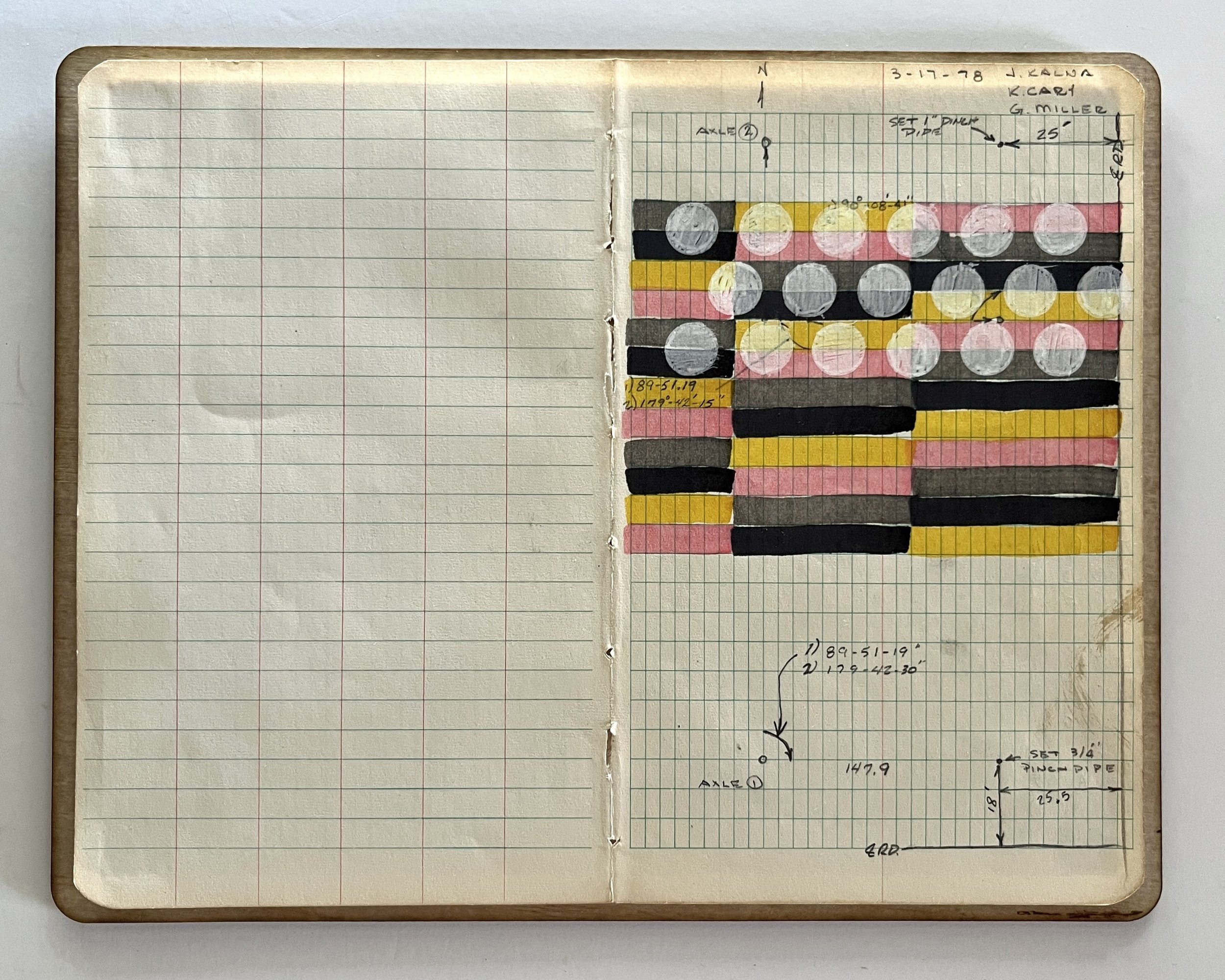
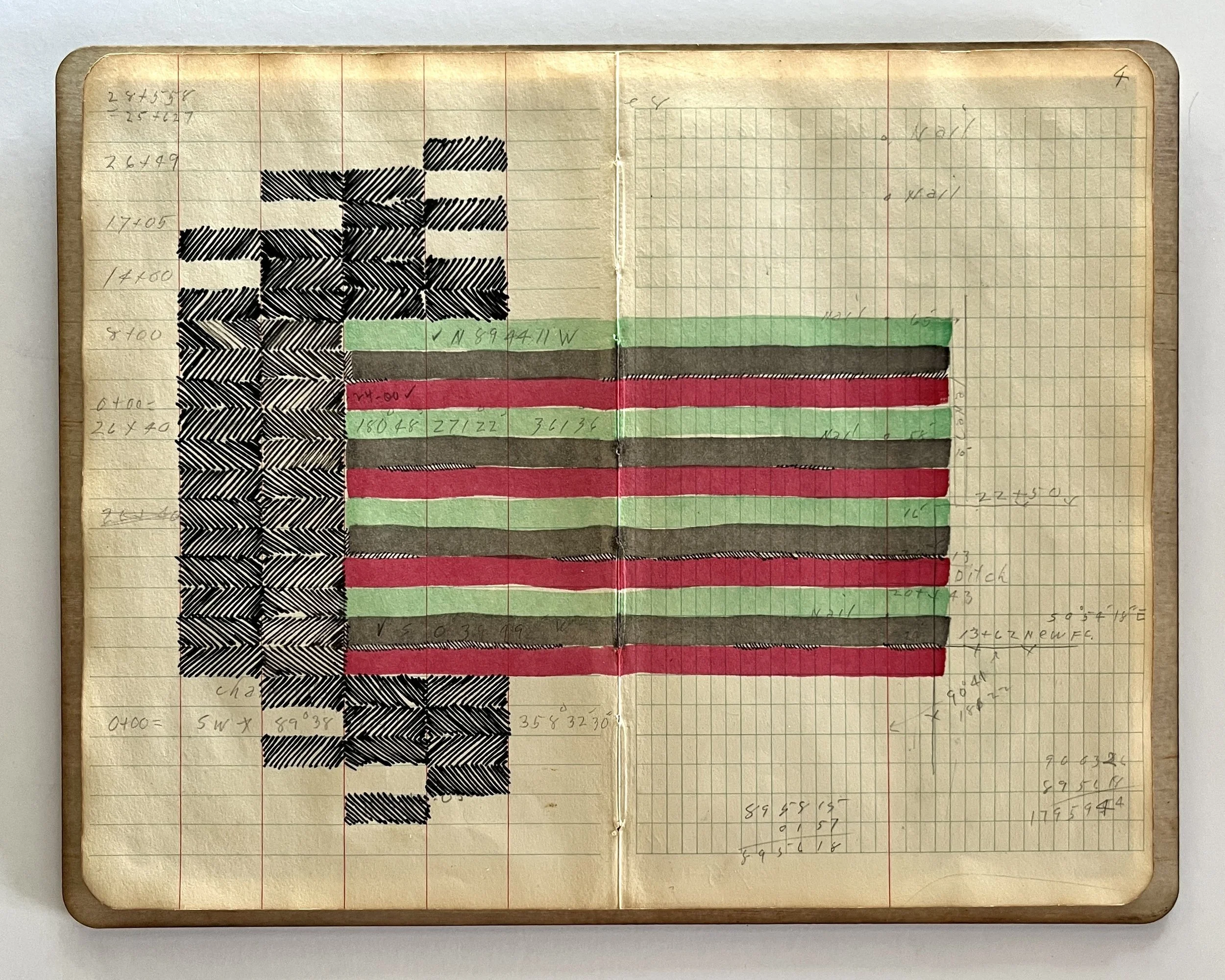
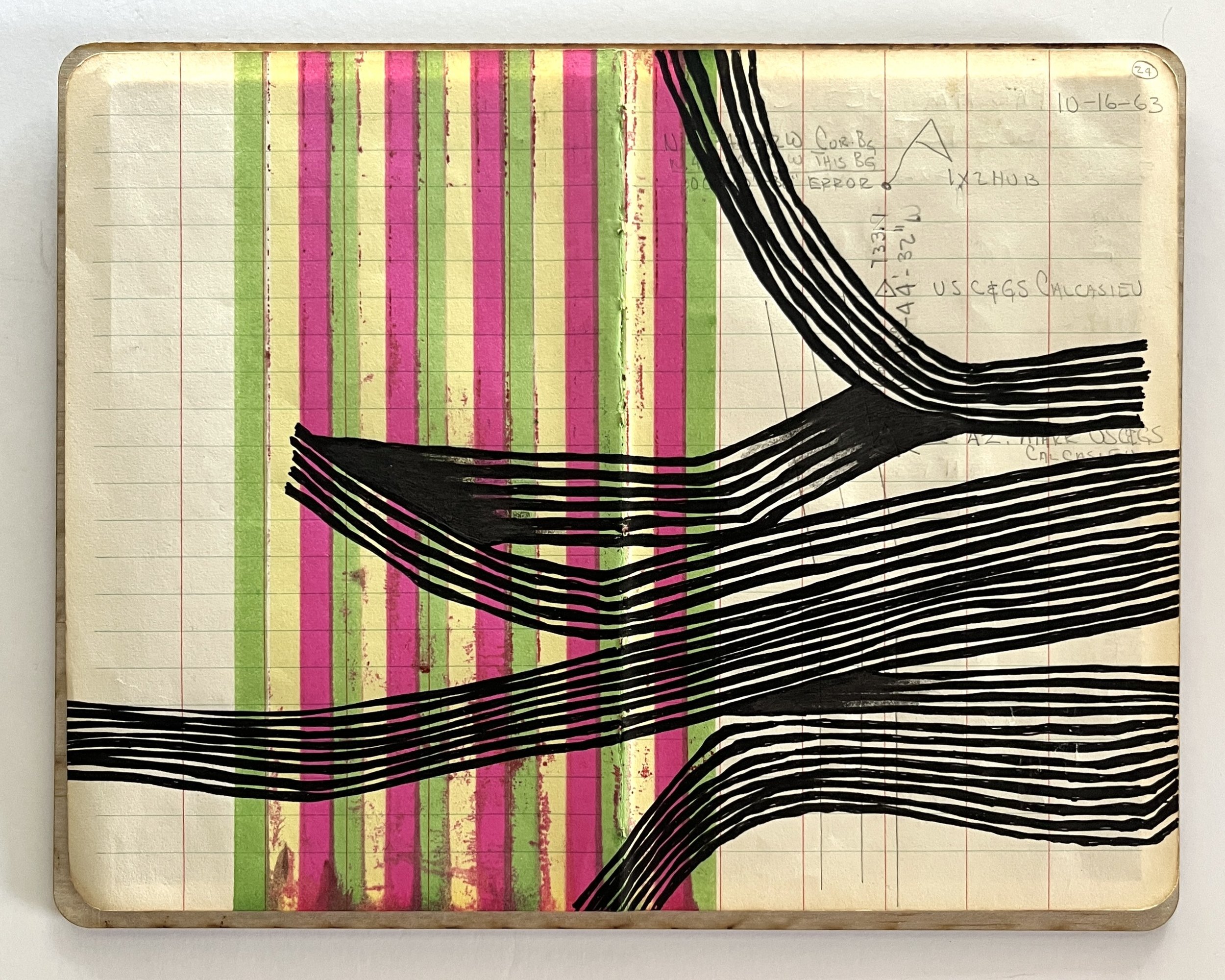
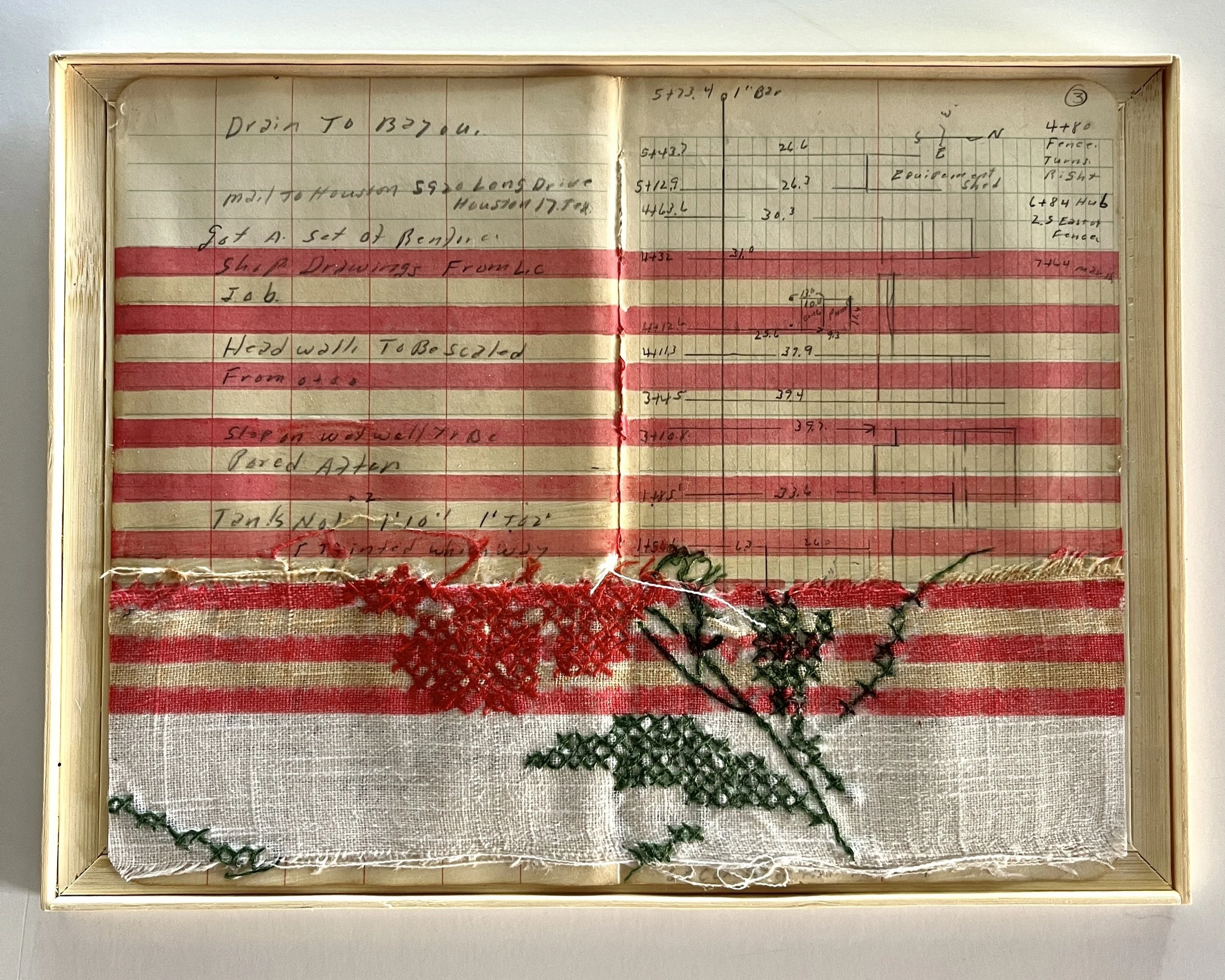
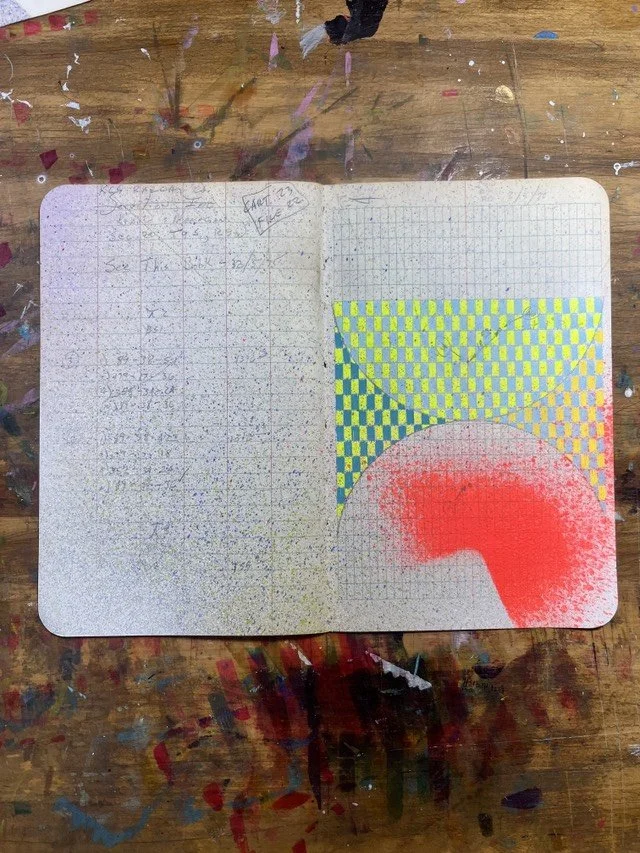
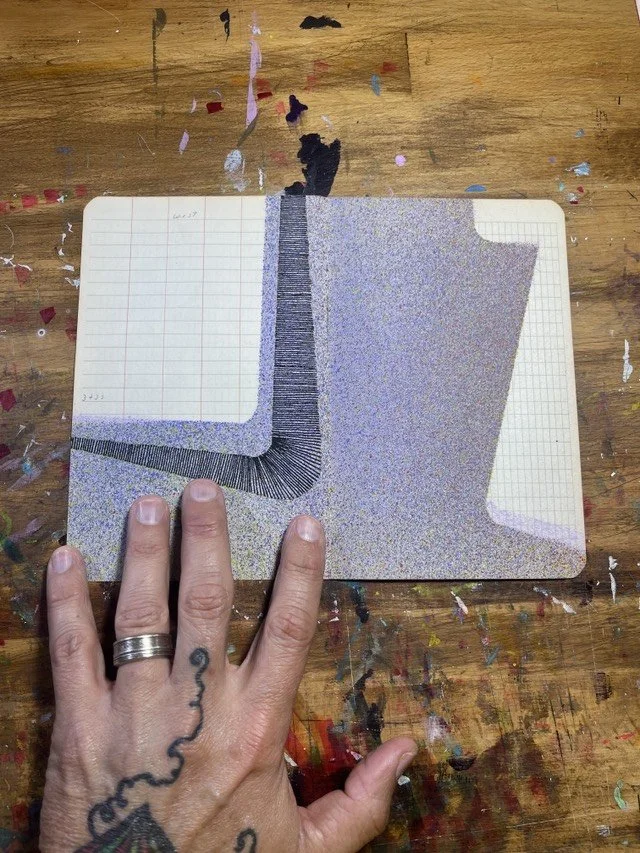
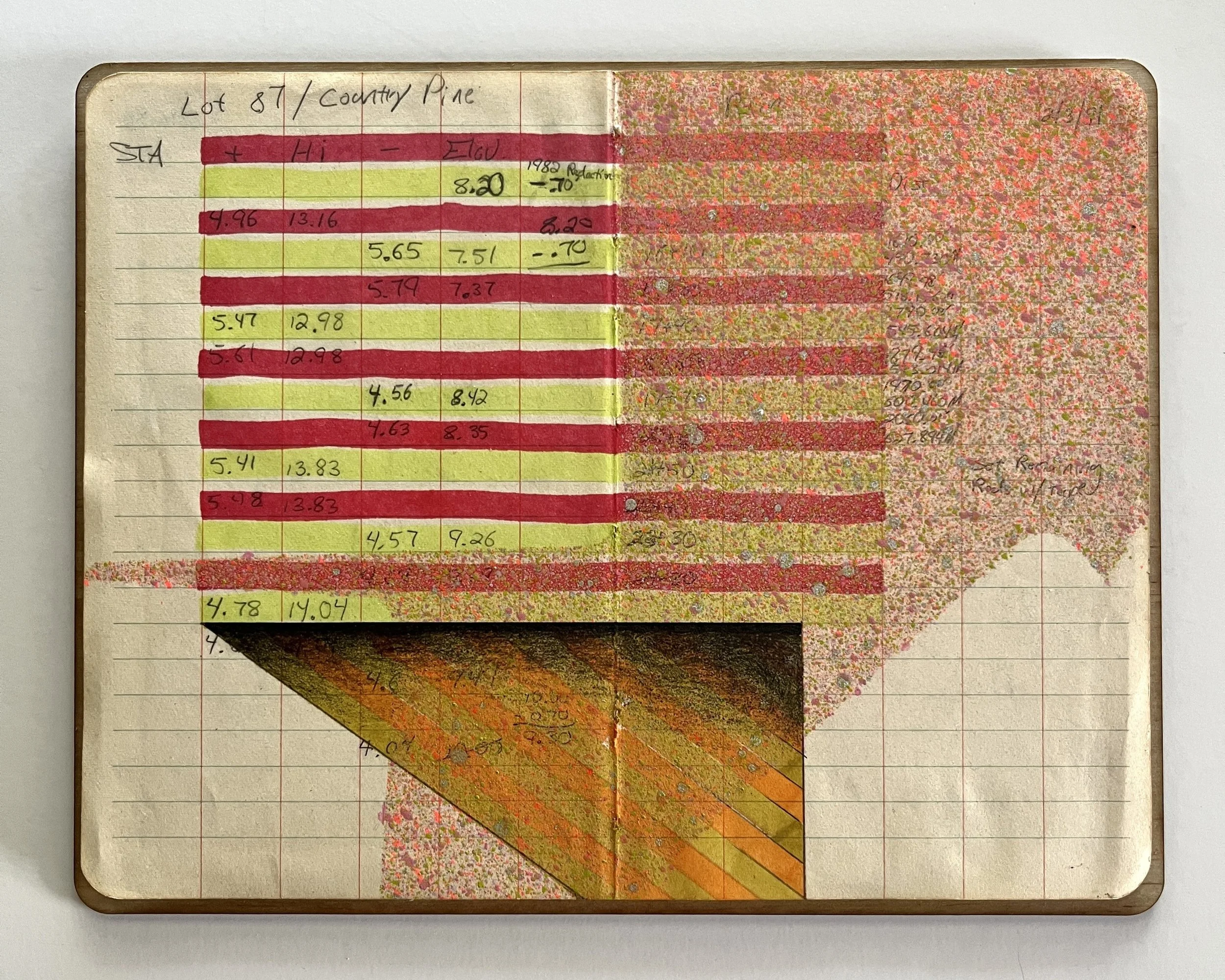
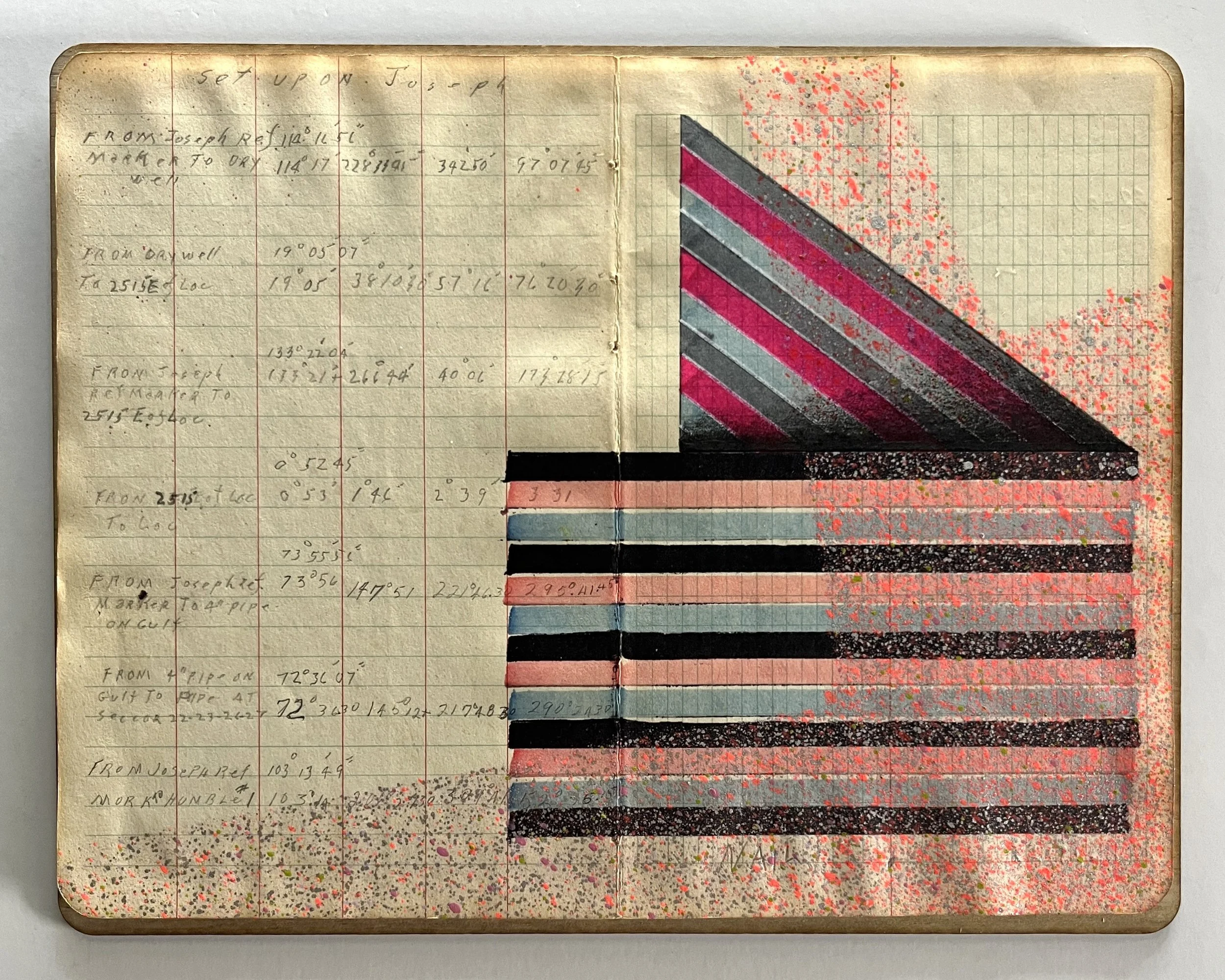
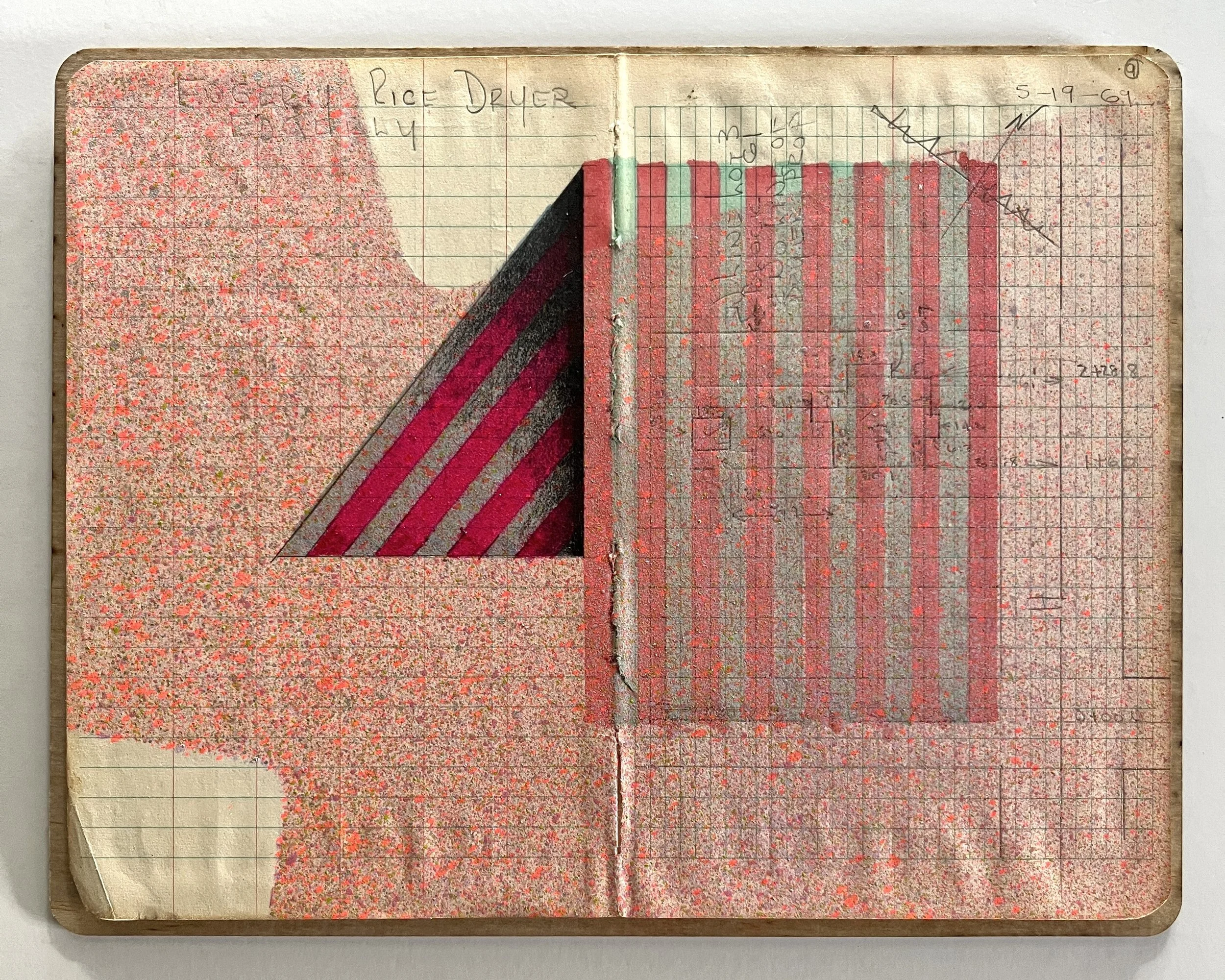
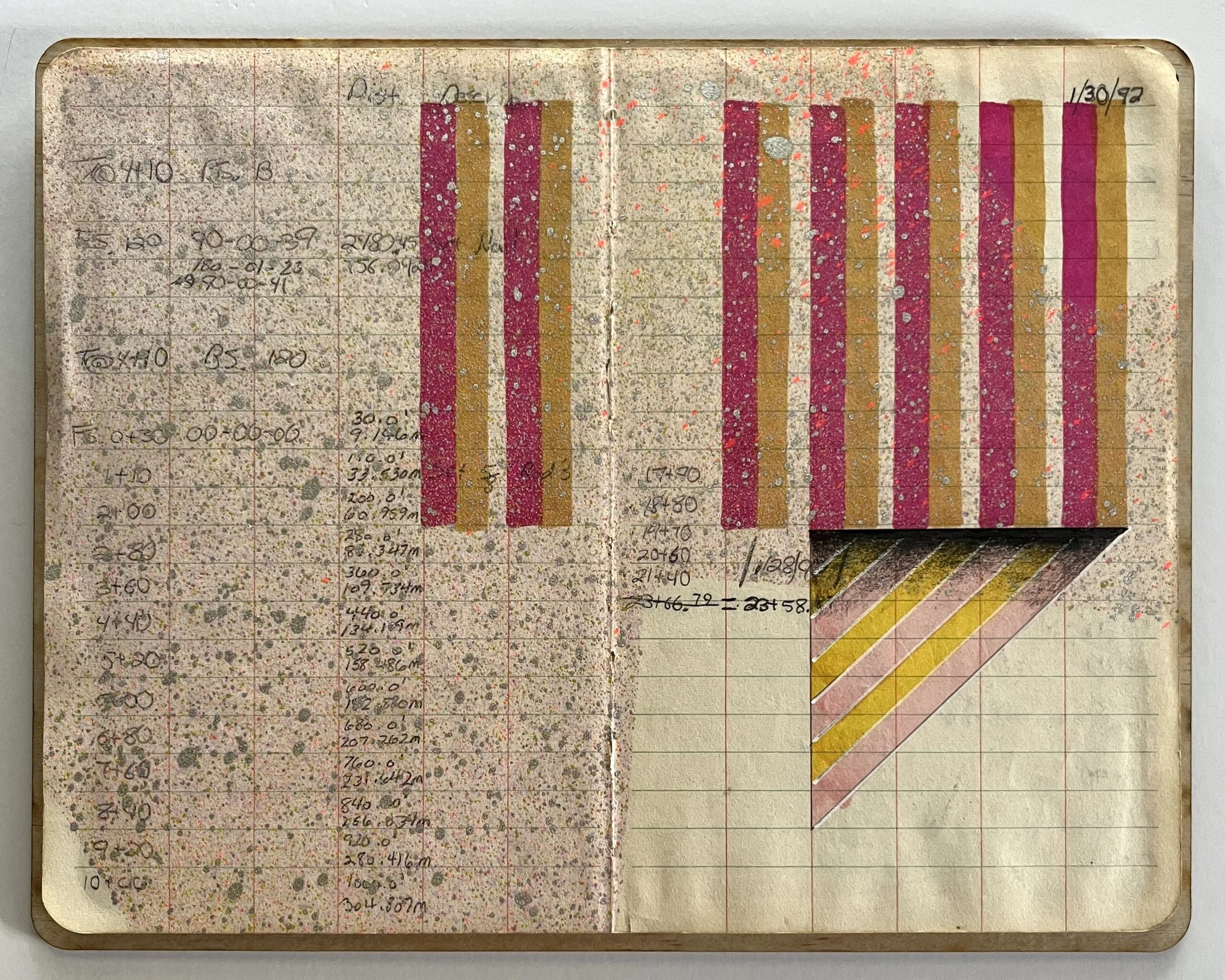
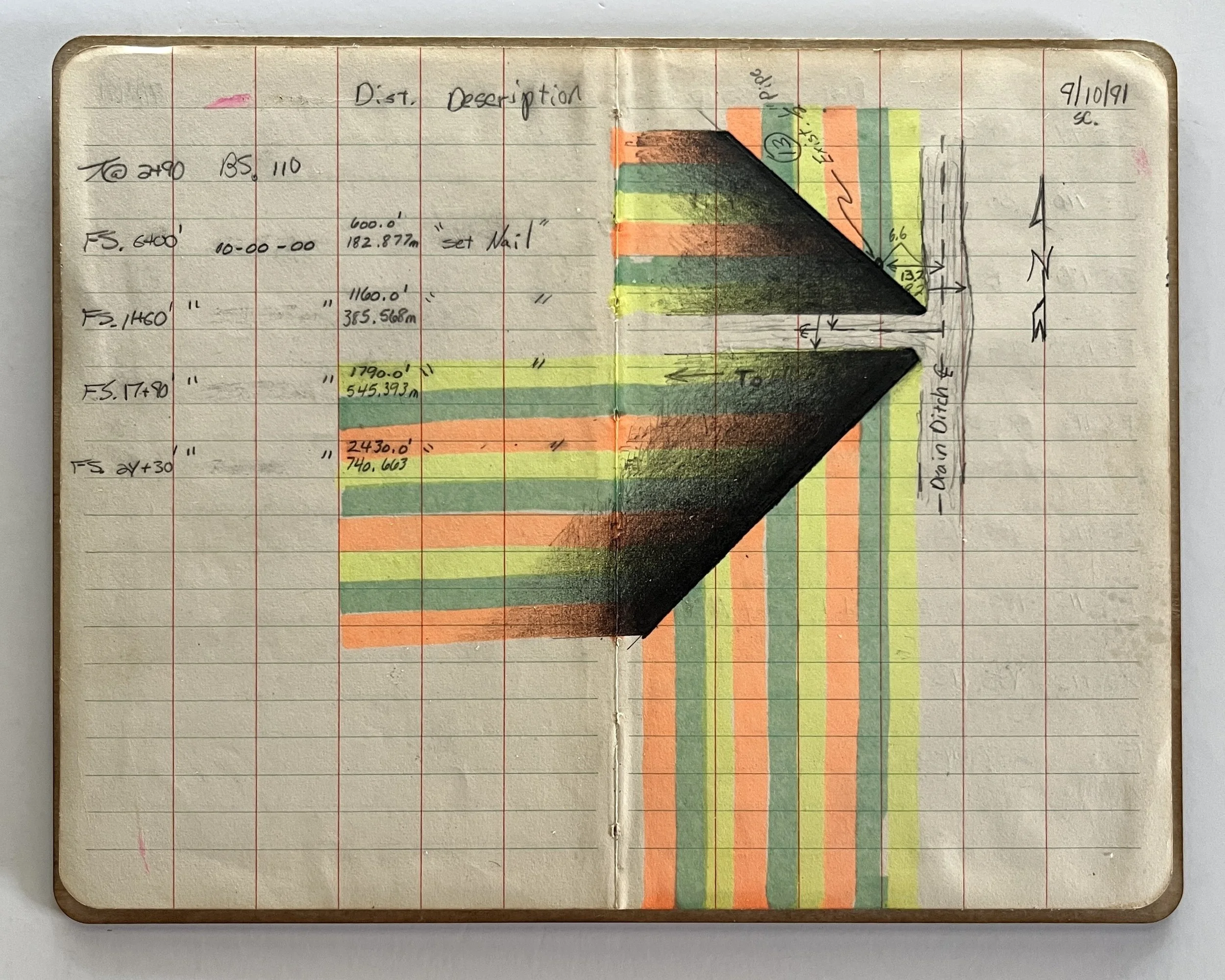
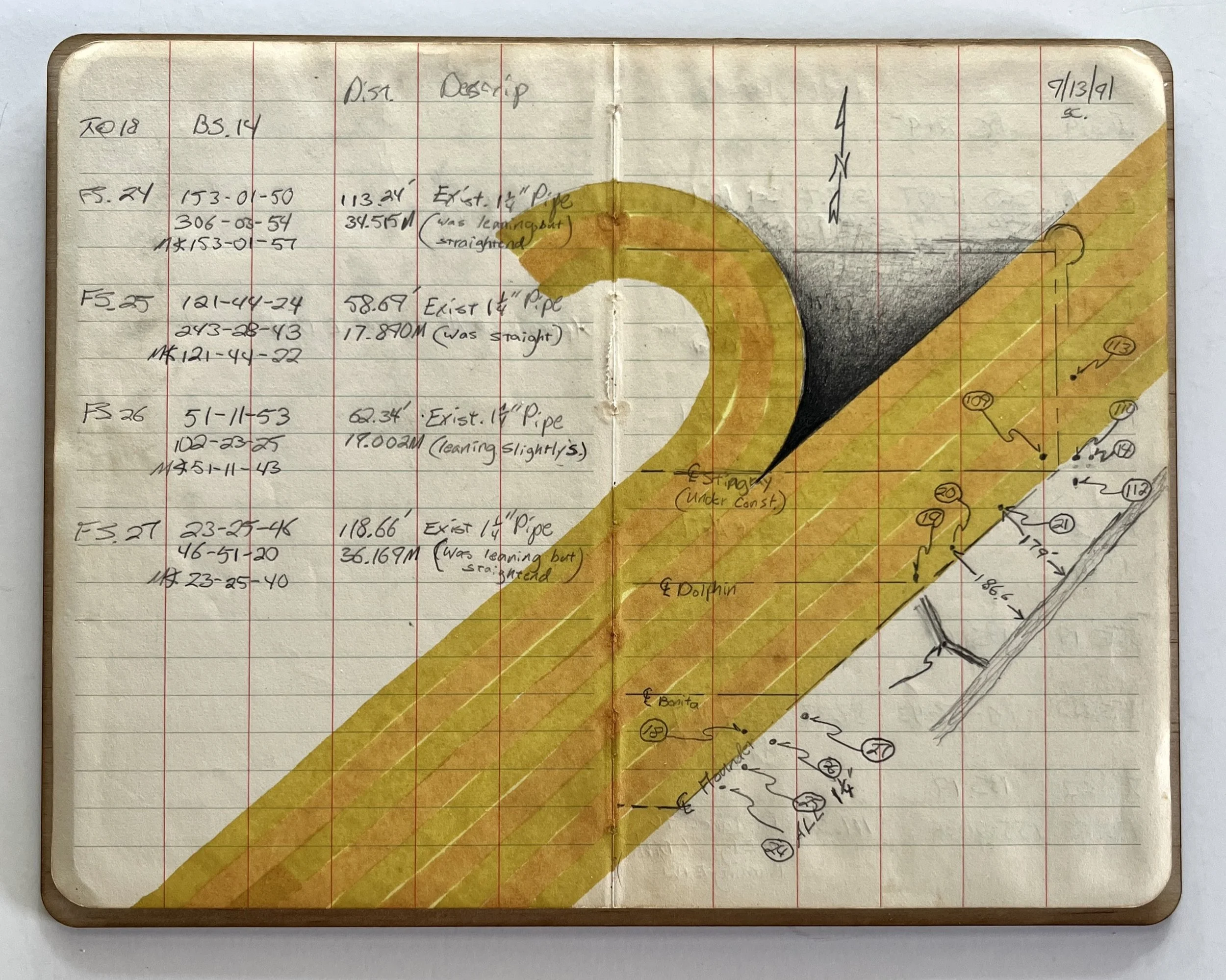
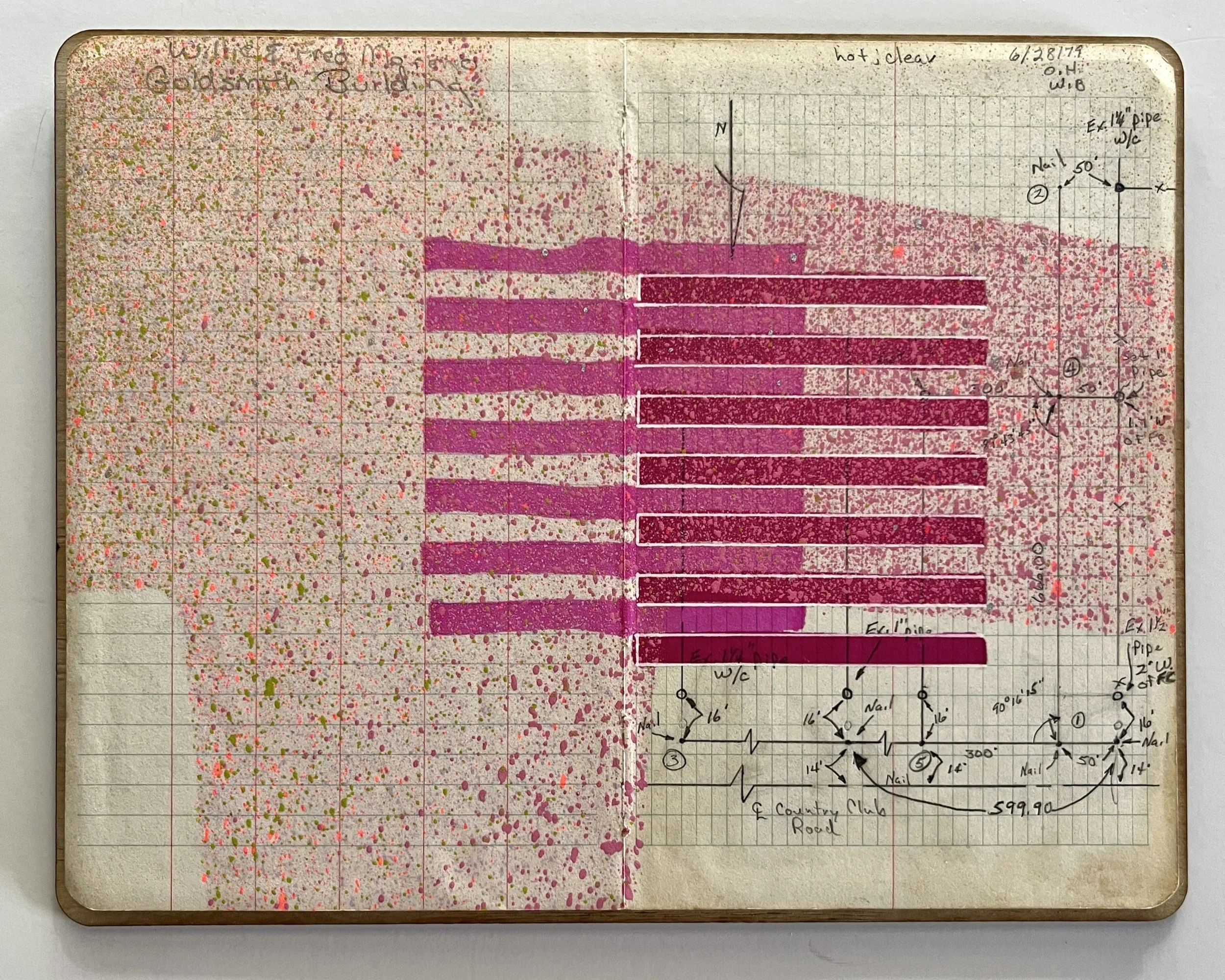
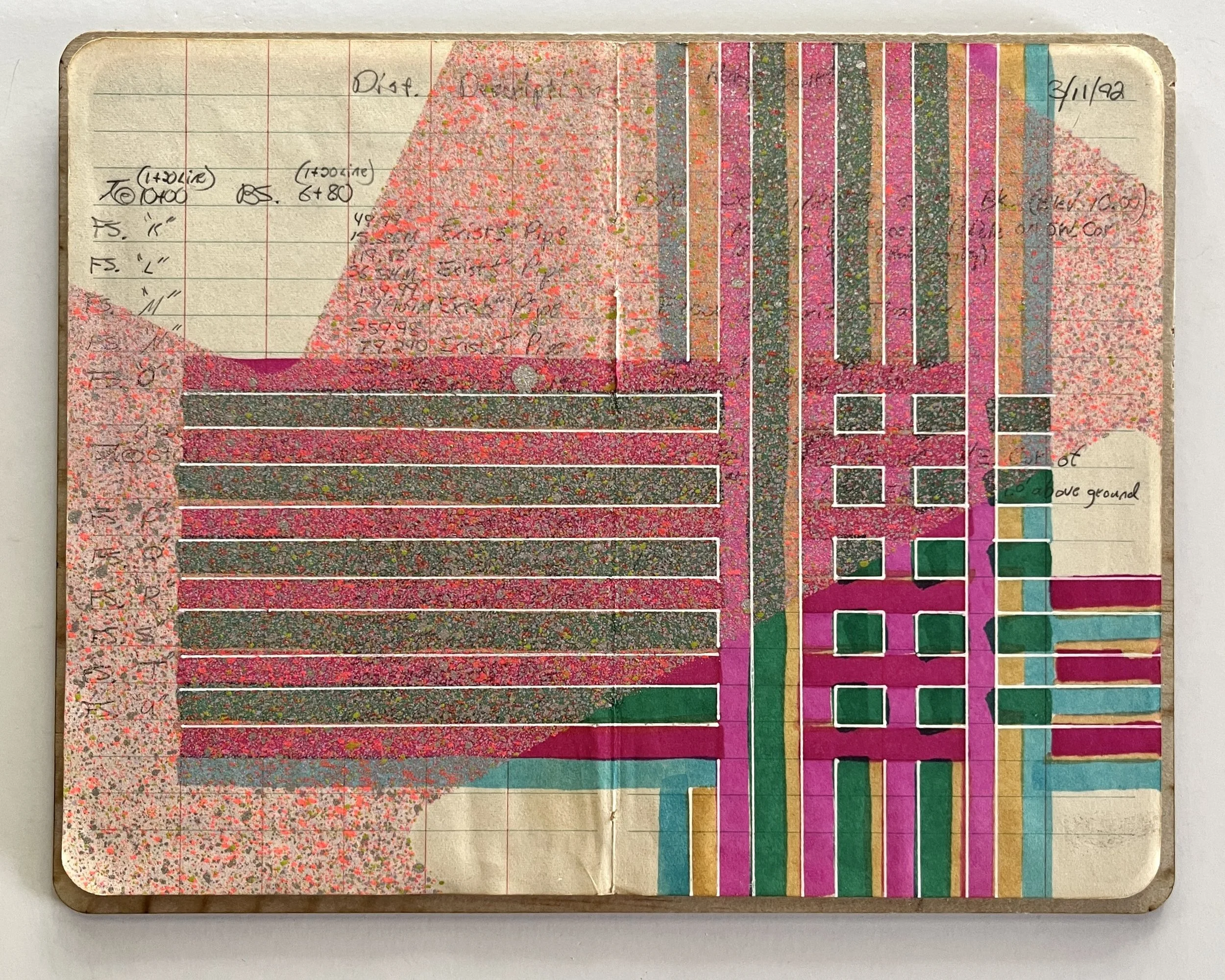
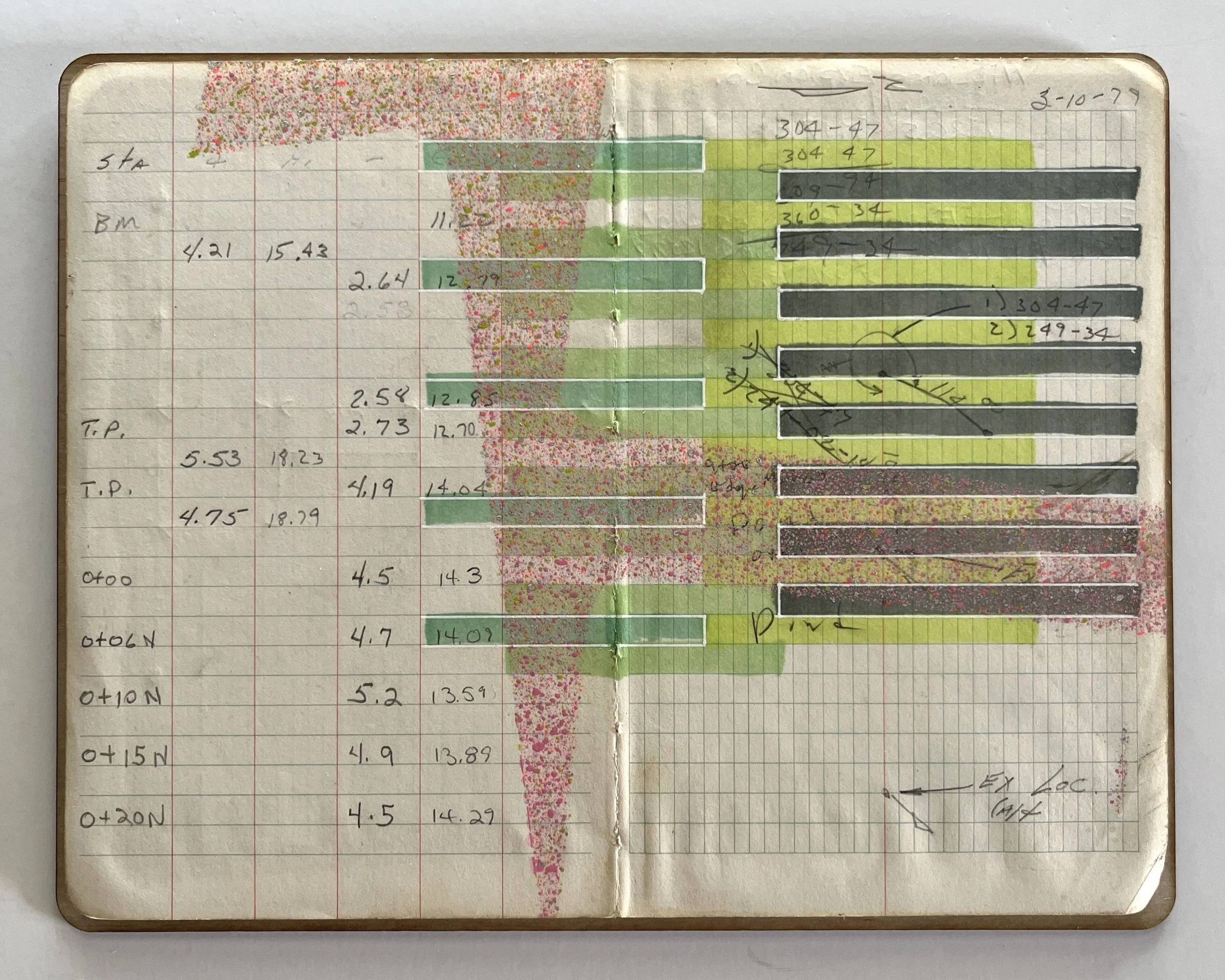
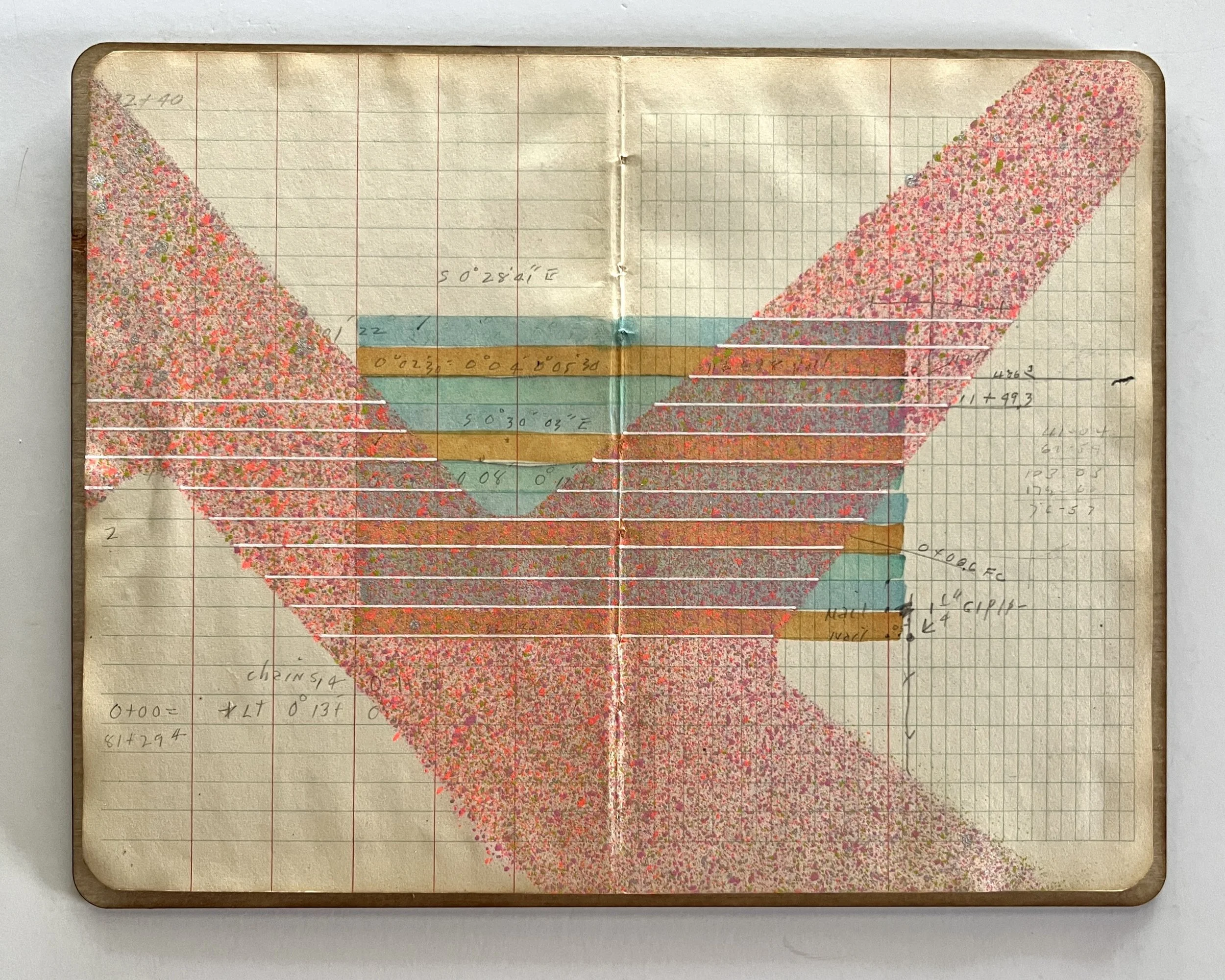
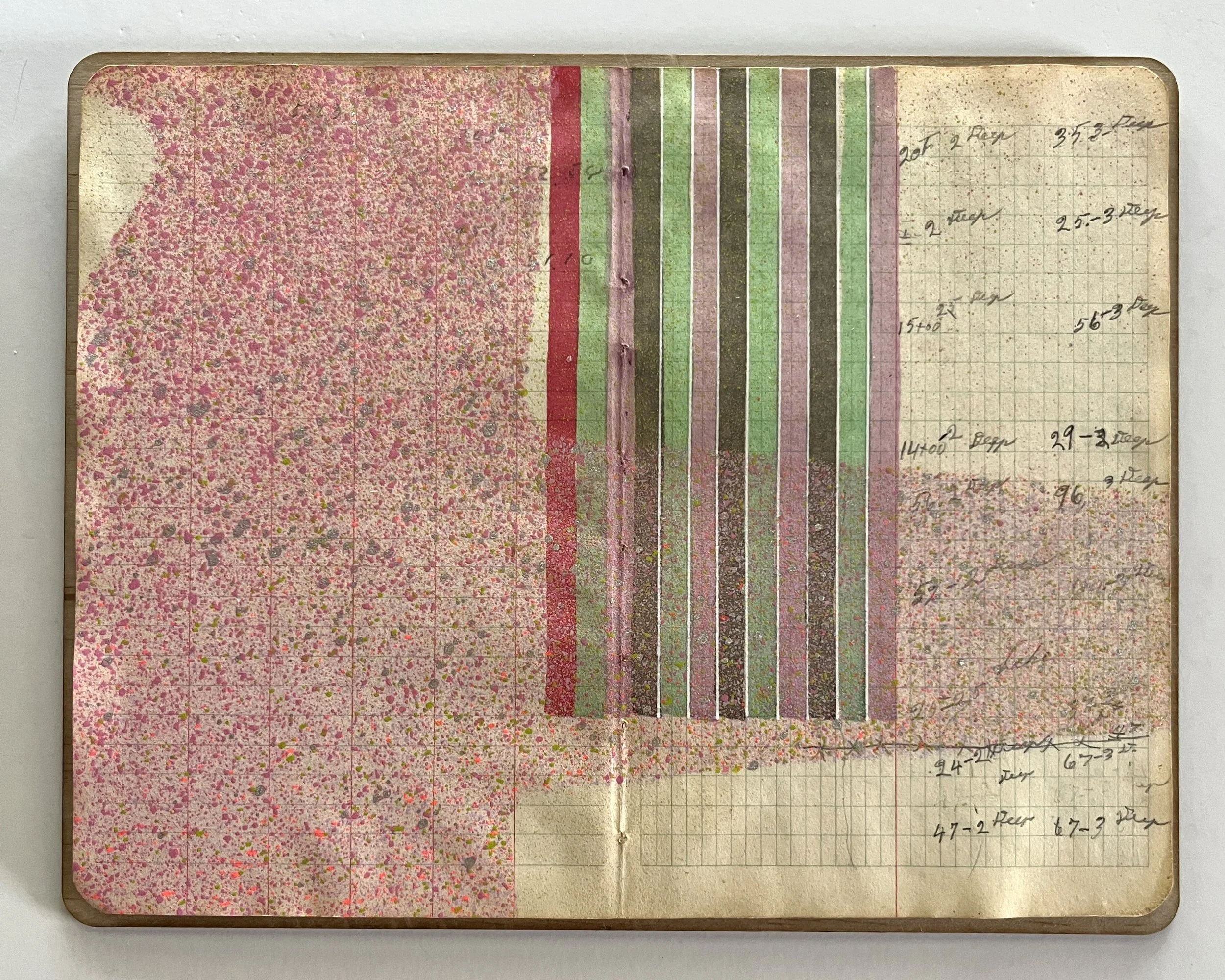
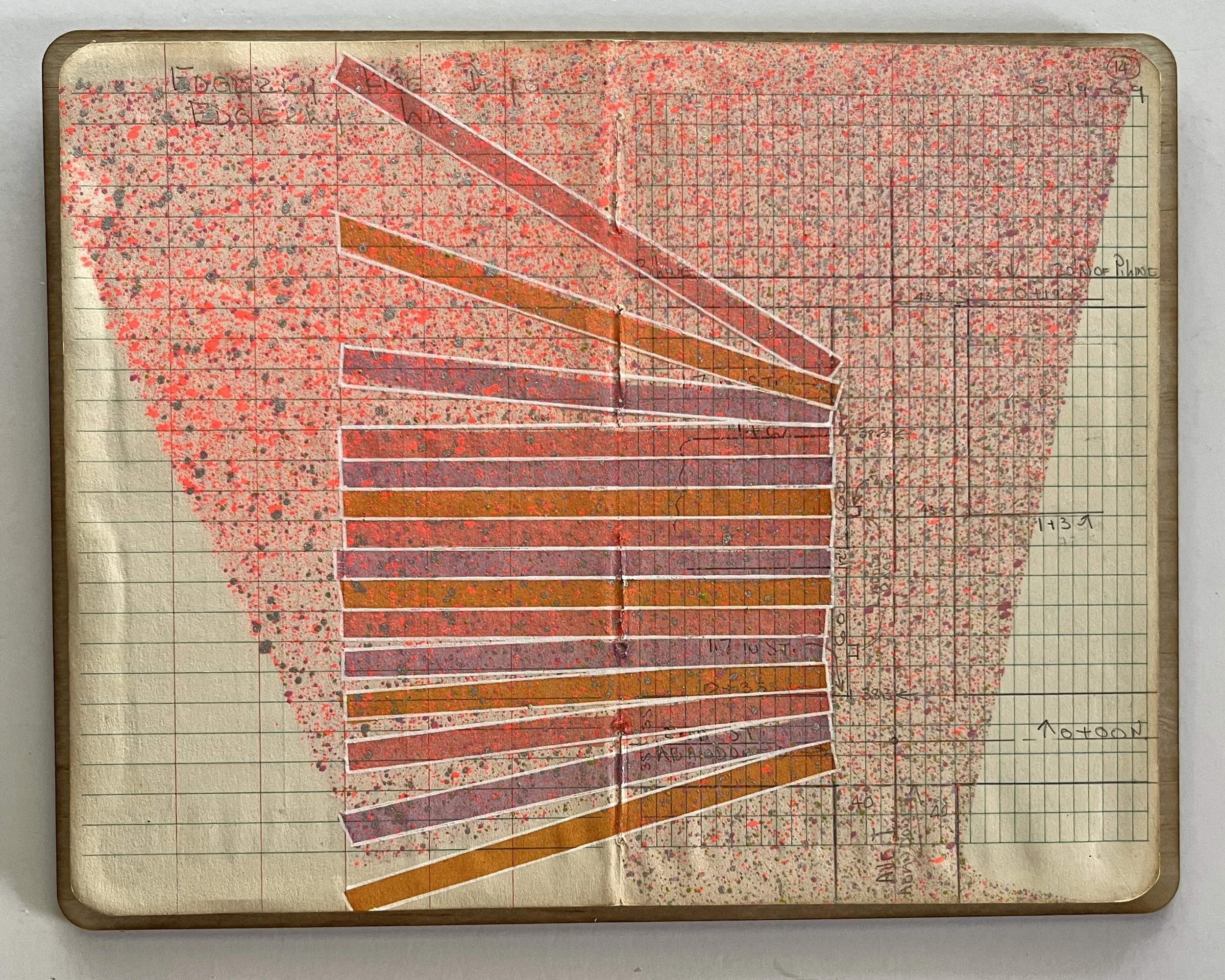
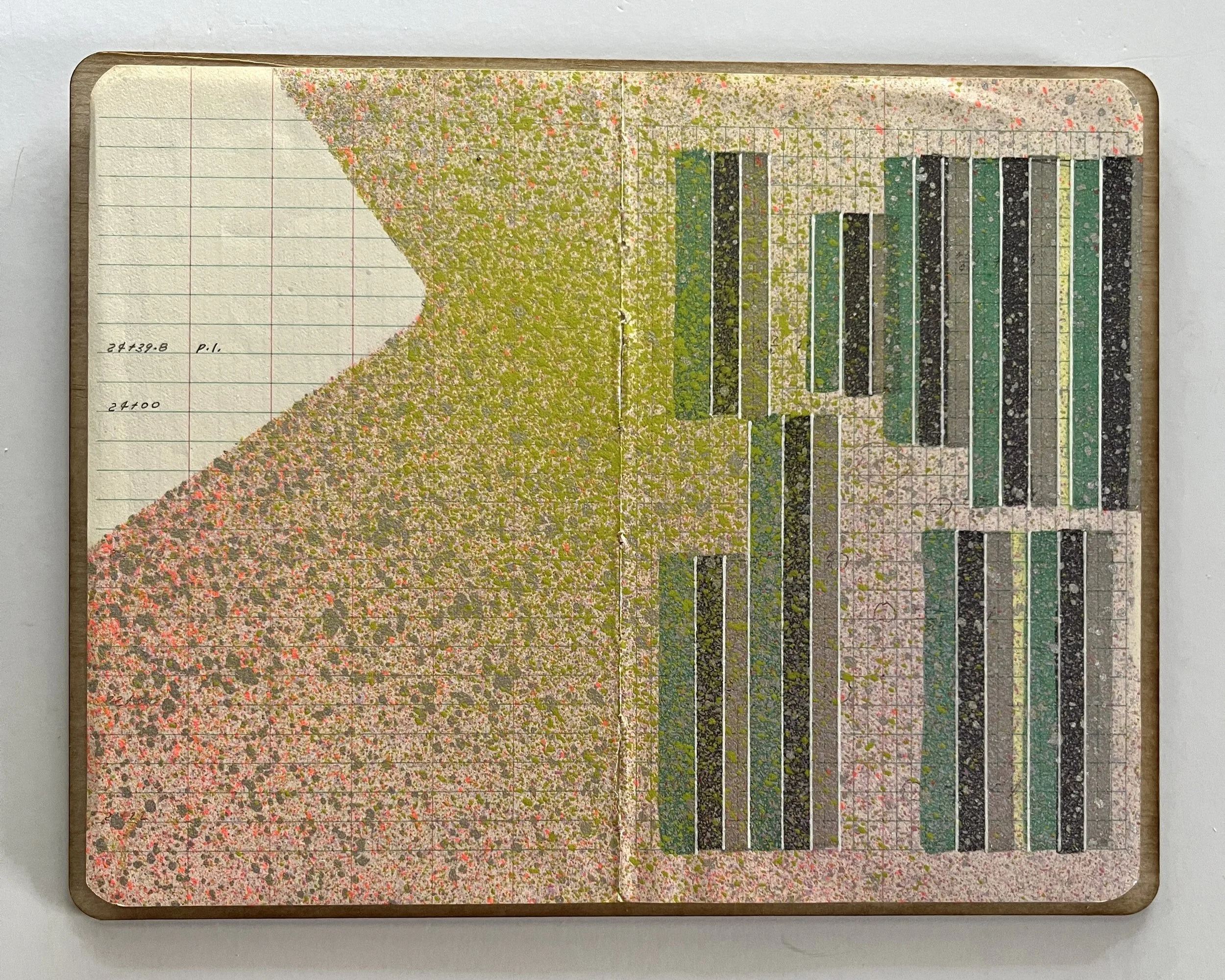
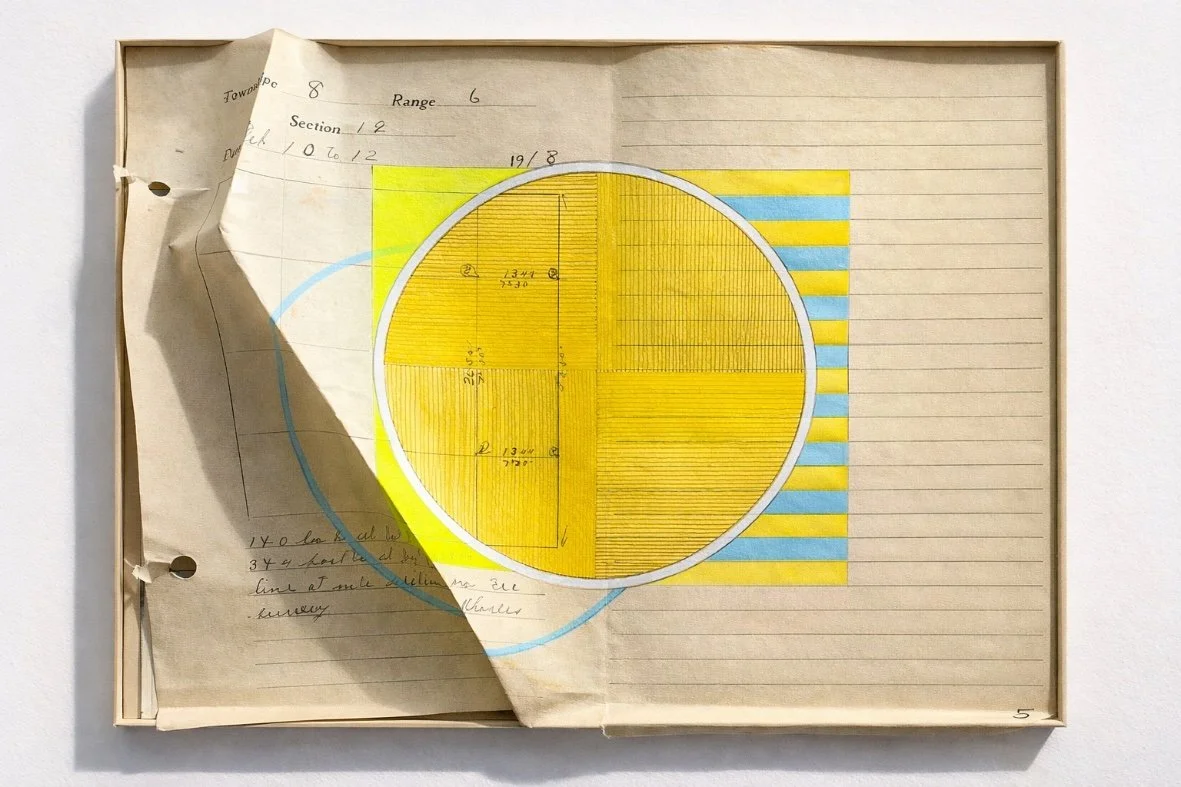
He gathers what others might discard: old maps, business ledgers filled with columns of figures, field books dense with measurements, weather notes, and survey lines, retro notebooks bearing anonymous scribbles and utilitarian marks. These are not pristine sheets awaiting expression; they are documents of labor, commerce, weather, land, and human presence.
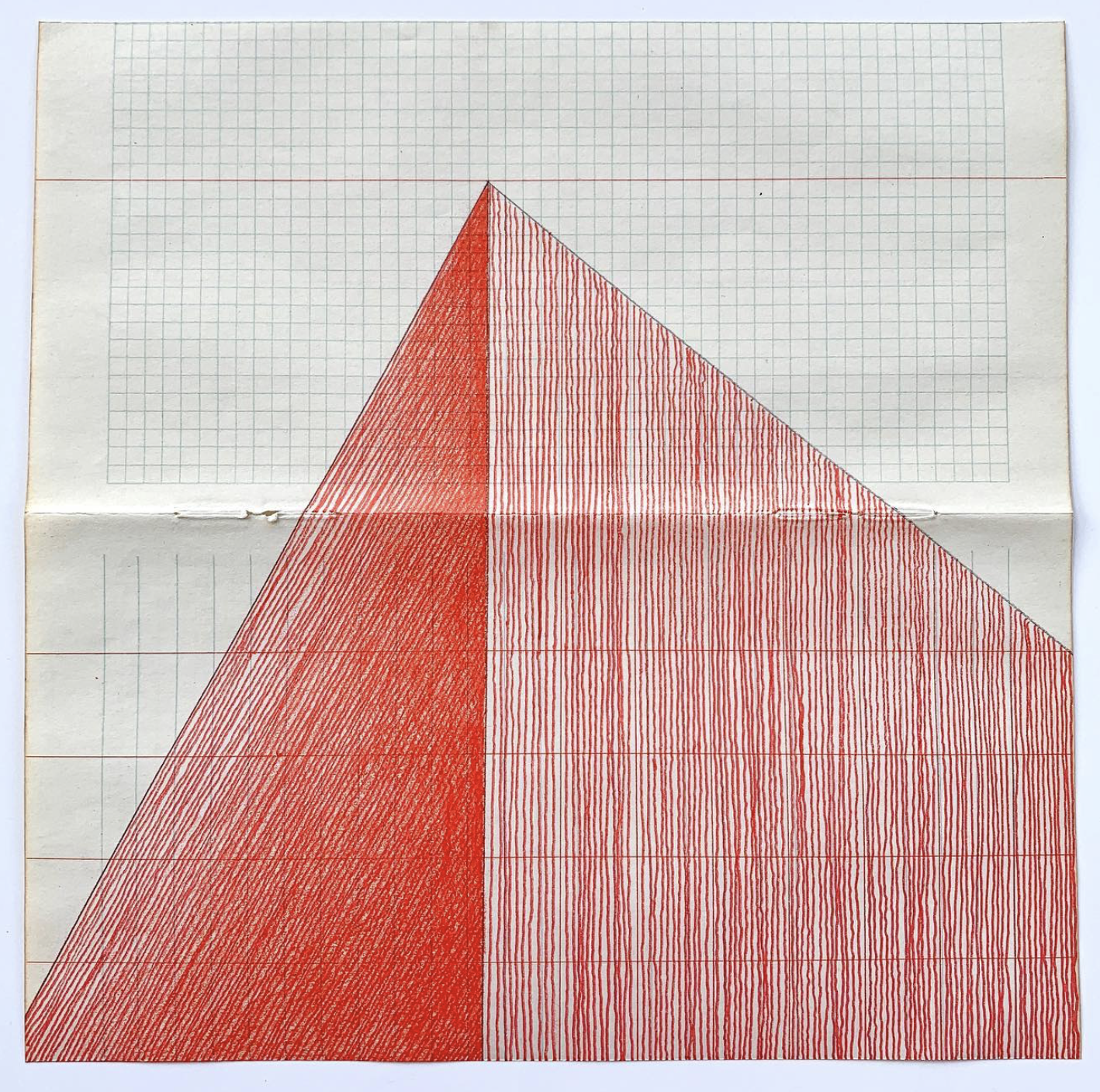
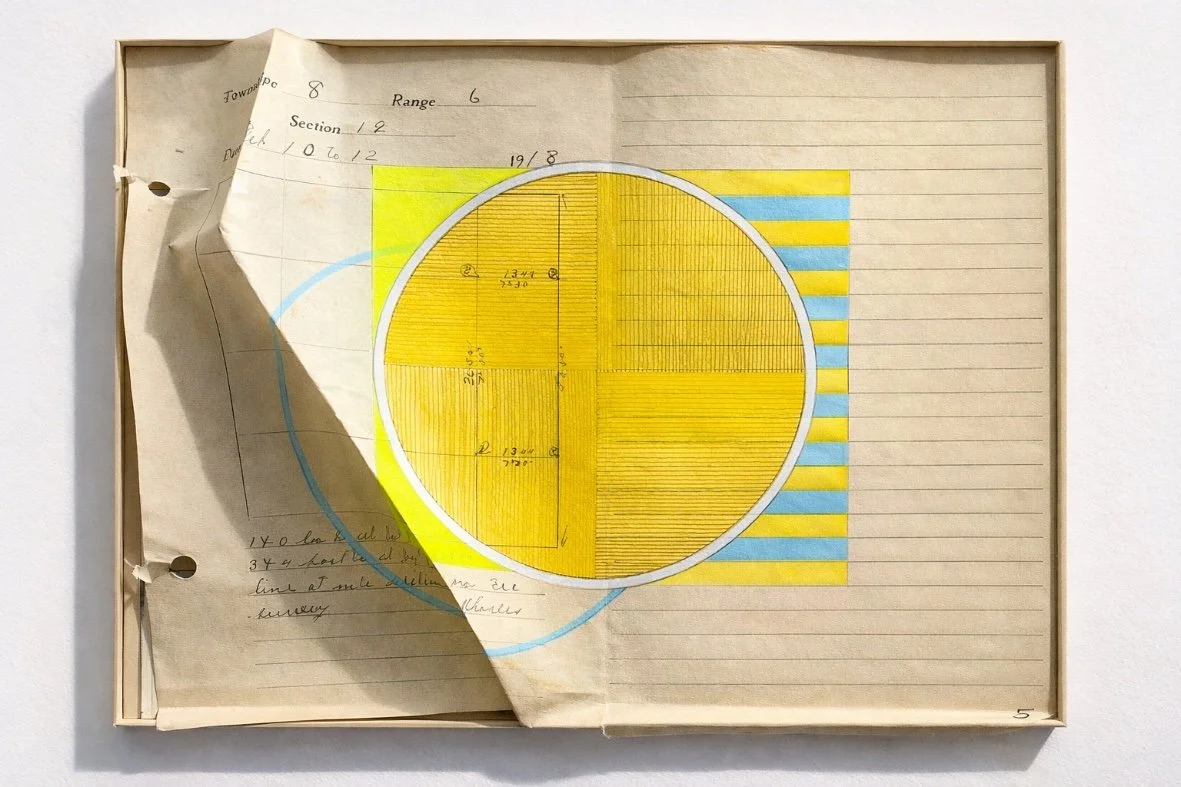
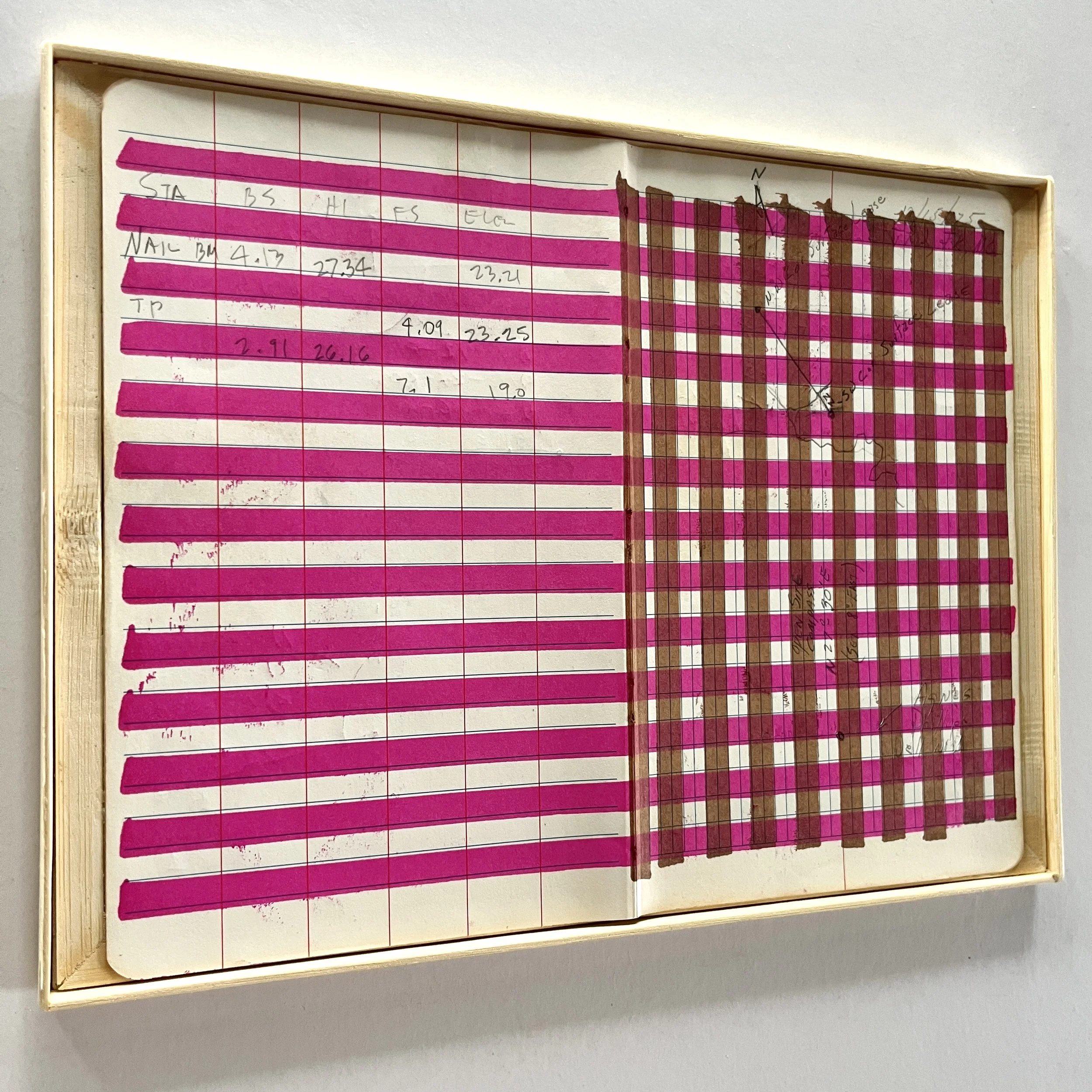
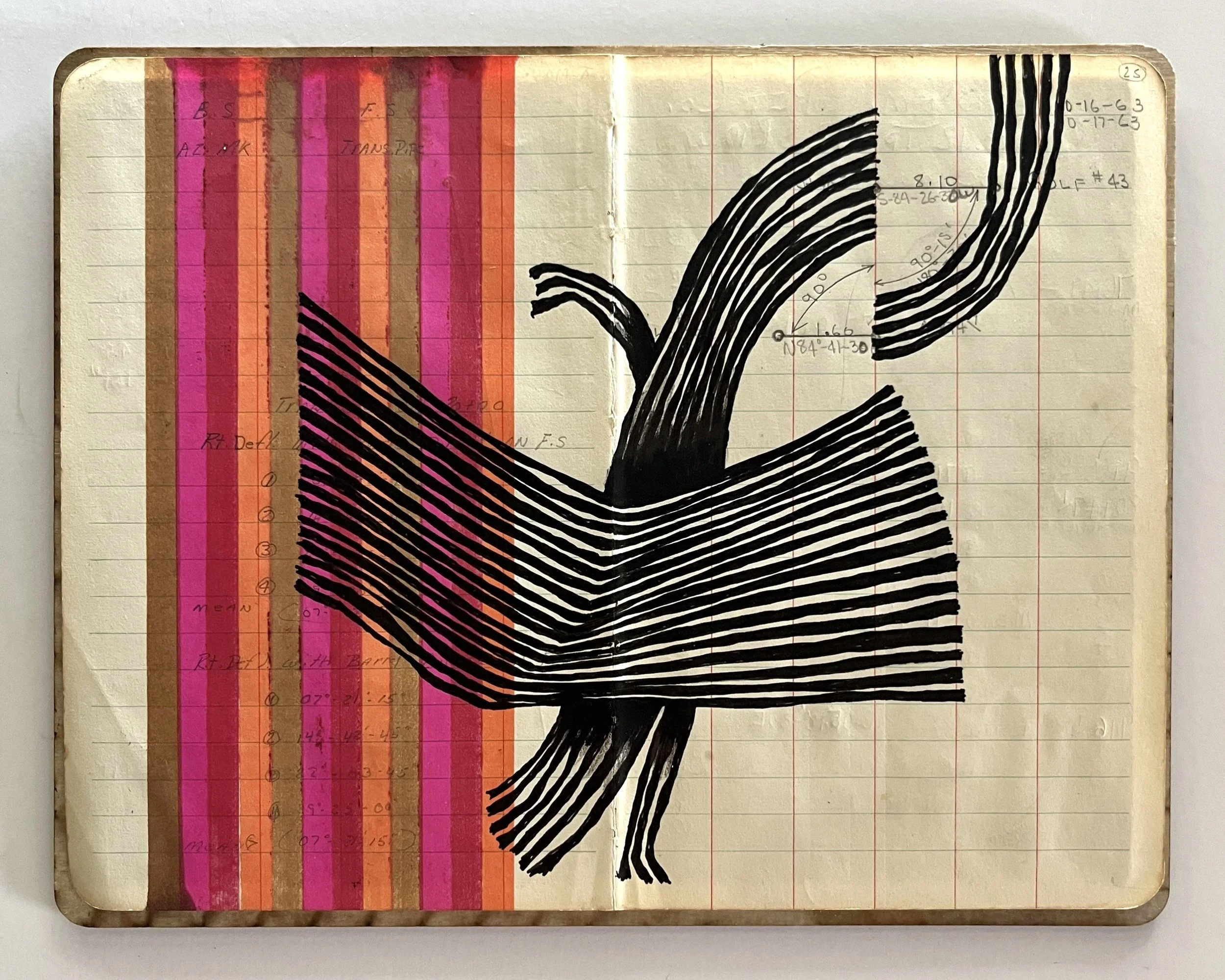
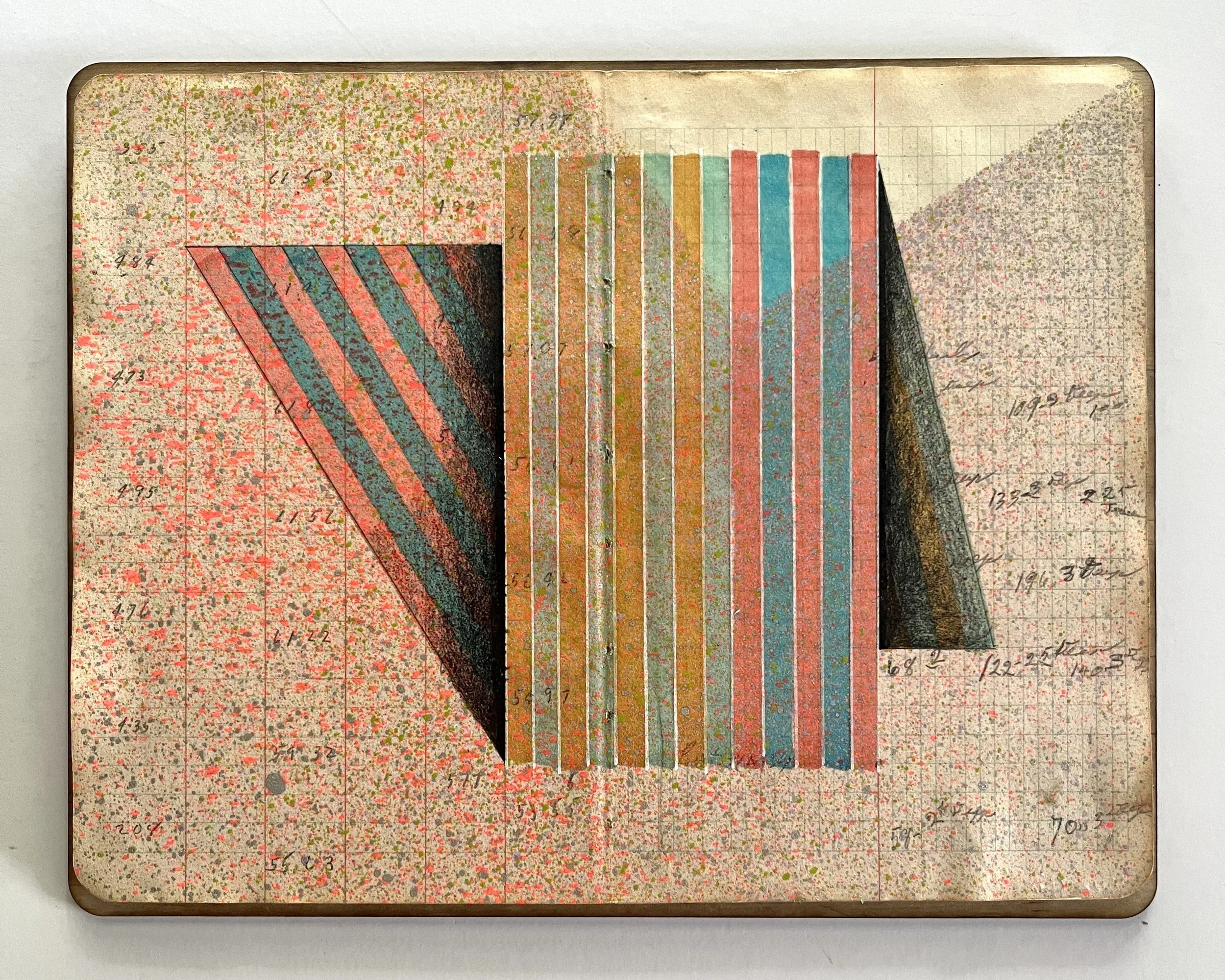
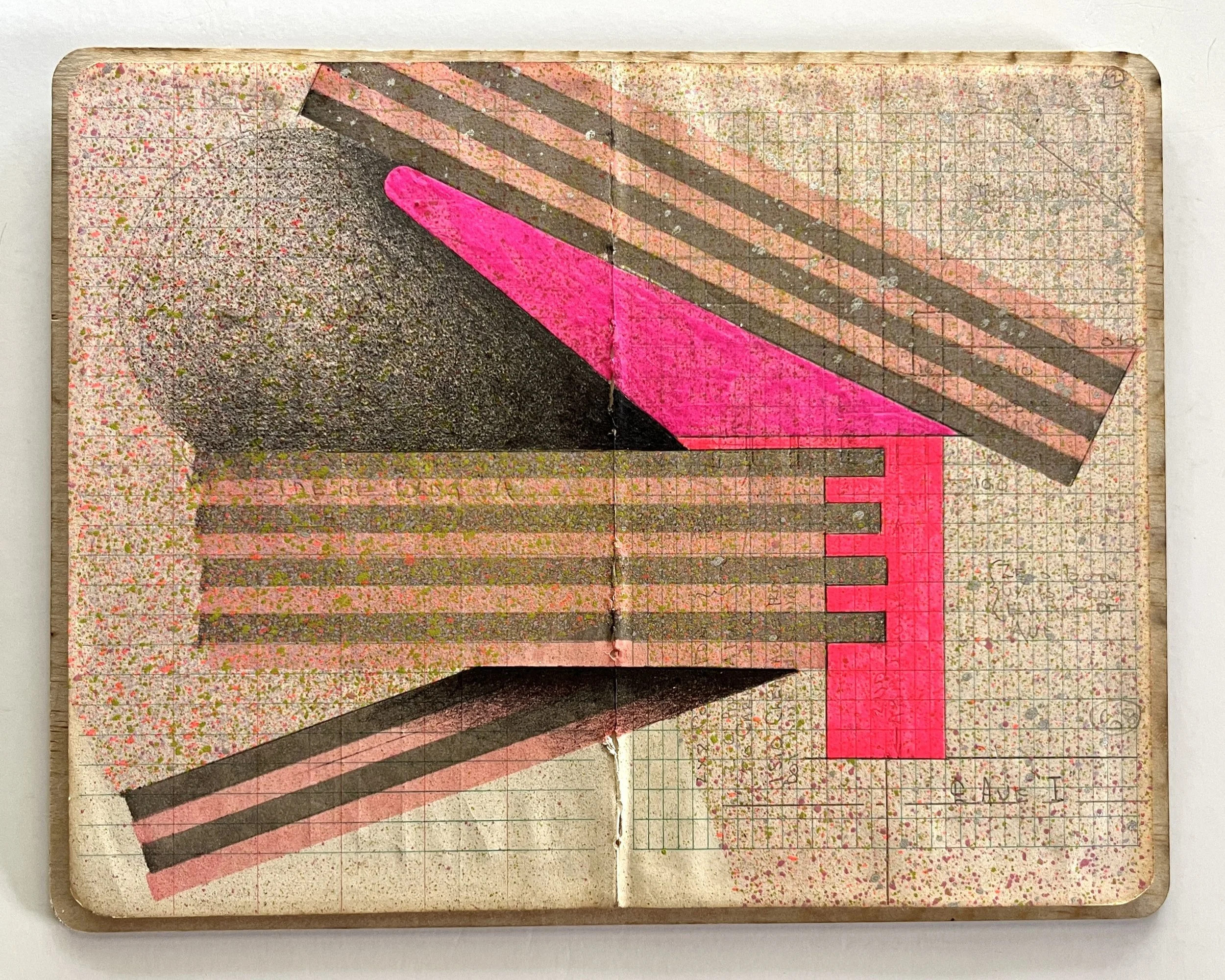
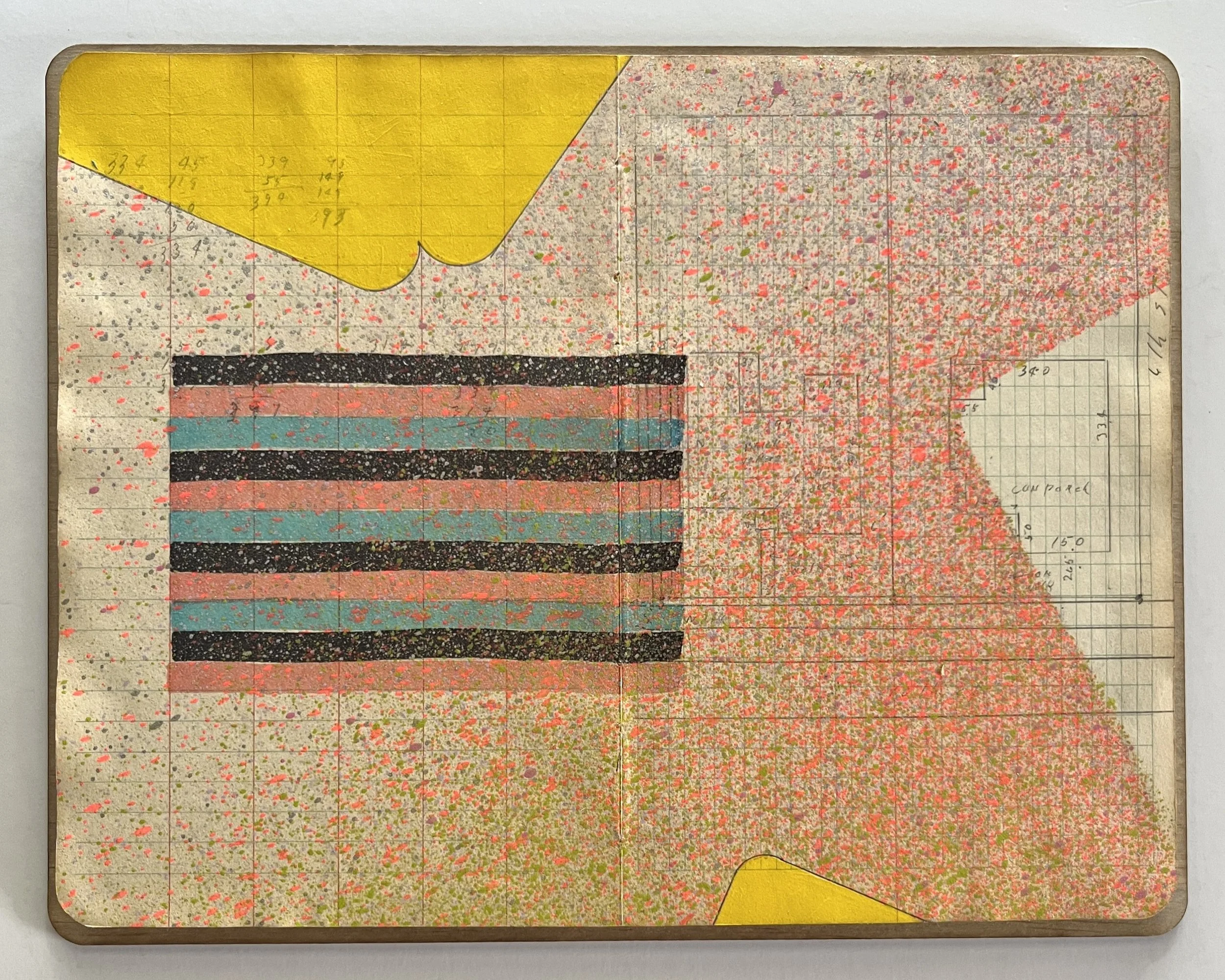
These pages are like skin creased, annotated, weathered, coded. They already contain decisions made by someone else. They already hold systems of order: numbers, graphs, coordinates, ownership names, dates, faded pencil lines. Austin does not cover these traces; he studies them. He adjusts their tempo. He allows their logic to inform his own rhythm. The pre-marked surface becomes both constraint and catalyst.
But the surface alone does not carry the work.
What transforms the page is the mark.
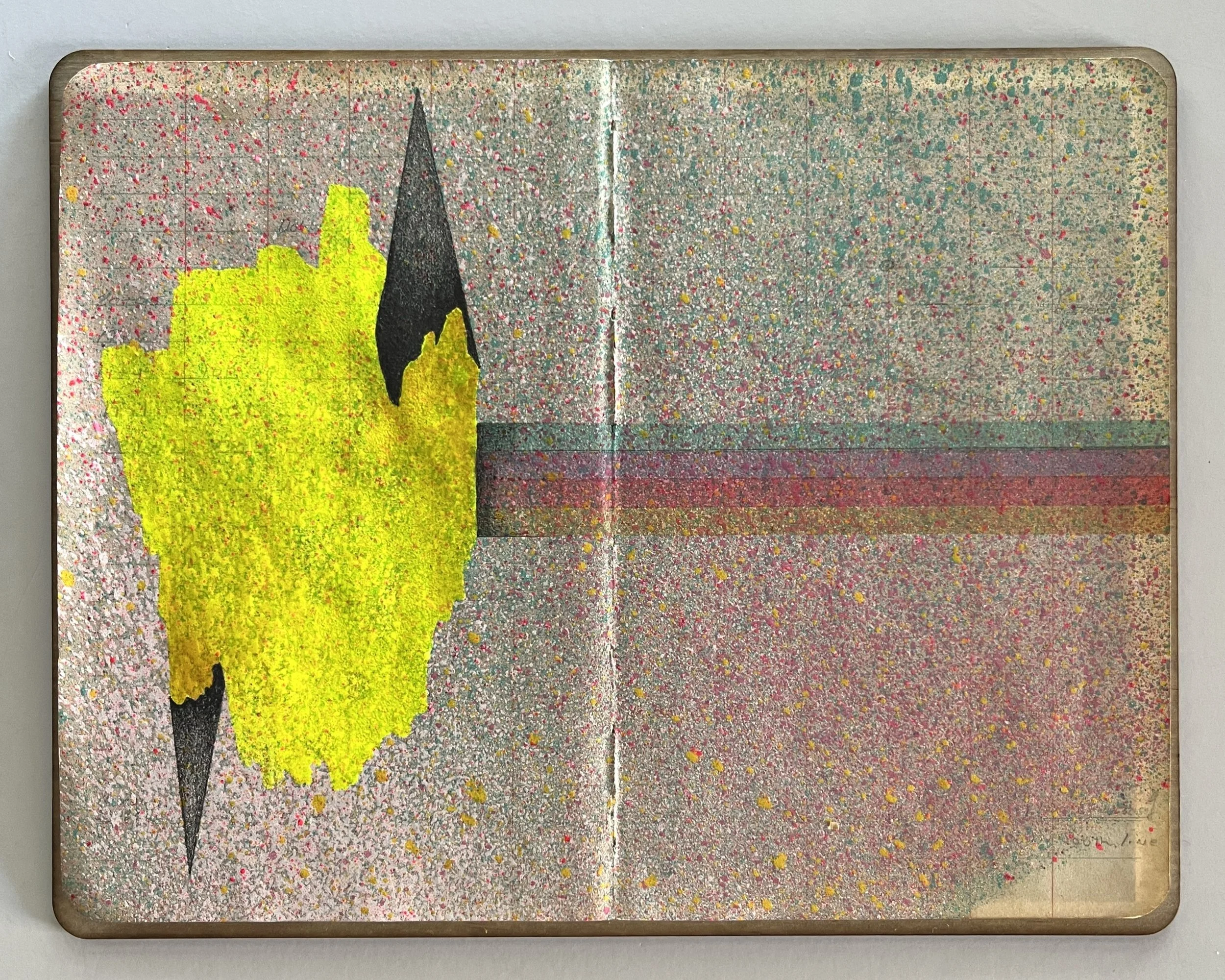
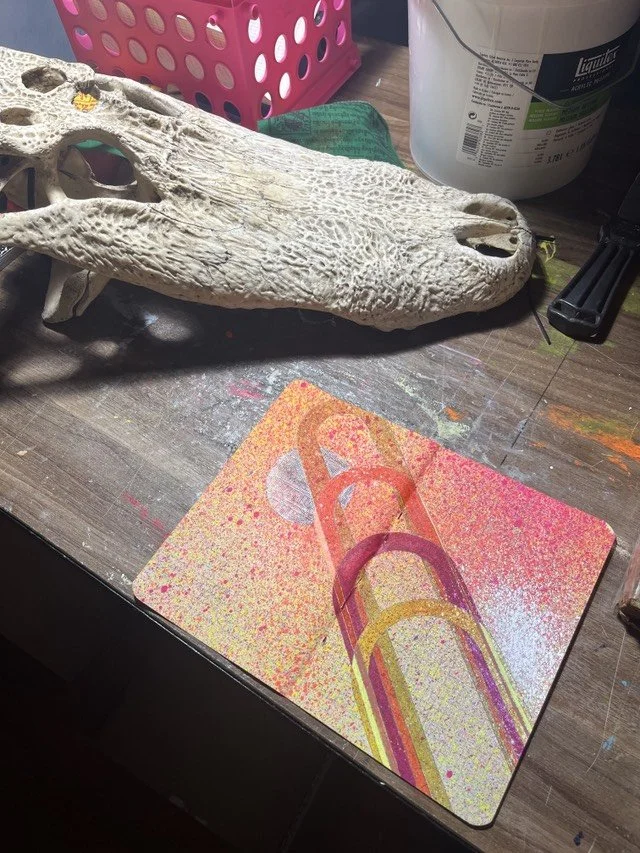
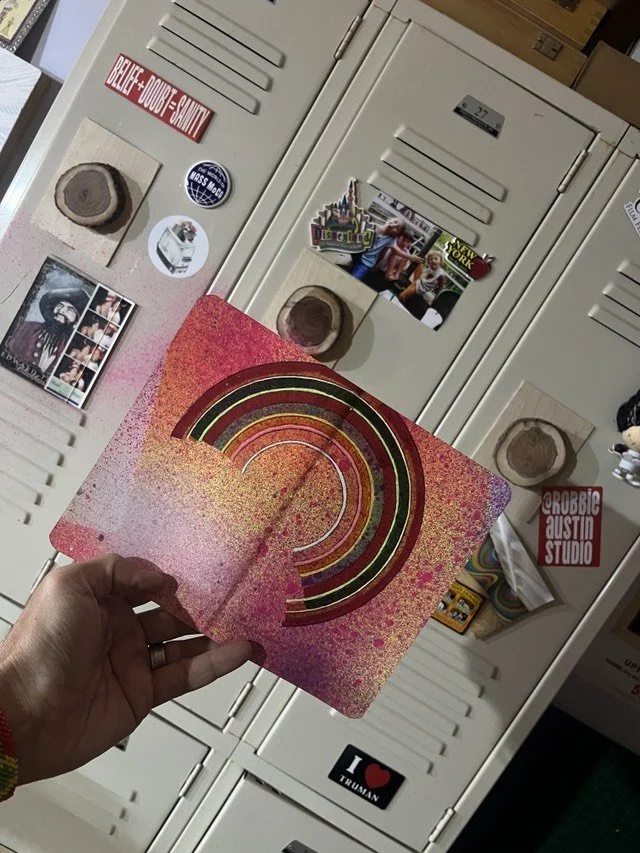
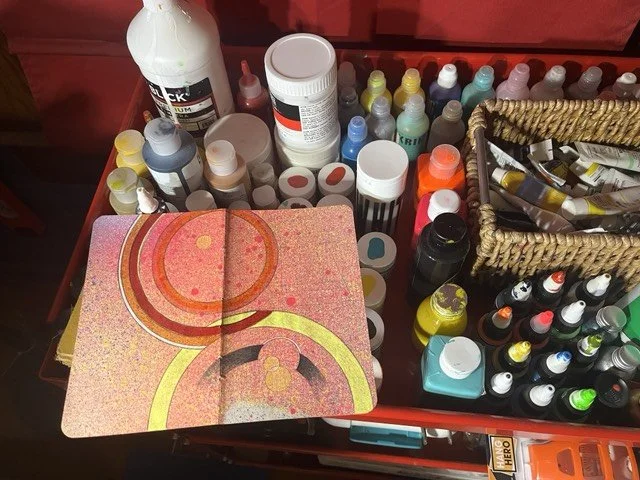
His gesture is not decorative. It is rhythmic. There is a structural quality to it repetition, interruption, restraint. The neon colors that sometimes appear electric, distinctly American, echoing the pulse of 1980s New Wave culture are not volume; they are pulse. They do not shout. They recalibrate. They introduce tension into the muted systems already present. They function almost like a signal flare within a coded terrain brief, intentional, and directional.
Austin does not flood the page. He adjusts its tempo.
The grids and survey lines are already active systems. He is not erasing them; he is altering how they are read. A minimal gesture can redirect attention across the surface. The mark becomes a hinge a quiet instruction to the viewer:
Pay attention.
Look here.
See what was already there.
In this way, authorship resides not in domination but in modulation.
Weather sits beside skin in this metaphor. Not storm as spectacle, but pressure over time. Erosion. Residue. Subtle recalibration. The accumulation of minor shifts that eventually alter perception. His interventions operate similarly small, precise, but transformative in how they redirect vision.
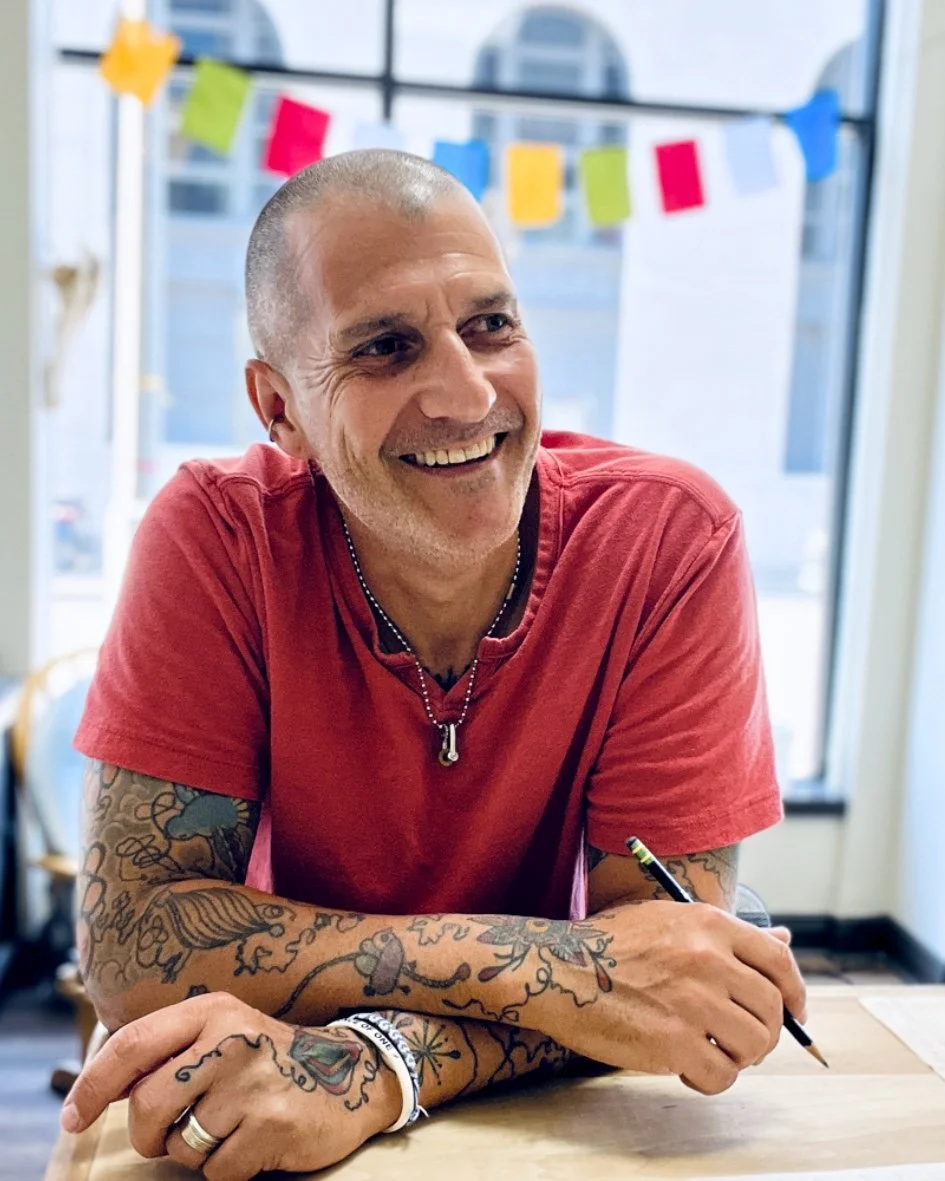
His own skin mirrors this relationship. Austin’s body carries tattoos pulled from his children’s drawings intimate marks transferred permanently onto him. The gesture is not decorative; it is archival. Just as he selects paper that carries a past, he chooses to carry his own history visibly. Skin and paper function similarly in his world: both record, both accumulate, both resist erasure.
Yet even here, restraint governs.
Editing is central to his practice. Knowing when to stop. Refusing to overmark. Allowing silence to remain intact. The unaltered areas are not empty they are charged. The absence of intervention becomes as intentional as the gesture itself. The veil is not softness; it is partial revelation. He lifts rather than covers. He guides the eye toward edges, toward what is faint, toward what sits underneath.
Austin is, fundamentally, a storyteller whose medium is not only ink or paint, but time and direction. His practice is inseparable from his daily rhythms. He wakes before dawn, works small at a table while the household sleeps, limits his materials to maintain concentration, and photographs his work in the precise light that filters through his window at specific hours. He teaches during the day. He returns to the studio. He moves between roles father, husband, teacher, citizen, artist without separating them.
The town he grew up in, the maps of its streets, the memory of storms that reshaped neighborhoods, the inherited archives of survey data and family plots these do not serve as literal subject matter. They form atmosphere. They provide wind.
There is something navigational in his approach. Harnessing what is already present systems, grids, history and redirecting it through measured intervention. Not conquering terrain, but sailing within it. The periphery, in his work, is not marginal. It is fertile. It is where structures loosen and new readings become possible.
Each drawing becomes a layering of presences those who recorded the land before him, the coded histories embedded in the paper, and his own deliberate, restrained gestures. The result is not illustration, nor abstraction detached from context. It is a recalibration of perception. A document of someone thinking through place, belonging, identity, and continuity.
Paper behaves like skin.
The mark behaves like weather.
And time remains visible in both.
Through sustained engagement with used and coded surfaces and through a disciplined, rhythmic language of intervention Robbie Austin constructs a practice that is deeply local yet universally resonant. A practice where authorship is not loud but precise, where gesture is hinge, and where seeing itself is gently redirected.
Robbie’s Masterclass
Now, when we turn to the masterclass itself, the focus shifts from finished works to the internal architecture behind them.
This is not a technical demonstration and not a craft lesson. It is an in-depth exposure to an artist’s research, thinking structure, editing process, and long-term dialogue with material and memory. Robbie opens his process from the inside out: how he studies a page before touching it, how rhythm forms, how restraint operates, and how he decides when enough is enough.
Participants will see how the paper holds memory but also how the mark directs seeing.
He will speak about repetition and interruption; about neon as pulse rather than decoration; about how minimal gestures redirect entire reading systems; about how grids and survey lines are not erased but redirected; and about how silence can be more forceful than saturation.
He will share work in progress, discarded attempts, moments of hesitation, and the discipline of editing: the refusal to overmark, the importance of leaving space intact, and the sensitivity required to stop.
What he offers is not instruction in technique, but clarity of perception: how authorship can coexist with humility toward material, and how the smallest intervention can recalibrate the entire field of vision.
This masterclass is an invitation to witness how paper, skin, weather, and mark converge and how direction, restraint, and rhythm form the core of an artist’s voice.