Paper Camp
A Guided Self-Residency in Process and Material
Paper Camp is a self-residency program for artists and creatives who want to work intensively with paper — not as a single technique, but as a full discipline that spans casting, forming, mold making, plant-based processes, installation, and self-topography.
Paper Camp is offered in one-week and two-week formats:
One-week Paper Camp
A full labor camp. Mornings are dedicated to structured teaching; afternoons open into an unrestricted studio environment where each participant deepens and develops their own work.Two-week Paper Camp
Includes the entire one-week curriculum plus an additional week dedicated to Self-Topography on Paper, allowing time for extended research, reflection, and sustained experimentation.
-
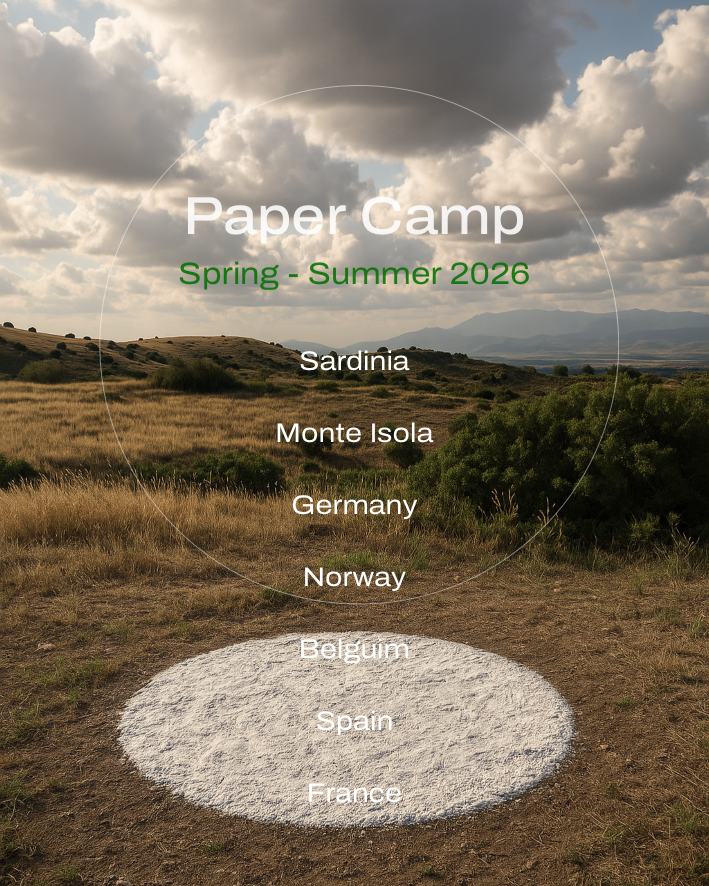
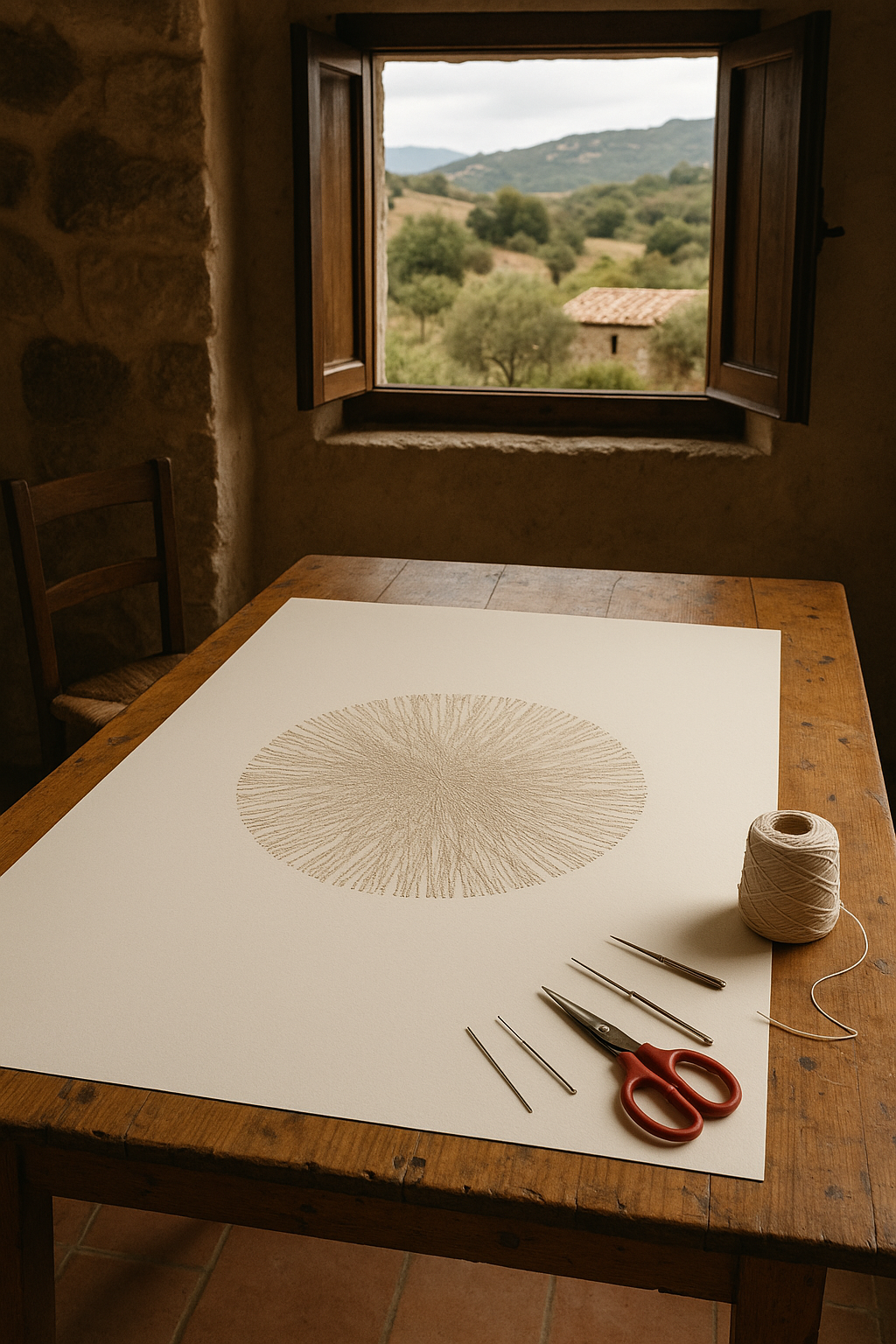
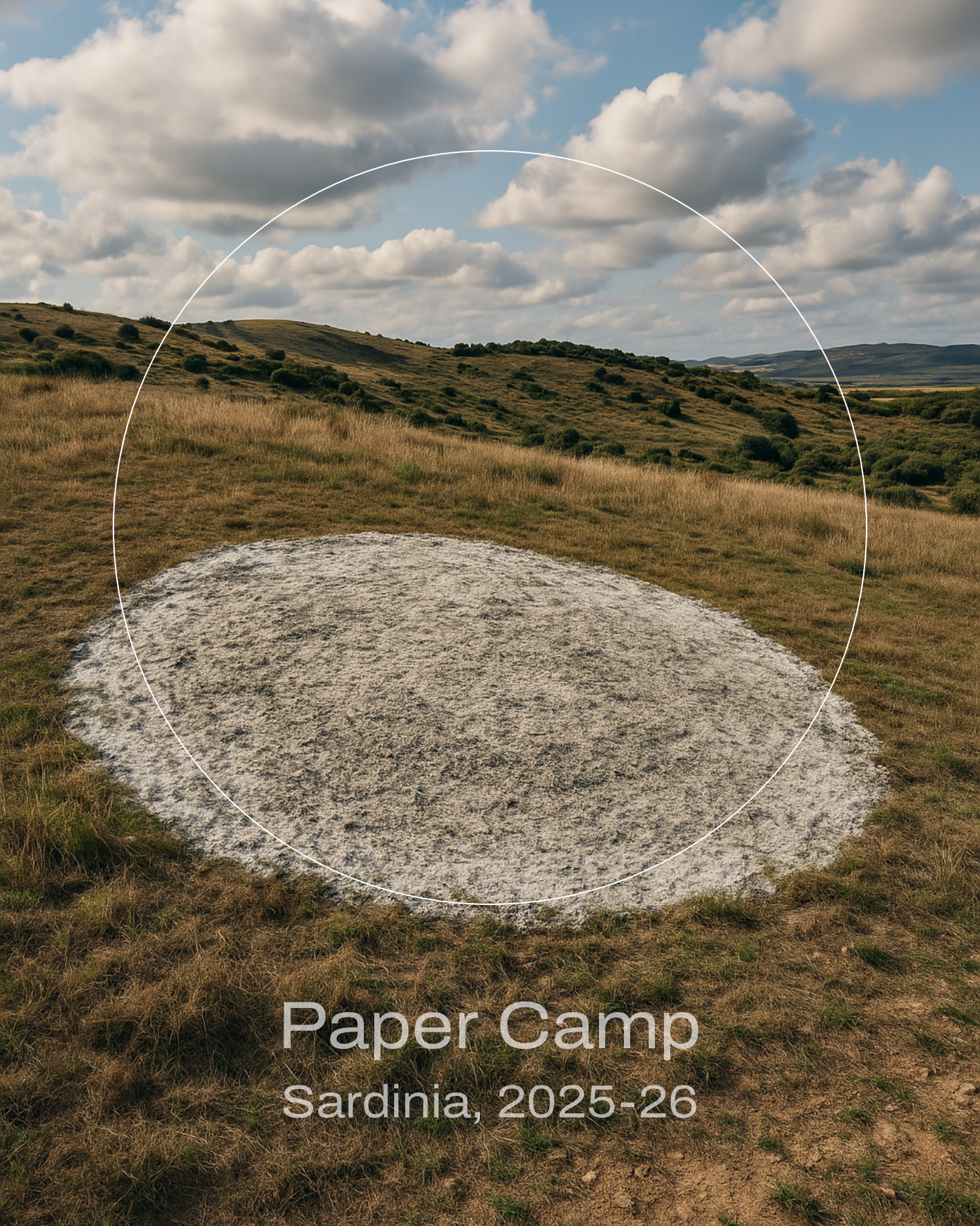
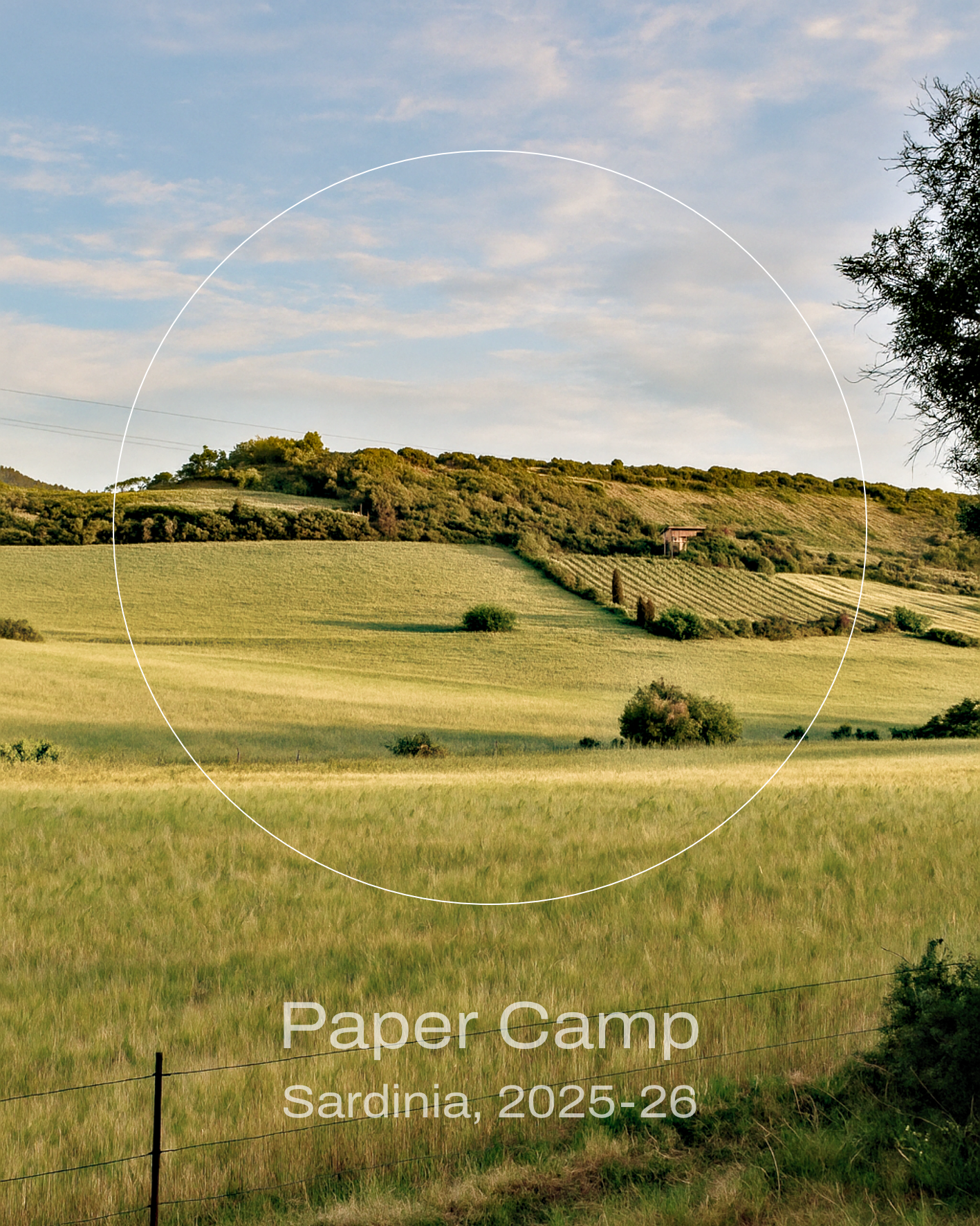
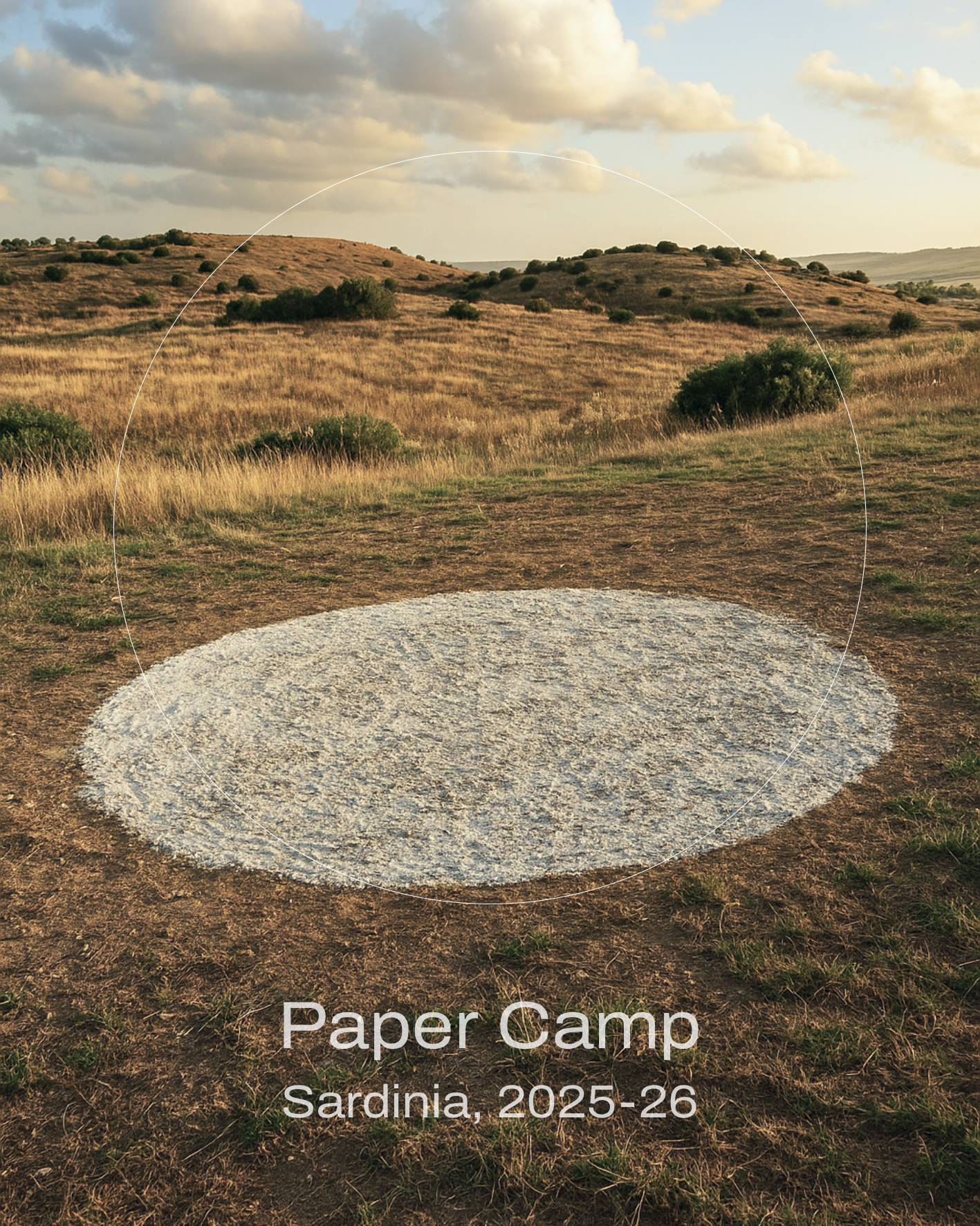
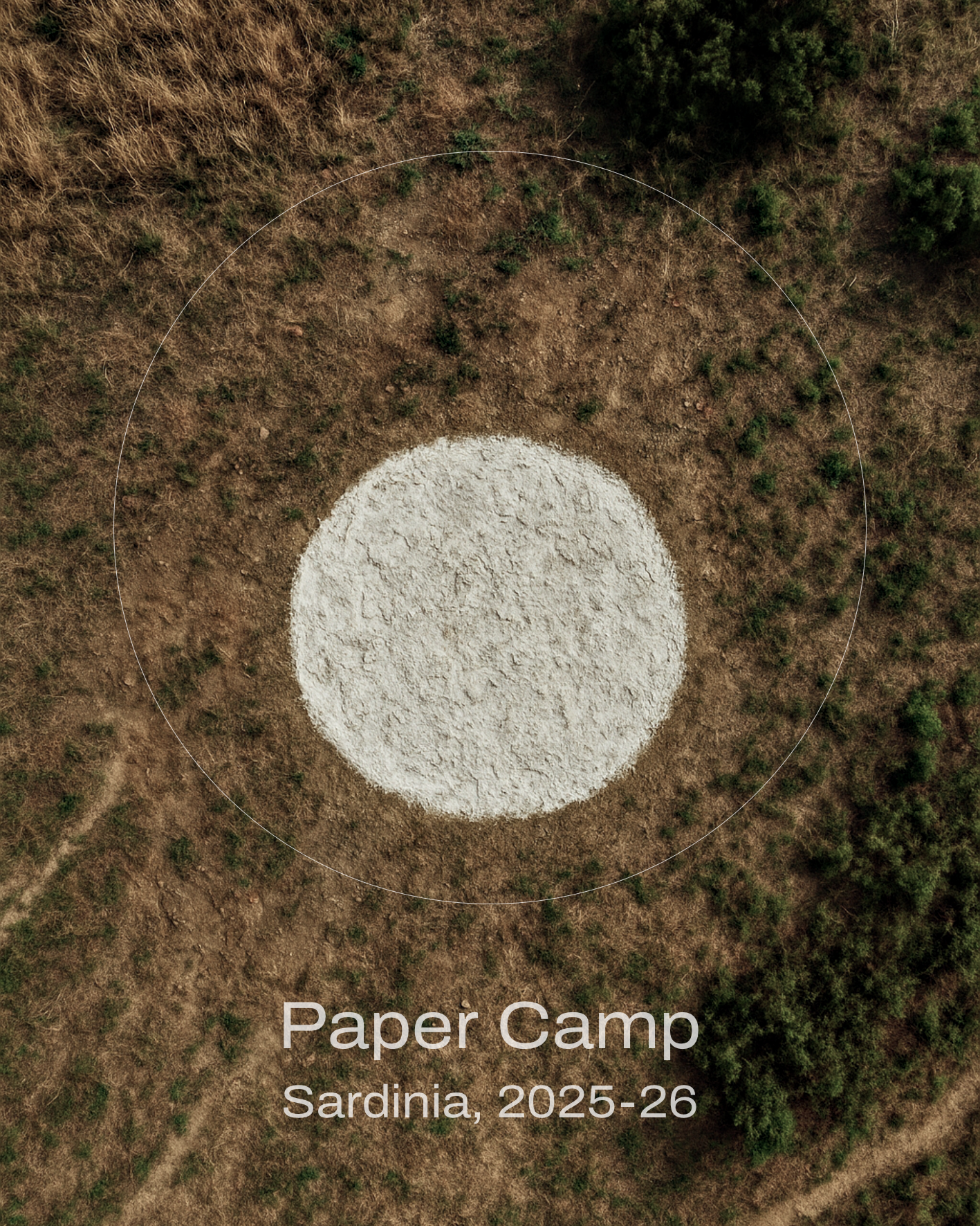
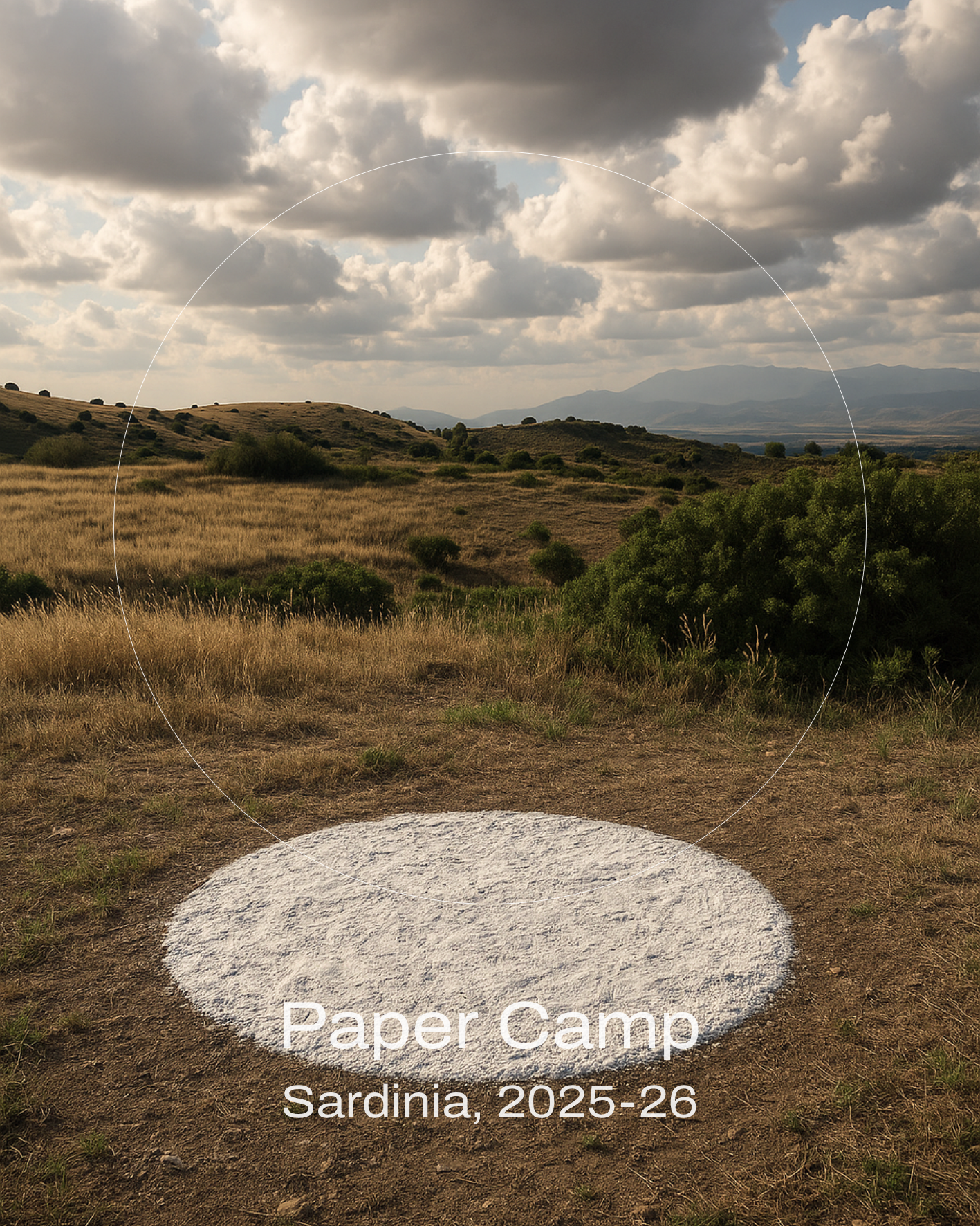
Paper Camp is an intensive, multi-day program that brings participants into a working studio and a specific landscape — a farm, a coastline, a rural atelier — to work deeply, slowly, and with full attention to material. It is not a retreat. It is a guided self-residency dedicated to labor, experimentation, and the long arc of process.
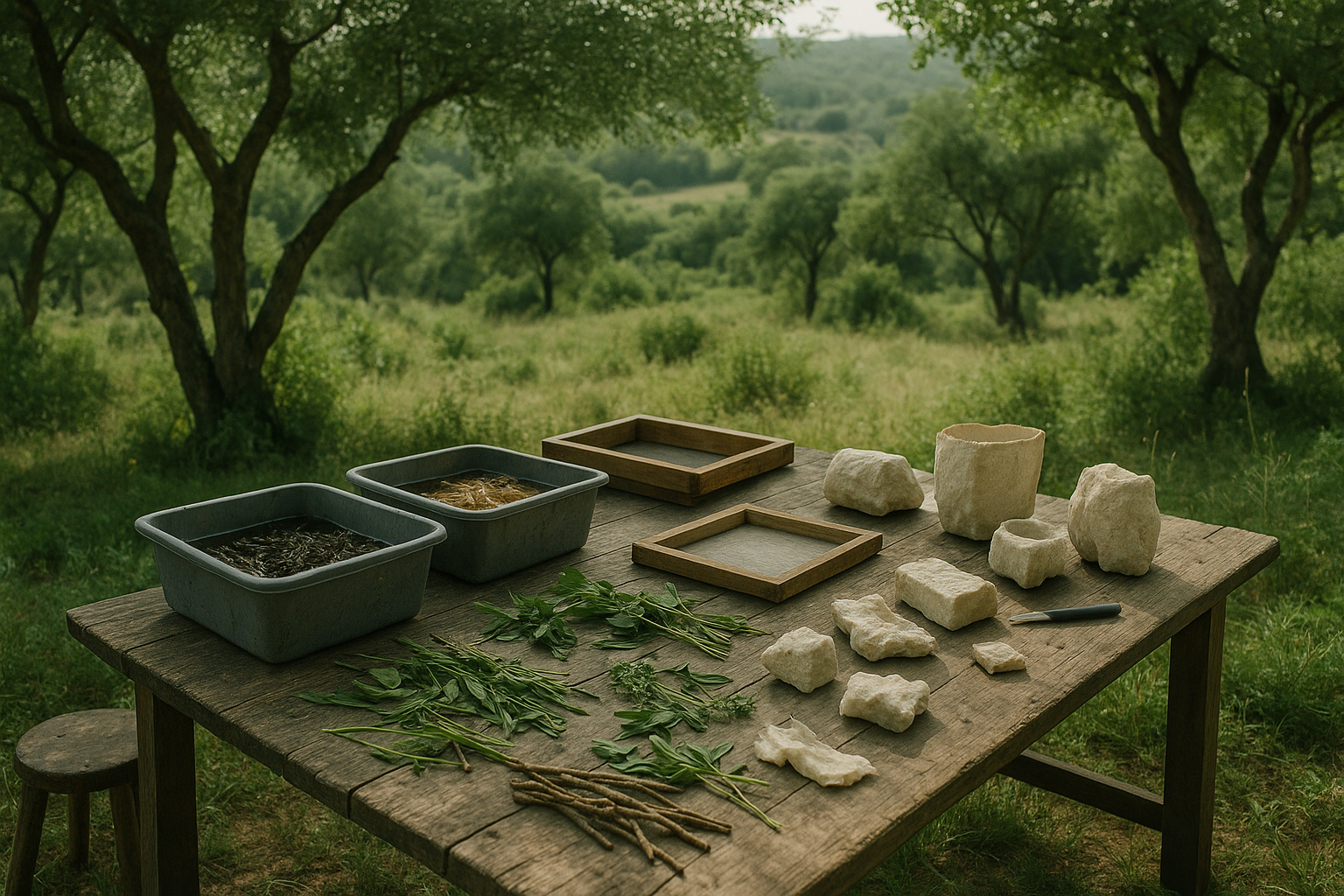
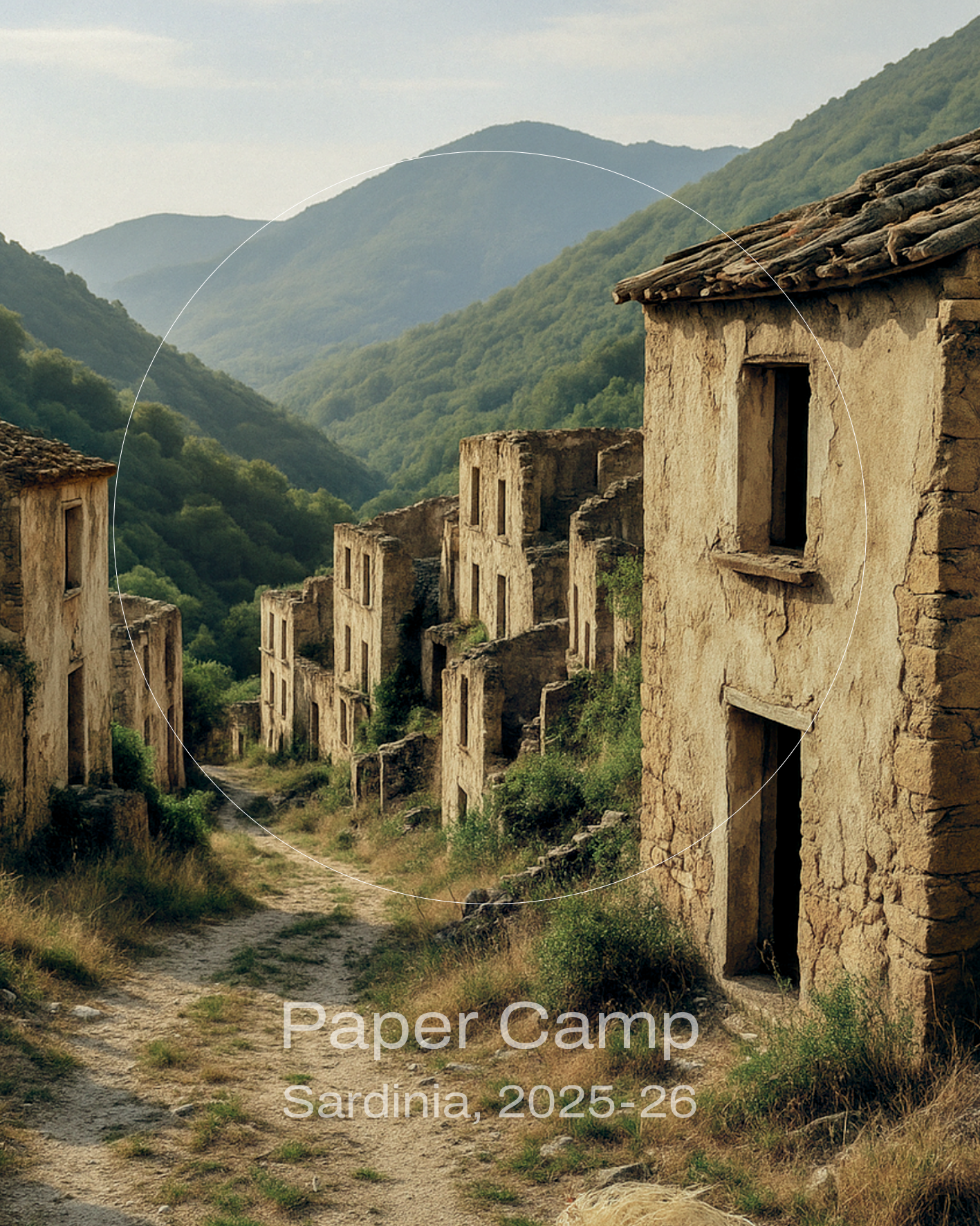
Each Paper Camp is shaped by its surroundings: the local plants, fibers, textures, weather, and histories. Participants work long days, moving between outdoor research, studio practice, collecting, forming, casting, and developing personal studies. The studio remains open throughout the day, allowing everyone to work at their own rhythm within a shared, focused environment.
Paper Camp is designed for motivated individuals who want to develop a serious relationship with material. Experience is not required; what matters is curiosity, discipline, and a willingness to work.
-
Each day unfolds in two distinct movements, creating a balance between structured learning and personal exploration.
Mornings — Foundations, Advanced & Unique Paper Programs
The mornings are fully guided and content-rich. Participants engage with:
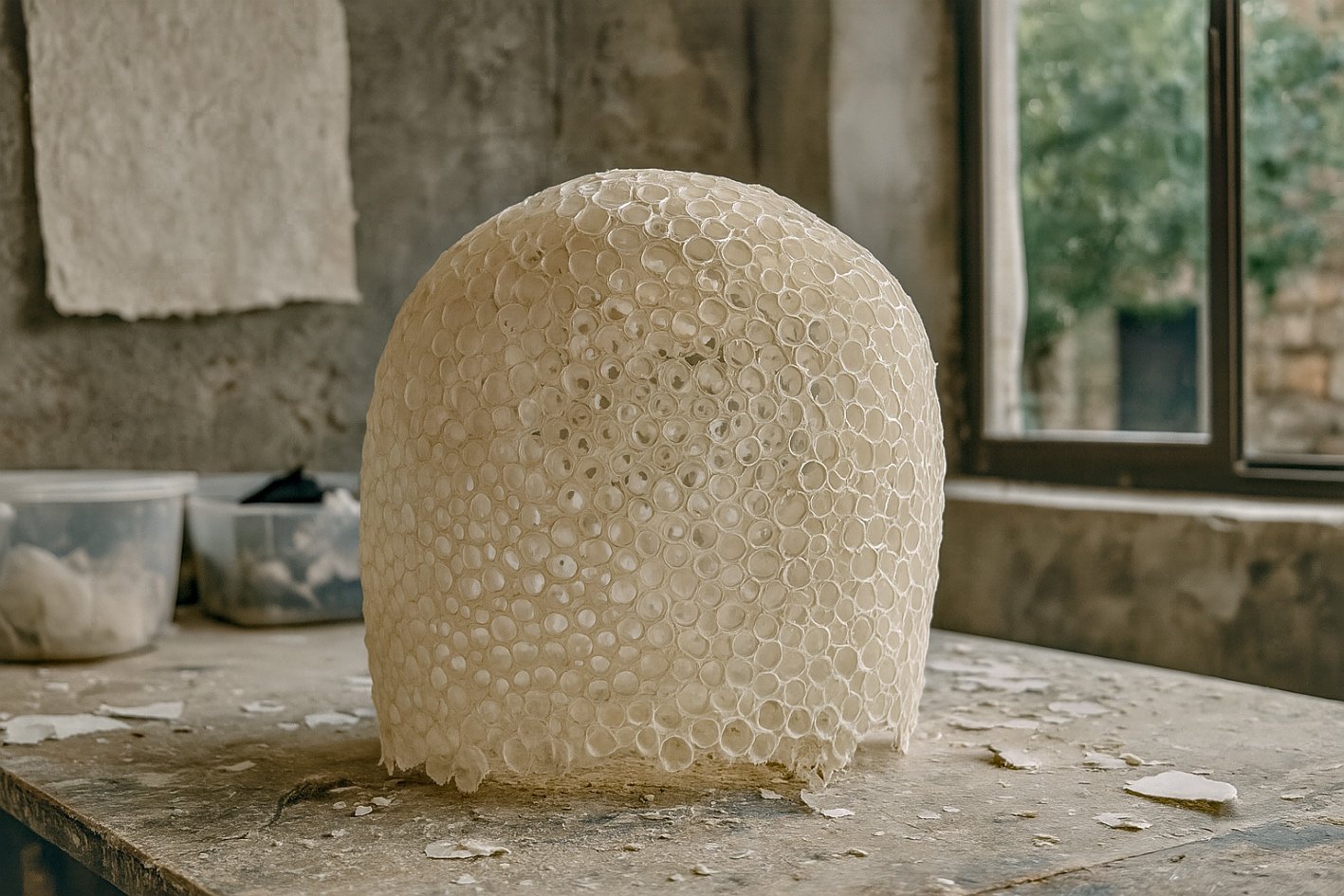
Foundations — the core principles of forming, shaping, pulp behavior, mold creation, casting, and material logic.
Advanced — complex structures, expanded fibers, plant-based papermaking, architectural molds, and advanced casting methods.
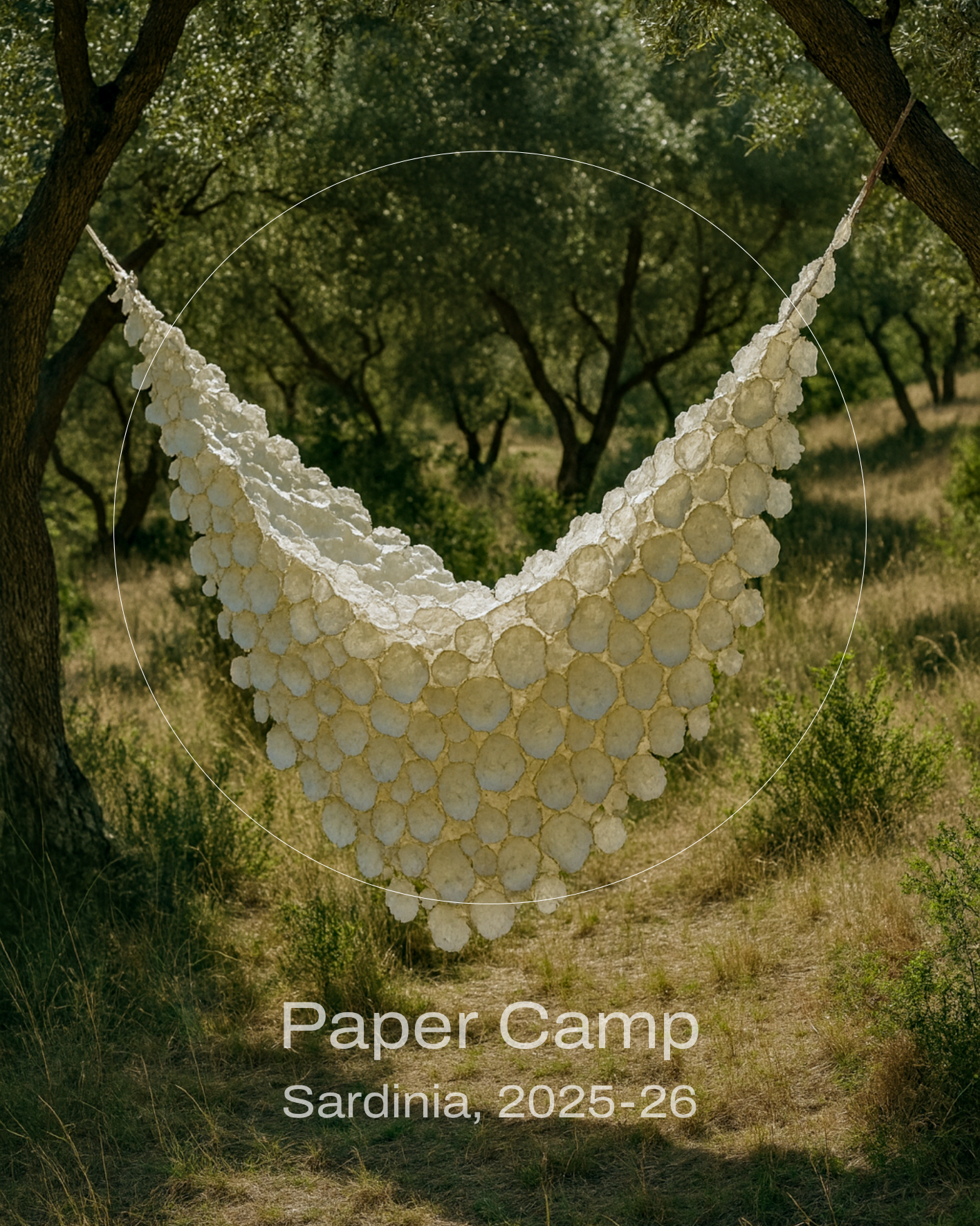
Unique Paper Programs — content created specifically for the location, drawing on the environment, local fibers, and the history of the place.
These sessions are precise, structured, and dense — the backbone of the Paper Camp.
Afternoons — Full Access to the Paper Lab Universe
In the second part of the day, the studio becomes an open laboratory.
Participants gain access to the entire Paper Lab ecosystem:The full depth of content from the Paper Lab’ers Membership Platform
Methodologies, experiments, and concepts from decades of practice
Material research documented in the Paper Lab blog
Techniques from all Paper Lab masterclasses:
paper casting, advanced mold-making, forming, paper installations, thread-based work, sewing machine experiments, wax and paper, plant-based fibers, tape art, fabric papermaking, and moreA growing library of demonstration videos, process studies, and visual lectures
Afternoons are for personal research, extended experimentation, and self-directed work.
Here, the knowledge from the morning unfolds into practice — and the studio becomes a living archive of techniques, materials, and possibilities.This rhythm creates a rare learning structure:
directional learning in the morning, open exploration in the afternoon. -
Every Paper Camp includes a sequence of interconnected movements:
1. Gathering & Material Research
Collecting local plants, fibers, earth, and textures.
Understanding how materials behave in their original landscape.2. Pulp Preparation
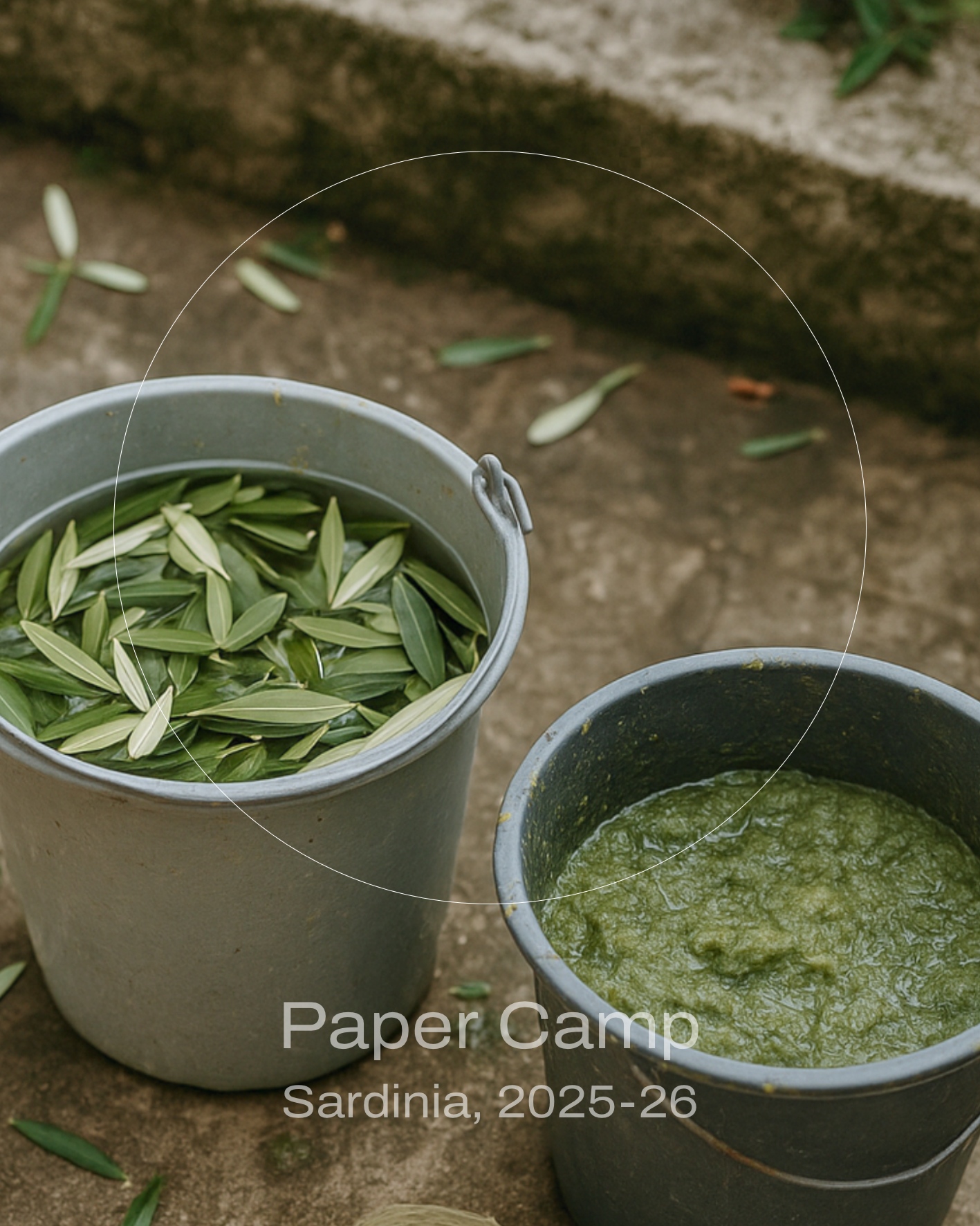
Breaking down natural fibers, recycled fibers, fabrics, and location-specific plants.
Reading strength, shrinkage, memory, and behavior.3. Forming, Shaping & Casting
Exploring form, structure, relief, and mold-based thinking.
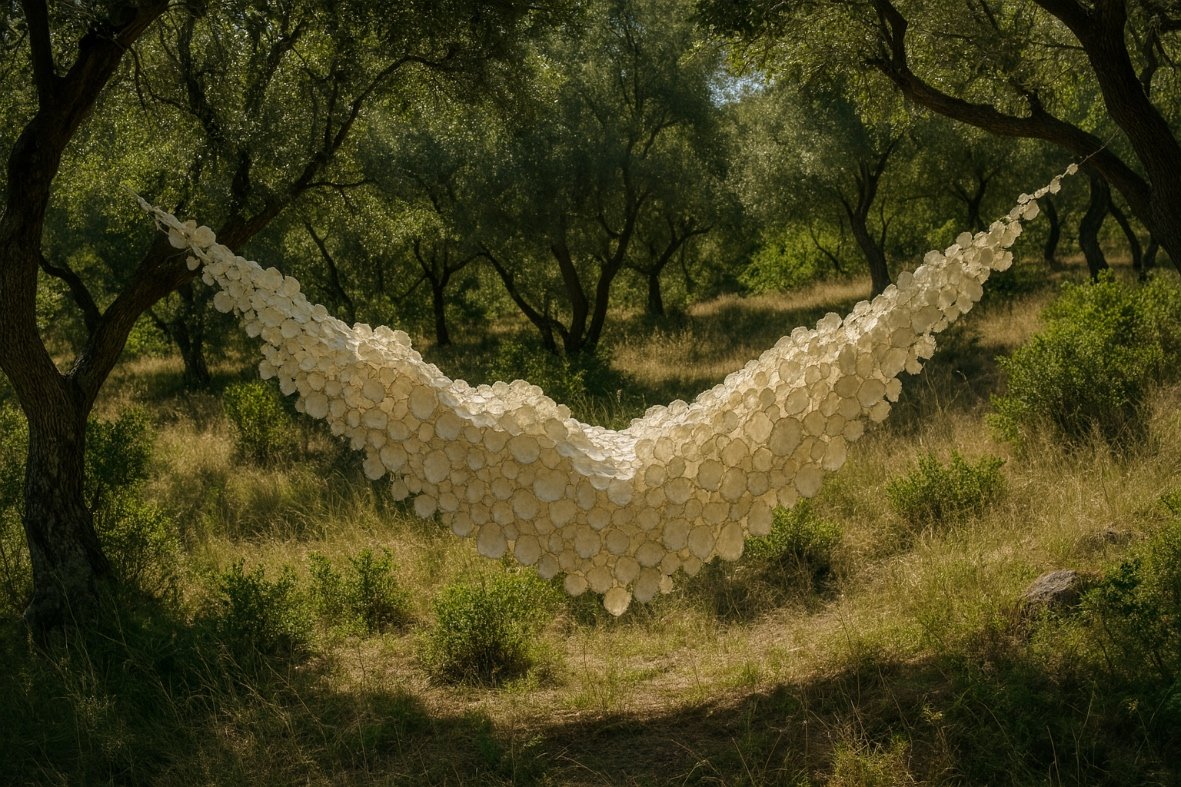
Understanding water, pressure, drying, and fiber logic.4. Site-Responsive Experiments
Developing outdoor or large-scale works that respond to the environment.
A collective experiment shaped by place.5. Independent Work
Long studio hours dedicated to personal studies and experimentation.
6. Sharing & Reflection
Discussions, quiet observations, and an optional closing presentation.
-
Paper Camp is ideal for:
Artists, designers, researchers, educators
Participants interested in deep material research
Anyone wanting to work in a focused, intensive, hands-on environment
Those exploring forming, casting, papermaking, or site-responsive work
Makers seeking guidance, structure, and long studio hours
No previous experience is required — only motivation and openness.
-
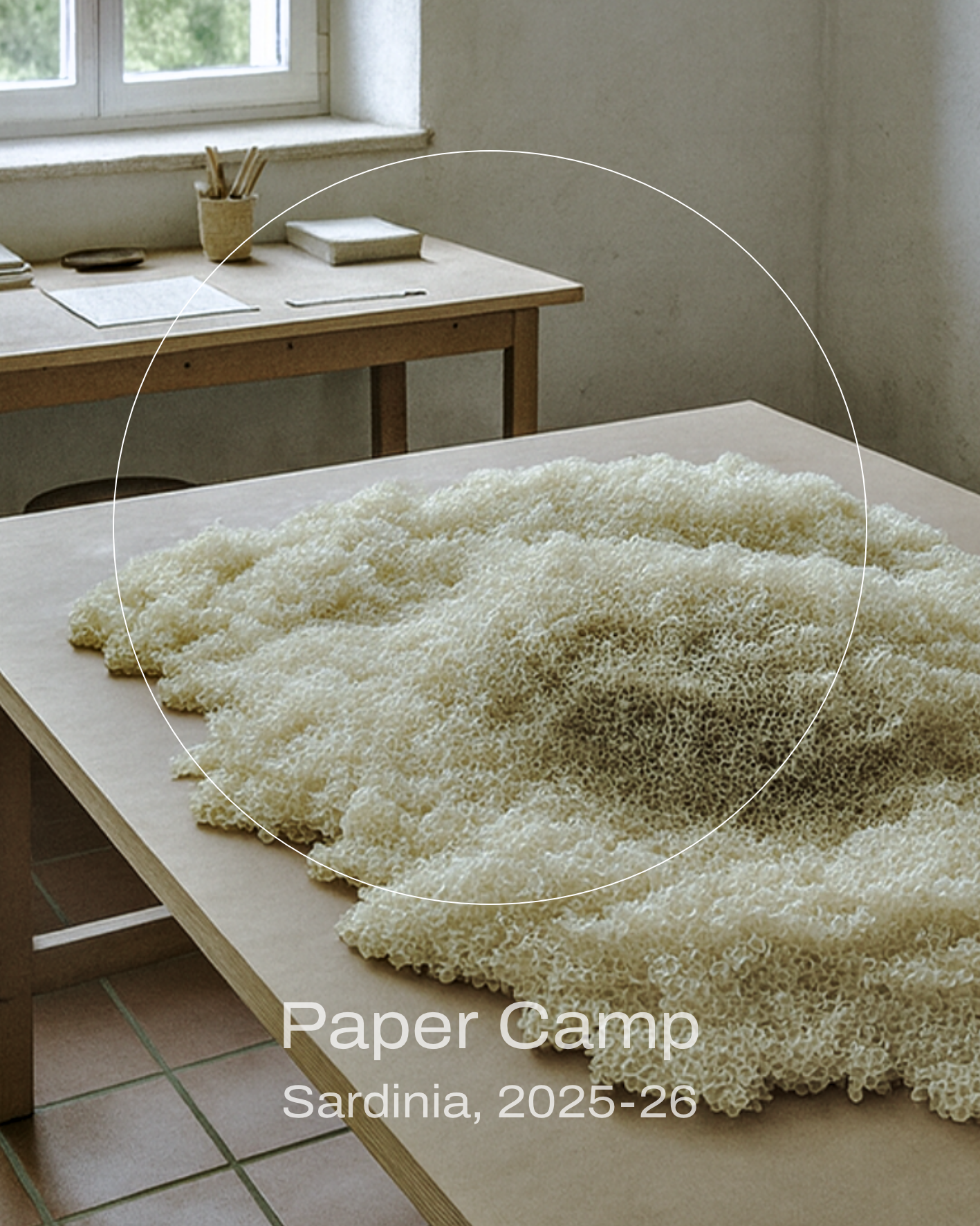
Each Paper Camp takes place in a professional working studio with:
Floors suitable for water and heavy use
Natural daylight (no basements)
Large sinks or direct water access
Drying areas
Sufficient space for pouring, forming, and casting
Accessibility for video demonstrations
Studio size typically 50–70 sqm
Participants arrange accommodation directly with the hosting location unless stated otherwise.
-
Introductory Session (Online)
A live Zoom session before the camp, introducing the program, showing process videos, meeting the host studio, and answering questions.
Preparation Files
Clear guidance on what to bring, how to prepare, and how to arrive grounded.
On-Site Guidance & Demonstrations
Daily explanations, hands-on support, and close attention to each participant’s work.
Integration Session (Online)
One month later — a reflective meeting to support continuity, answer questions, and follow how the techniques have evolved in your practice.
Ongoing Support — Paper Talk Pro
All Paper Camp participants receive continuous access to Paper Talk Pro, our monthly creative support session.
-
Paper Camps are intentionally small — usually 8–10 participants — to maintain space, depth, and attention.
Selection is based on motivation and fit, not on previous experience. -
Participants leave with:
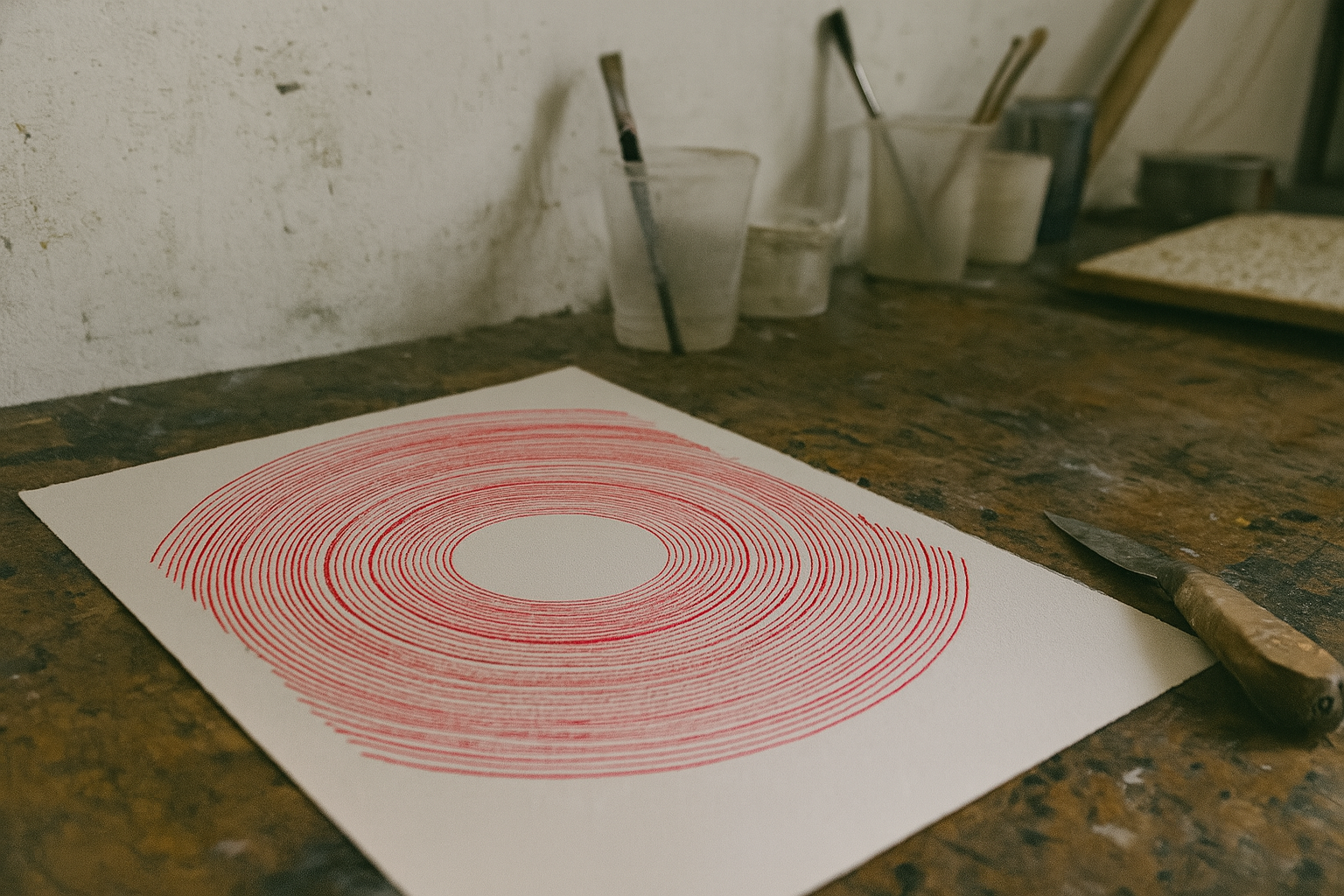
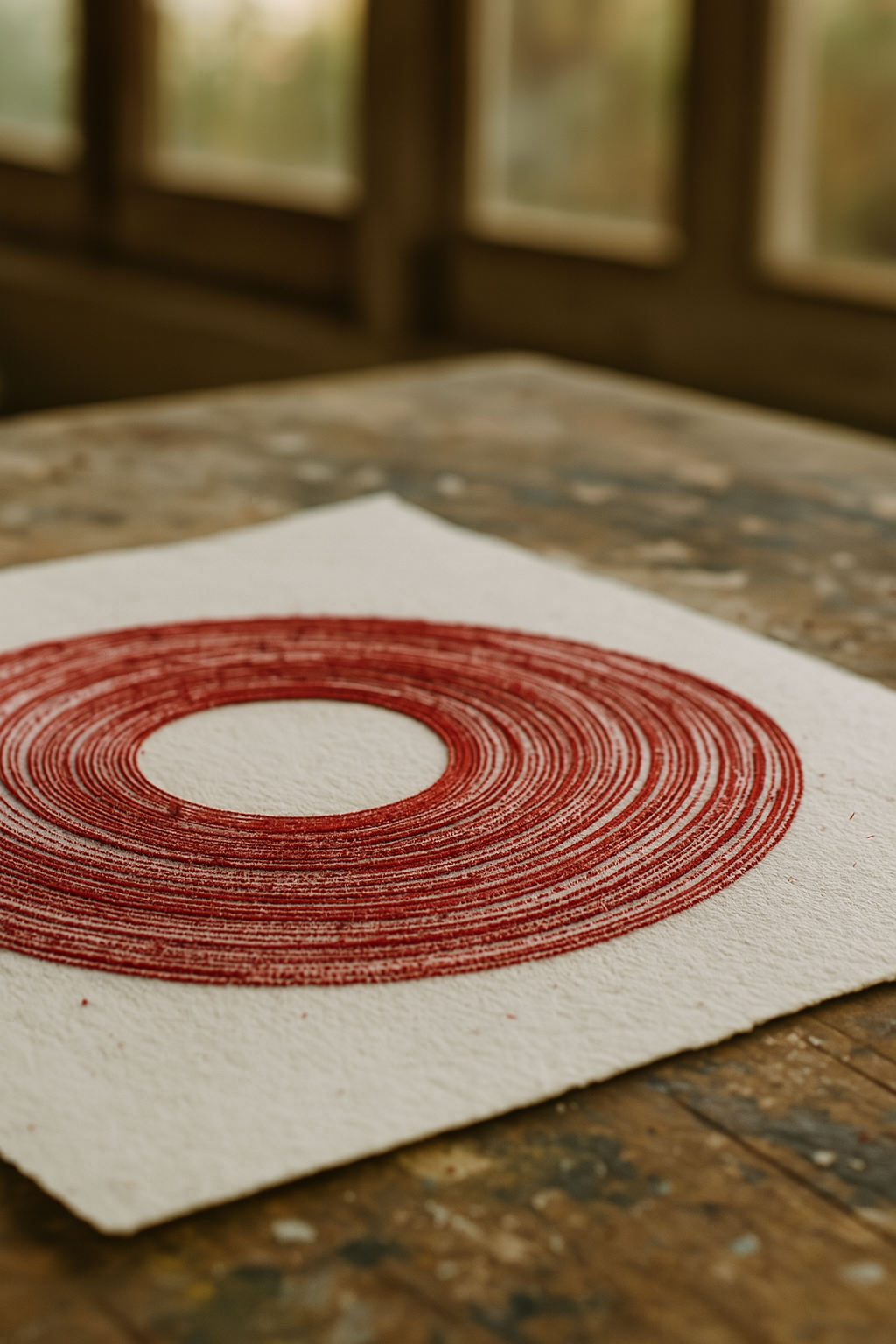
A substantial body of work and experiments
Location-specific materials and collected samples
A deeper understanding of material behavior
Technical and conceptual knowledge for future work
A personal vocabulary of forms, textures, molds, and casts
A strengthened sense of process, labor, and self-topography
Ongoing support through integration and Paper Talk Pro
Paper Camp is not simply a program — it is a turning point in how participants understand material, process, and their own artistic language.