Where pulp, structure, and intention meet
a place to shape form through labor, curiosity, and experiment.
The Groundwork of Paper Forms Foundations
A comprehensive introduction to papermaking, forming, mold creation, and casting
In-person workshop
-
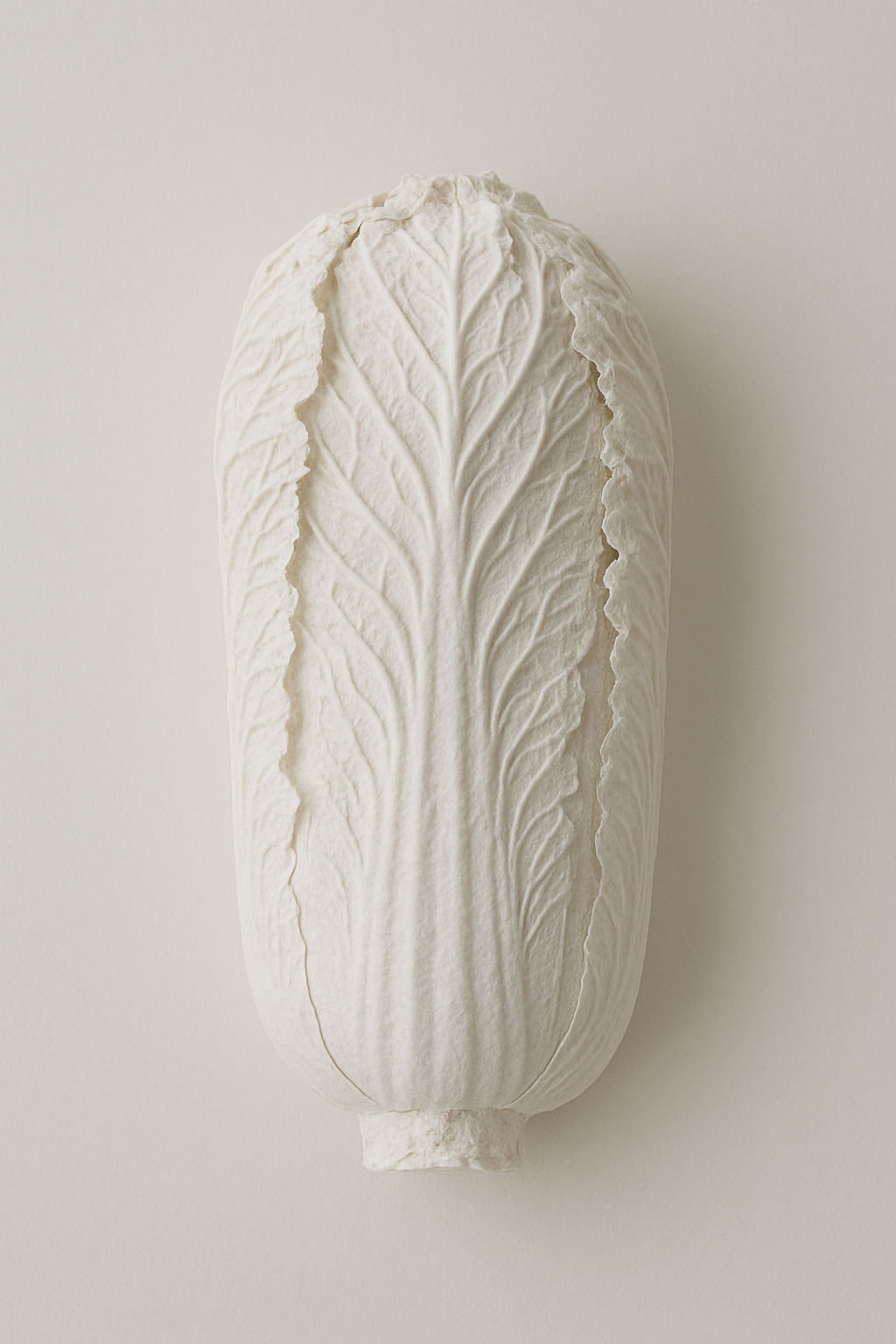
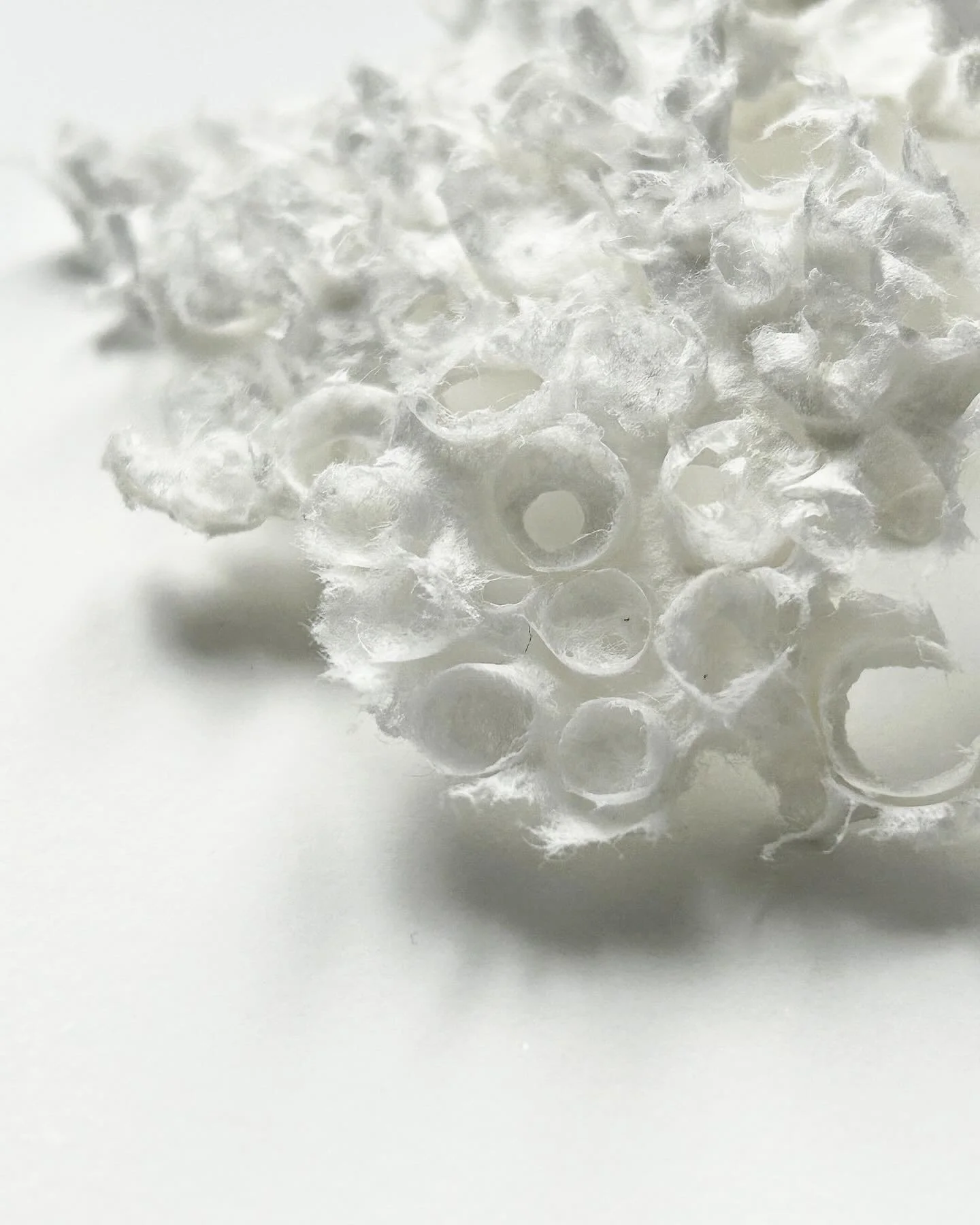
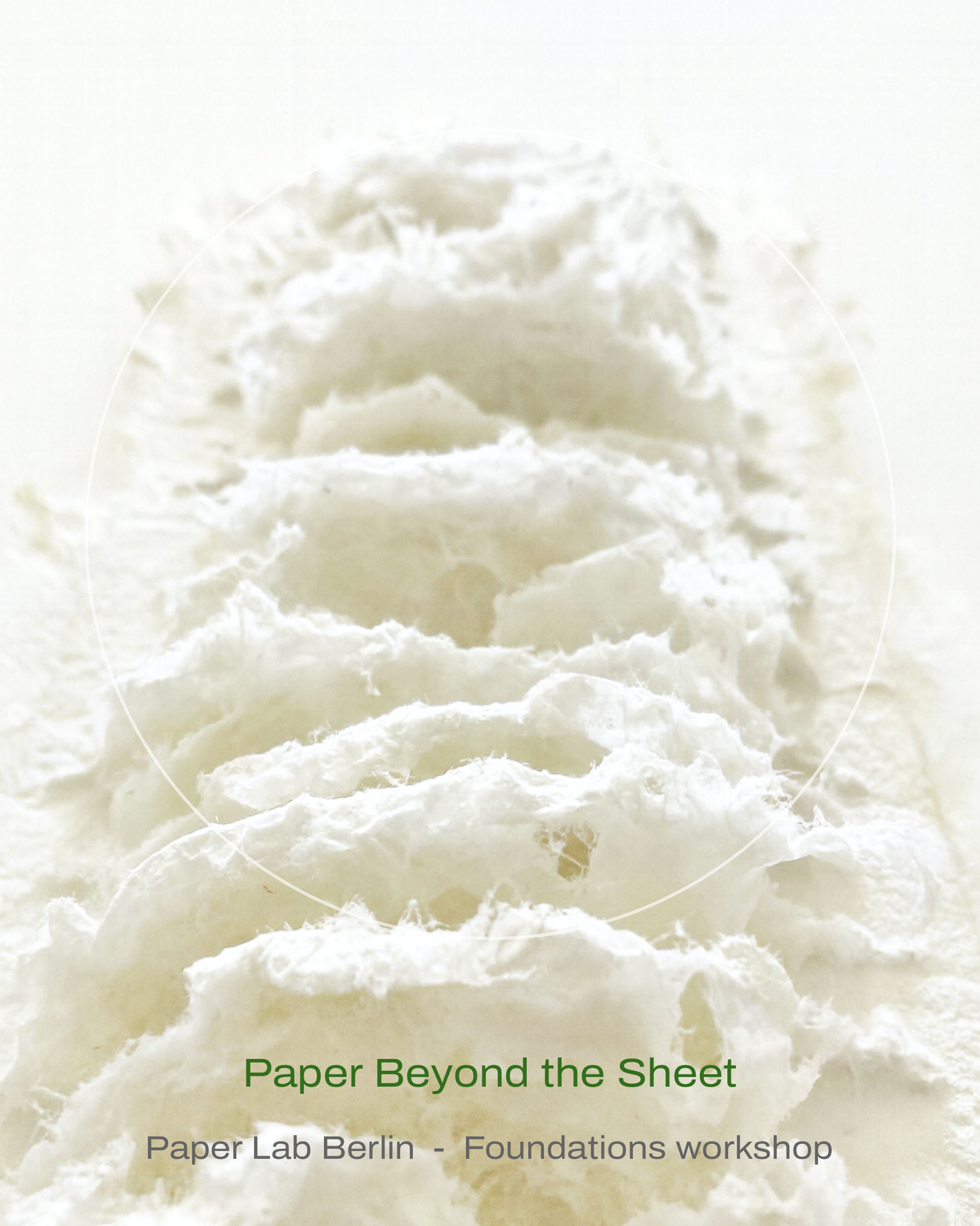
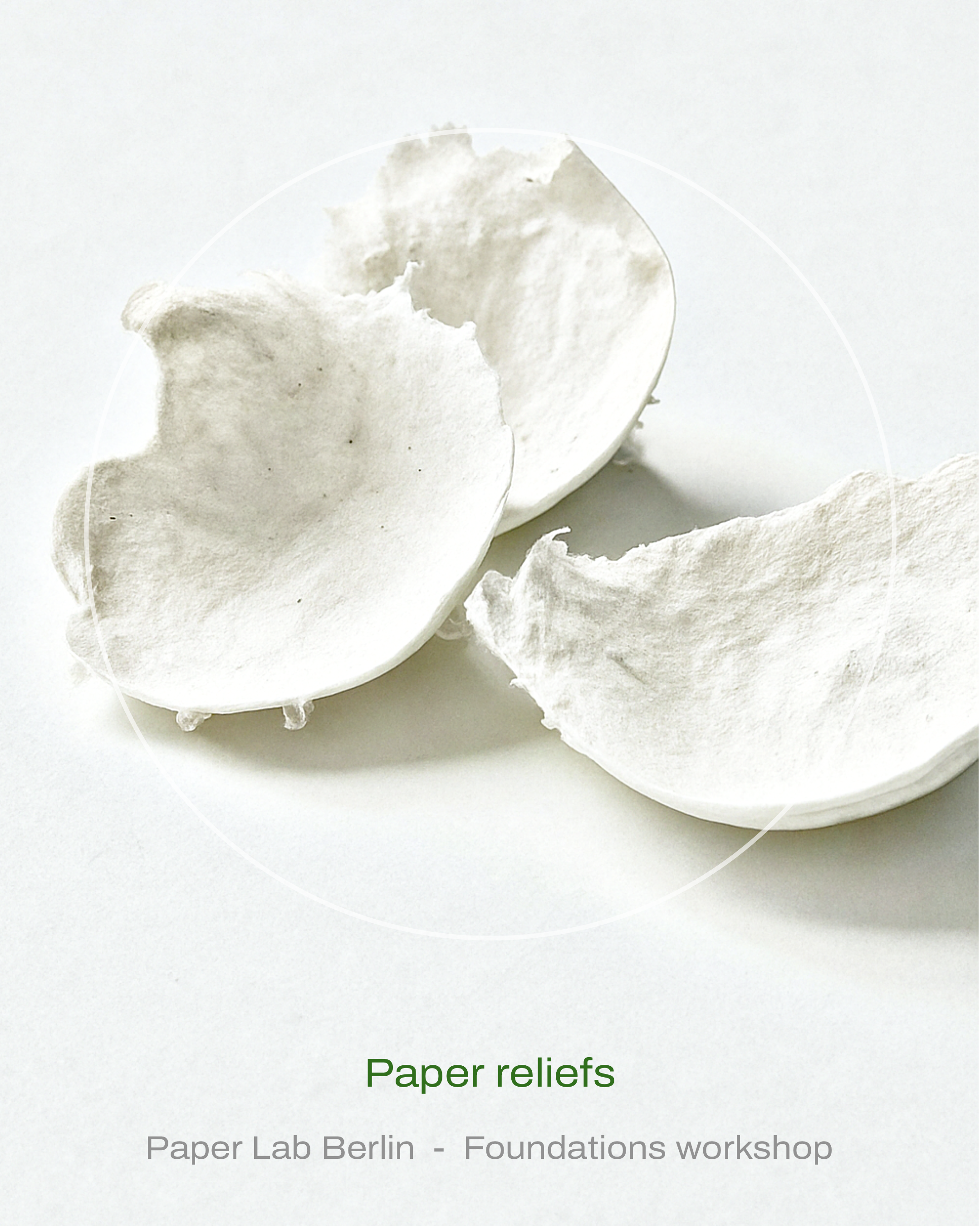
In this foundational workshop, we return to the ground level of working with pulp, form, and structure. Over two immersive days, participants step into a real studio environment and learn how raw fiber becomes volume — how texture begins, how surfaces rise and collapse, and how molds become a vocabulary for creating sculptural and relief-based works.
This workshop is designed for anyone who wants a clear, confident understanding of the essentials: preparing pulp for three-dimensional work, building forms, creating molds, and casting. Every stage is hands-on. Participants will mix, shape, press, manipulate, and cast their own work, gaining a direct physical sense of how material behaves when pushed beyond the flat plane.
-
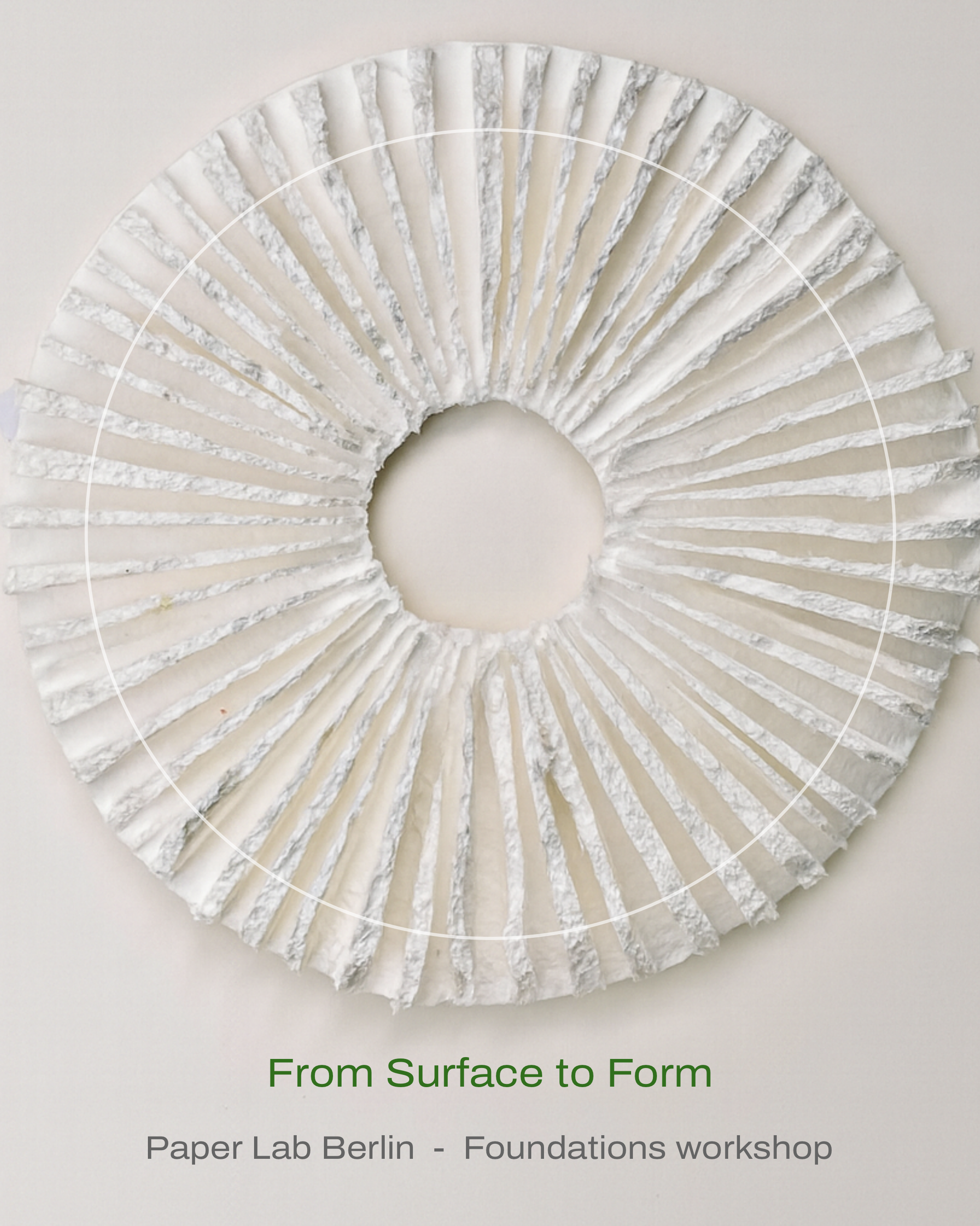
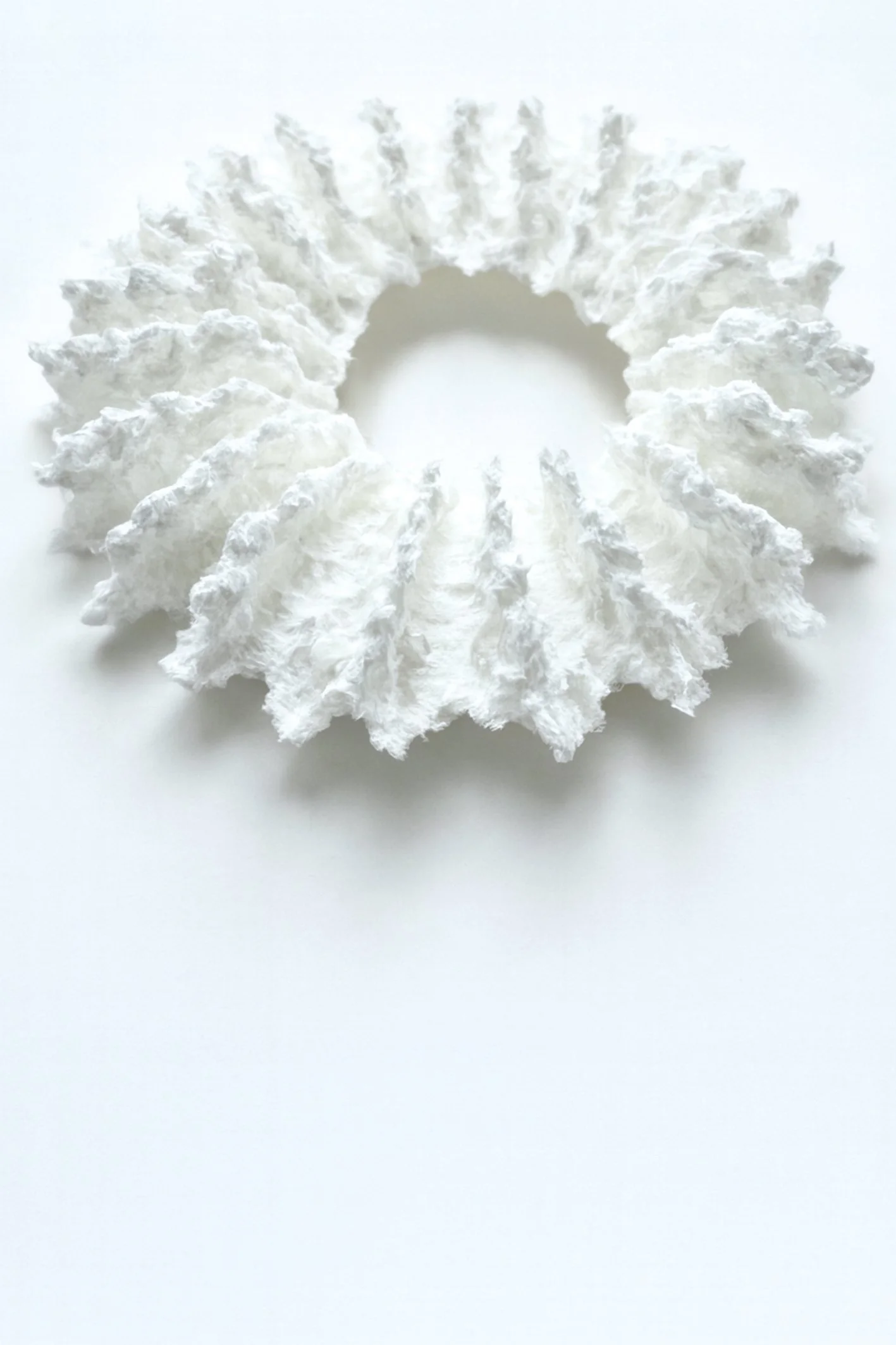
Forming and shaping — how to build structure, depth, and sculptural presence
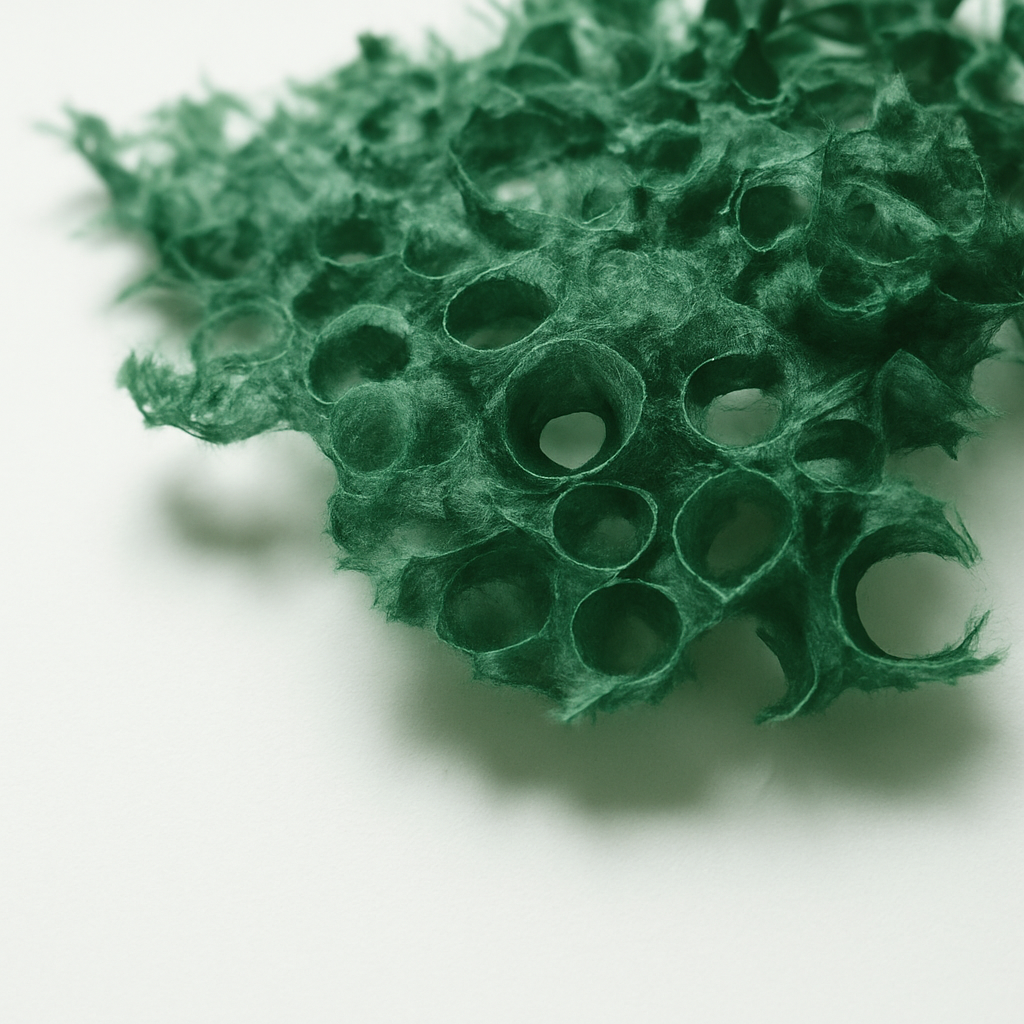
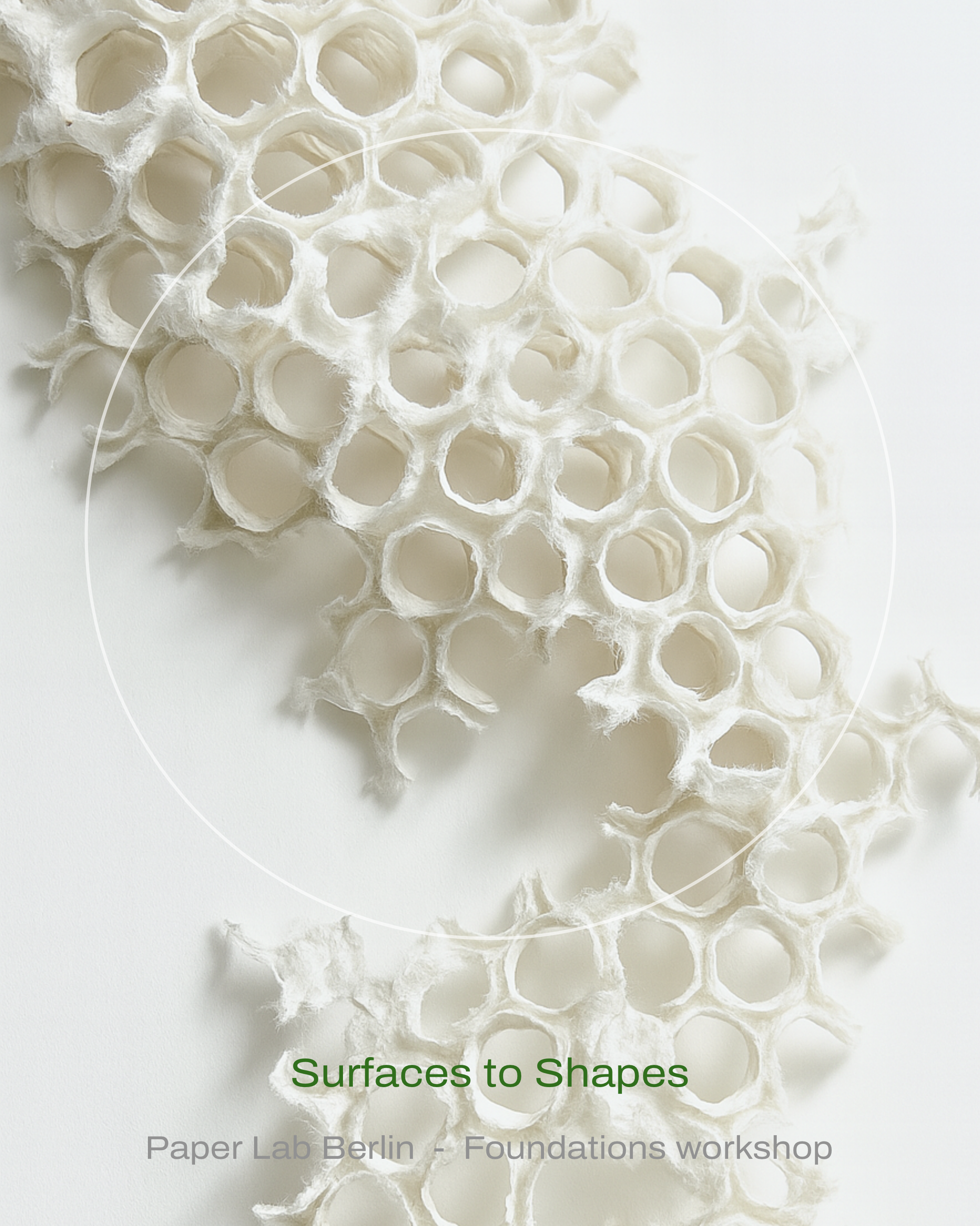
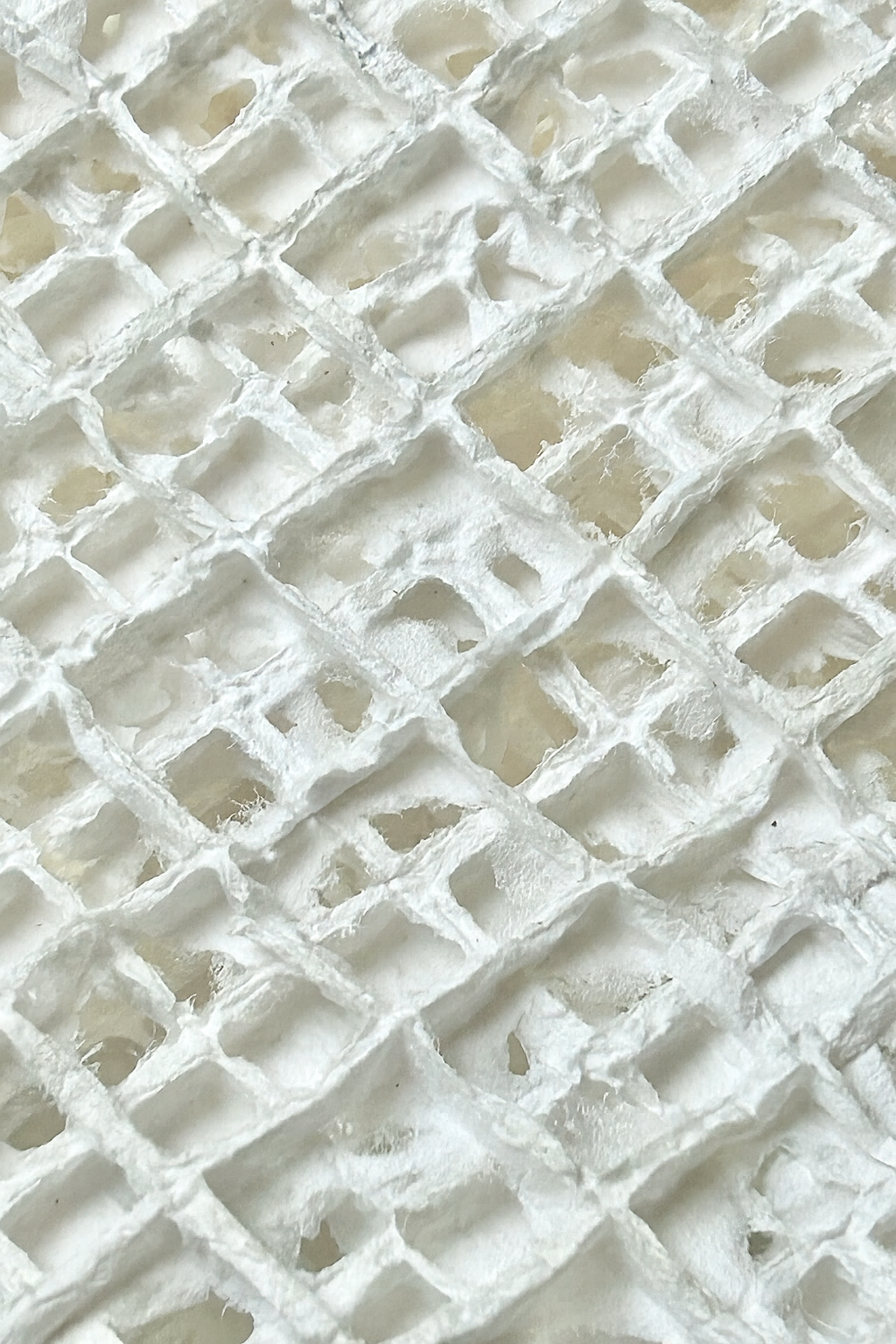
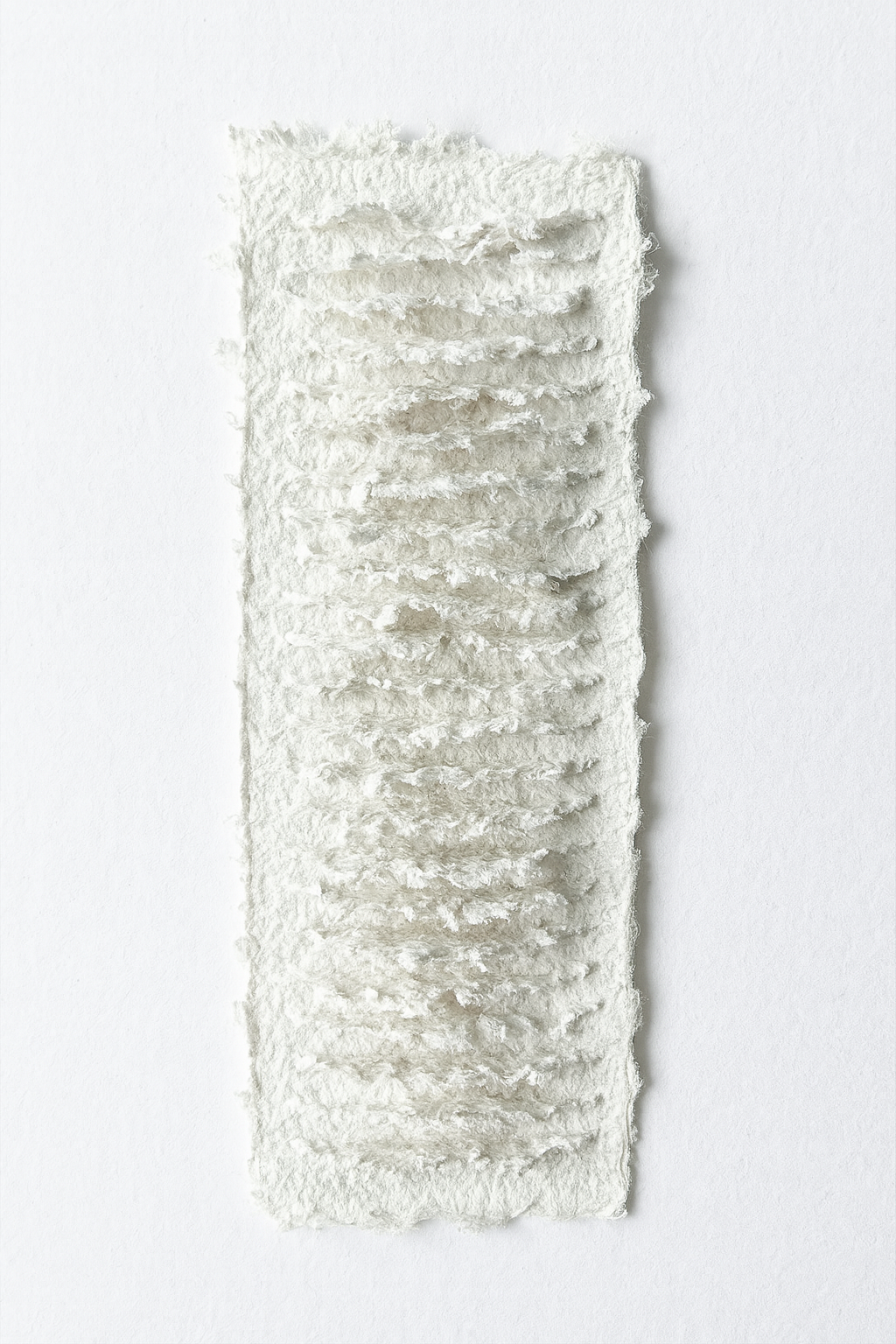
Texture and surface — methods for creating reliefs and complex topographies
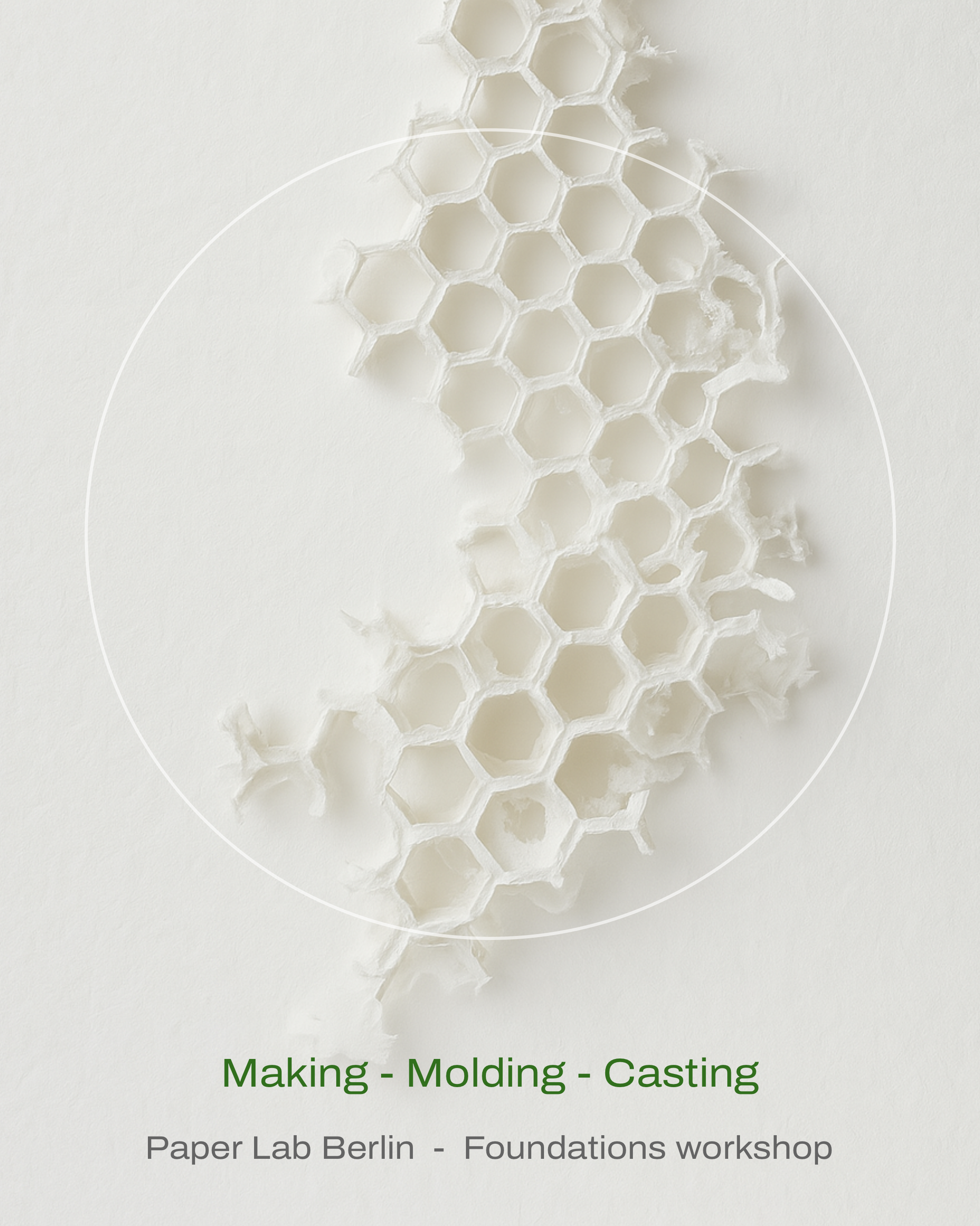
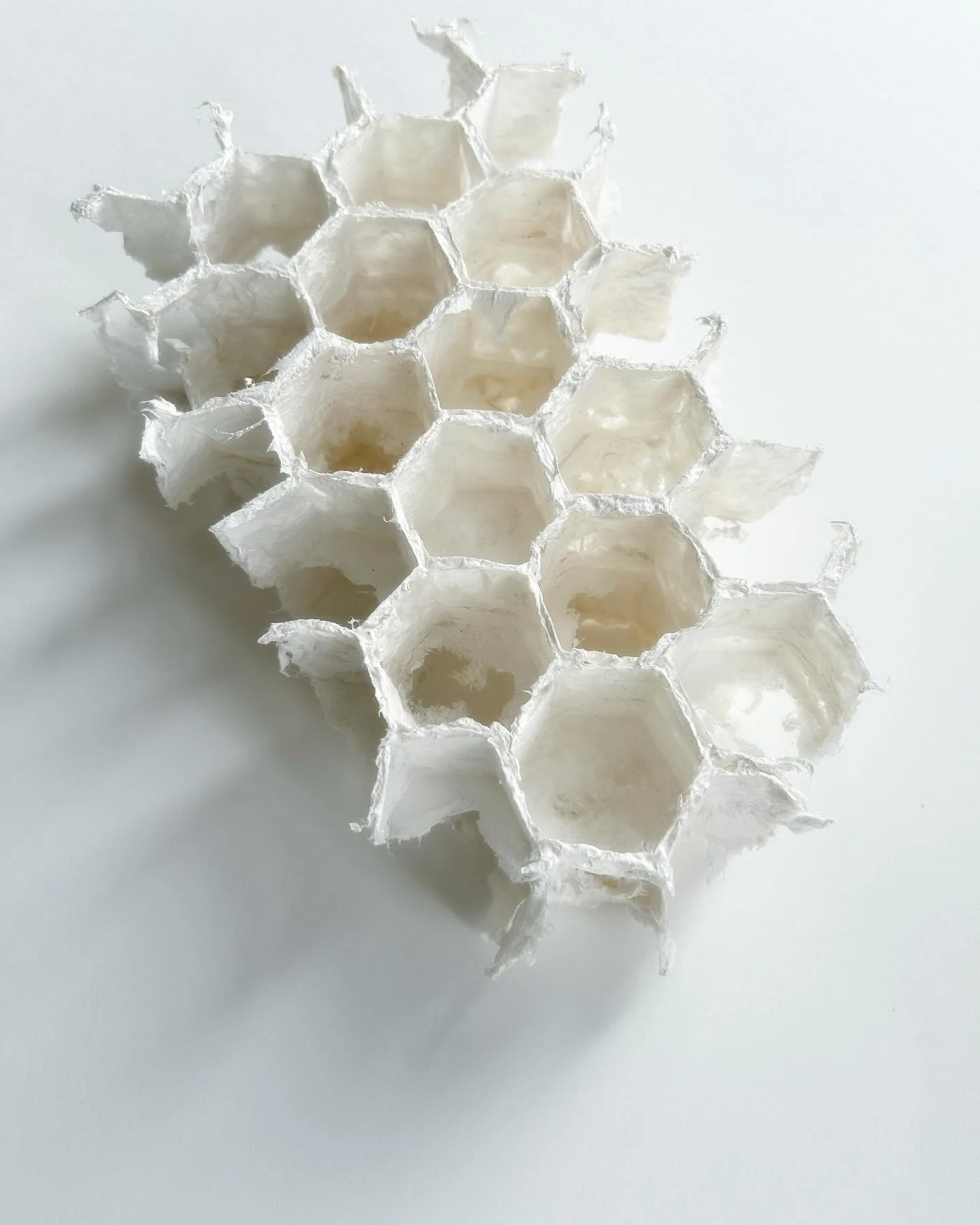
Mold creation — simple and advanced molds for objects and detailed surfaces
Casting with pulp — transforming fiber into solid, tactile forms
Throughout the workshop, the studio becomes a laboratory: water, pulp, light, pressure, and time work together. The emphasis is on understanding the logic of the material — how it breaks, holds, remembers, shrinks, expands, and responds to touch.
The in-person format allows for deeper experimentation, shared learning, and real attention to each participant’s work. No previous experience is needed; the workshop supports complete beginners while offering meaningful depth for experienced makers who want to refine or expand their methods.
The Groundwork of Paper Forms — Foundations invites you to slow down, observe, and work with intention — discovering how forms emerge from pulp and how techniques evolve into a personal vocabulary of structures, textures, and cast objects.
-
The Groundwork of Paper Forms — Foundations is built around three interconnected volumes: papermaking, mold making for paper, and casting. Together, they offer a complete entry into the world of shaping, forming, and reproducing structures with pulp.
1. Papermaking for Form and Volume
We begin by preparing pulp from both natural and recycled fibers. Participants learn how different fibers behave when transformed into a workable material for three-dimensional forms. Instead of thinking in terms of sheets, we focus on pulp as a sculptural substance — how to adjust consistency, strength, and texture depending on the form you want to create. This stage gives you the base material for all further exploration.
2. Mold Making for Paper
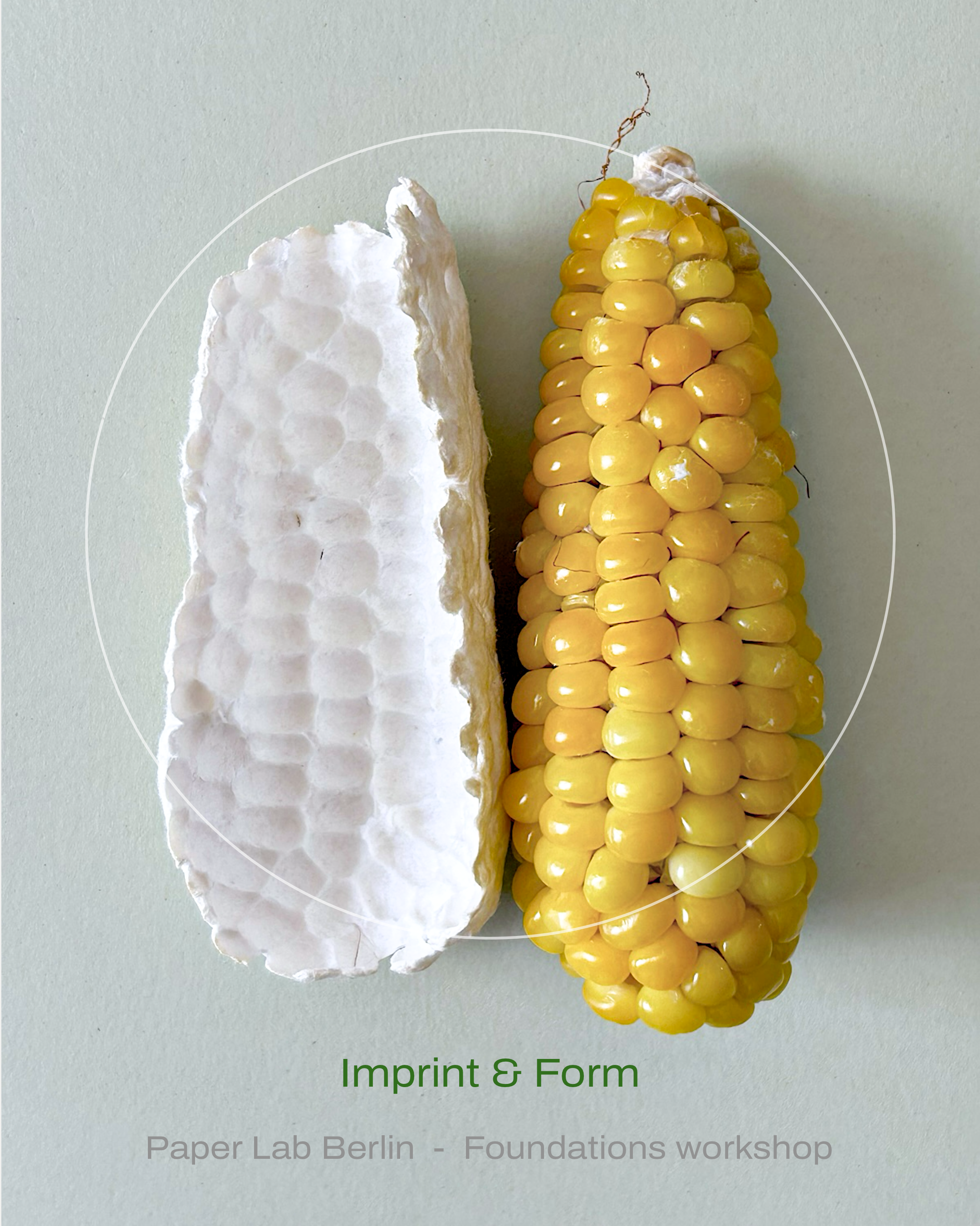
The second volume introduces mold creation as a flexible and accessible practice. We work with materials that can be found in any studio or home: fabrics, foams, wood, metal, glass, plastic, and everyday objects. Participants learn how to shape molds for both simple and complex forms, and how different surfaces imprint themselves onto pulp. The aim is to build confidence in crafting molds from almost anything, and to understand how each material influences the final cast.
3. Casting — Negative Forms and Detailed Surfaces
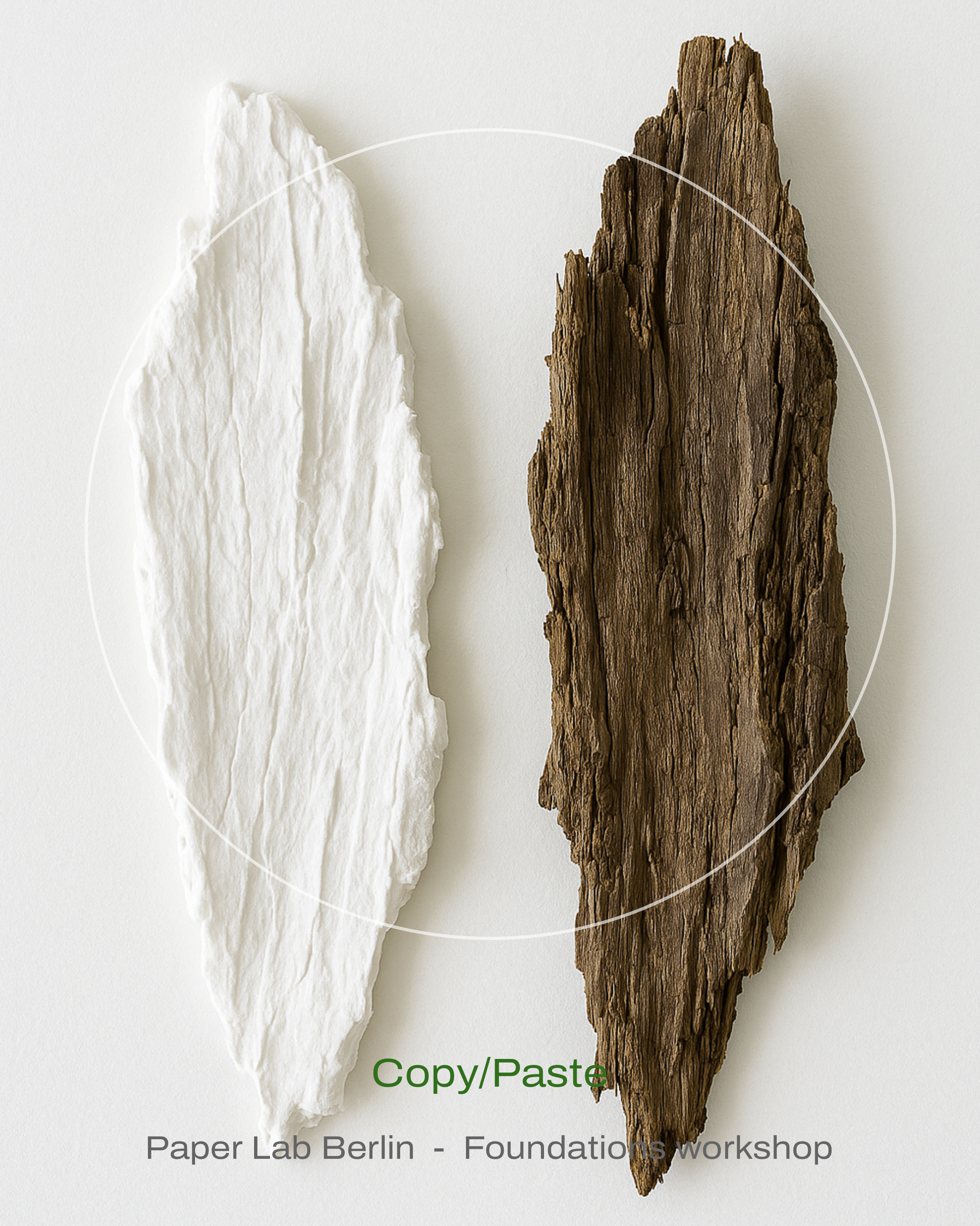
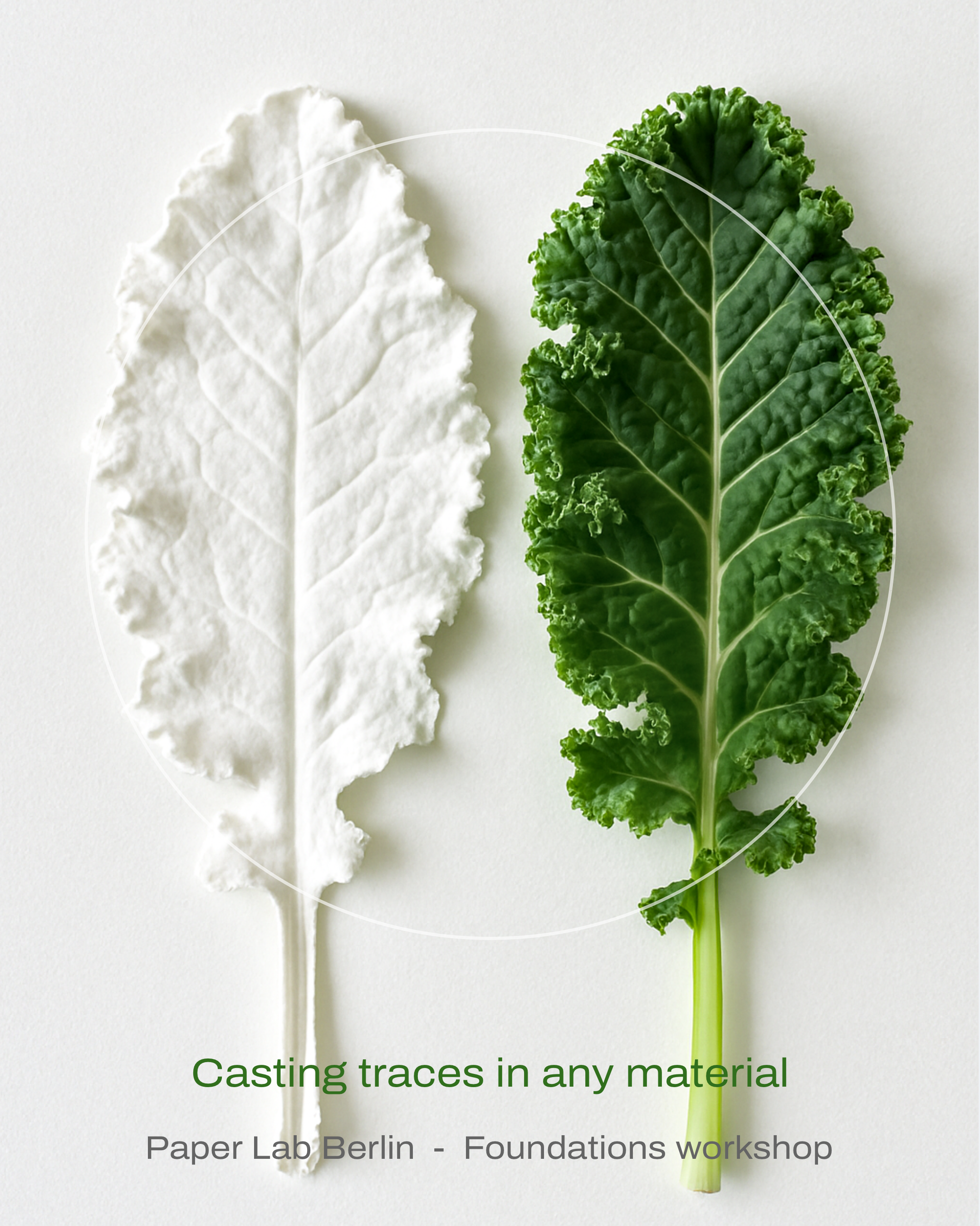
In the final volume, we focus on casting pulp into molds and capturing the negative side of objects. We explore how to replicate textures and structures from leaves, wooden surfaces, small objects, and various plastics or manufactured materials. Participants learn how to read a surface, decide how much detail to preserve, and cast pulp in ways that hold the essential qualities of the original form. This is where the workshop opens possibilities: sculptural reliefs, textured elements, fragments, objects, and hybrid forms.
Together, these three volumes create a foundation for working with pulp as a structural material. Participants leave with a practical understanding of how to generate material, craft molds from almost anything, and cast forms that carry detail, depth, and presence.
-
Participants are invited to work in a lab state of mind — curious, hands-on, and fully engaged with material. Over two intensive days (6–7 hours each), the studio becomes a place for constant experimentation: testing different mold materials, trying multiple casting approaches, adjusting pulp, observing behavior, and comparing results. The aim is not to create one final object, but to produce many studies, fragments, and discoveries that open new pathways in your practice.
All materials are supplied during the workshop. Participants are asked to bring a few basic tools of their own; full details will be shared in the registration files. The pace is deep and immersive, with a great deal of content, demonstrations, and time dedicated to individual work.
To support participants before, during, and after the workshop, we provide a full learning framework:
2.5-Hour Video Demonstration
After the workshop, participants receive a comprehensive video (2.5 hours) with demonstrations and clear explanations covering all main topics explored in the studio — pulp preparation, mold creation, negative forms, casting methods, and troubleshooting. This serves as a long-term reference for practice and integration.
Presentation & Resource Files
A detailed presentation and supporting files accompany the video, offering technical clarity and guidance for continued experimentation.
Introductory Session (Online)
Before each workshop, we host a live Zoom session where participants meet the team, learn about the program structure, and ask questions. This session builds trust, clarity, and confidence before arriving in the studio.
Getting Ready Sessions
Confirmed participants attend short preparation meetings to ensure they understand materials, tools, and workflow. These sessions help everyone enter the workshop grounded and ready.
Integration Session (Online)
One month after the workshop, participants gather again for a reflective session — sharing work, asking questions, and discussing how the techniques have evolved in their own practice. This session supports continuity and deeper understanding.
Ongoing Support — Paper Talk Pro
All past participants are welcome to join Paper Talk Pro, our monthly creative support session. It is a space to bring questions, new experiments, and ongoing work, connecting the learning from the workshop to a broader practice.
This combined structure — intensive in-person work, guided preparation, post-workshop integration, and ongoing community support — ensures that The Groundwork of Paper Forms — Foundations becomes more than a two-day experience. It becomes a sustained entry point into working with forms, textures, molds, and casting as part of a long-term artistic journey.